You’re dry camping. The campground hookup is dead. Every appliance in your rig is a hungry mouth, and the generator you brought is loud, heavy, and out of gas. You need a portable power station for RV life that actually works.
The problem is most of these boxes look the same on Amazon. They all claim “3kWh” and “fast charging” and “run your A/C.” But only a few have a real TT-30 port. Only a few can sit in your bay without breaking your back. And almost none of them tell you the truth about how long they’ll last.
We dug through the specs, the reviews, the contradictions, and the fine print. Seven units. Three size tiers. One winner that made us rethink what a “portable” power station should be. If you’re in a hurry: Short on time? Our Best Overall pick is the BLUETTI Elite 300 because it packs a true 3kWh in a compact 58-pound frame with a TT-30 RV port and 78-minute recharge.
Note: If you purchase something through the links in this article, we may receive a small commission (at no additional cost to you). Let’s take a closer look and discover which one is best to help you tackle the next challenge.
Portable Power Stations for RV at a Glance
← Swipe to compare →
| Name | Quick Info | Rating | Best For | Link |
|---|---|---|---|---|
| BLUETTI Elite 300 Best Overall | 3014Wh · 2400W cont. · 58 lbs · TT-30 port · 78 min recharge | ★★★★☆4.6 · Amazon | Compact 3kWh with RV port and fast AC recharge | Amazon ↗ |
| EF ECOFLOW DELTA 2 Best for Fast Charging | 1024Wh · 1800W cont. · 27 lbs · 50 min 80% · 15 outlets | ★★★★★4.7 · Amazon | Lightweight expandable power for weekend RV trips | Amazon ↗ |
| BLUETTI AC200PL Best Expandable for Boondocking | 2304Wh (exp. 8448Wh) · 2400W cont. · 72 lbs · TT-30 · 5 yr warranty | ★★★★★4.7 · Amazon | Heavy-duty expandable station for long off-grid stays | Amazon ↗ |
| Anker SOLIX F3800 Best for 240V Appliances | 3.84kWh (exp. 26.9kWh) · 6000W dual volt · 132 lbs · NEMA 14-50 | ★★★★☆4.2 · Amazon | Stationary power for big rigs and 240V appliances | Amazon ↗ |
| BLUETTI AC70 Best for Weekend Camping | 768Wh · 1000W cont. (2000W surge) · 22.5 lbs · 45 min 80% | ★★★★★4.7 · Amazon | Light, fast-charging unit for a night or two off-grid | Amazon ↗ |
| Jackery Explorer 1000 v2 Best for Light RV Use | 1070Wh · 1500W cont. · 23.8 lbs · 1 hr fast charge · 4000 cycles | ★★★★★4.8 · Amazon | Reliable 1kWh with ultra-fast recharge for essentials | Amazon ↗ |
| PECRON F3000LFP Best for Off-Grid Backup | 3072Wh (exp. 10752Wh) · 3600W · 63.3 lbs · 2 hr full charge · 220V | ★★★★☆4.6 · Amazon | Fast-charging high-capacity unit for heavy-duty 220V gear | Amazon ↗ |
Best Solar Power Boat Battery Chargers
1. BLUETTI Elite 300, Best Overall
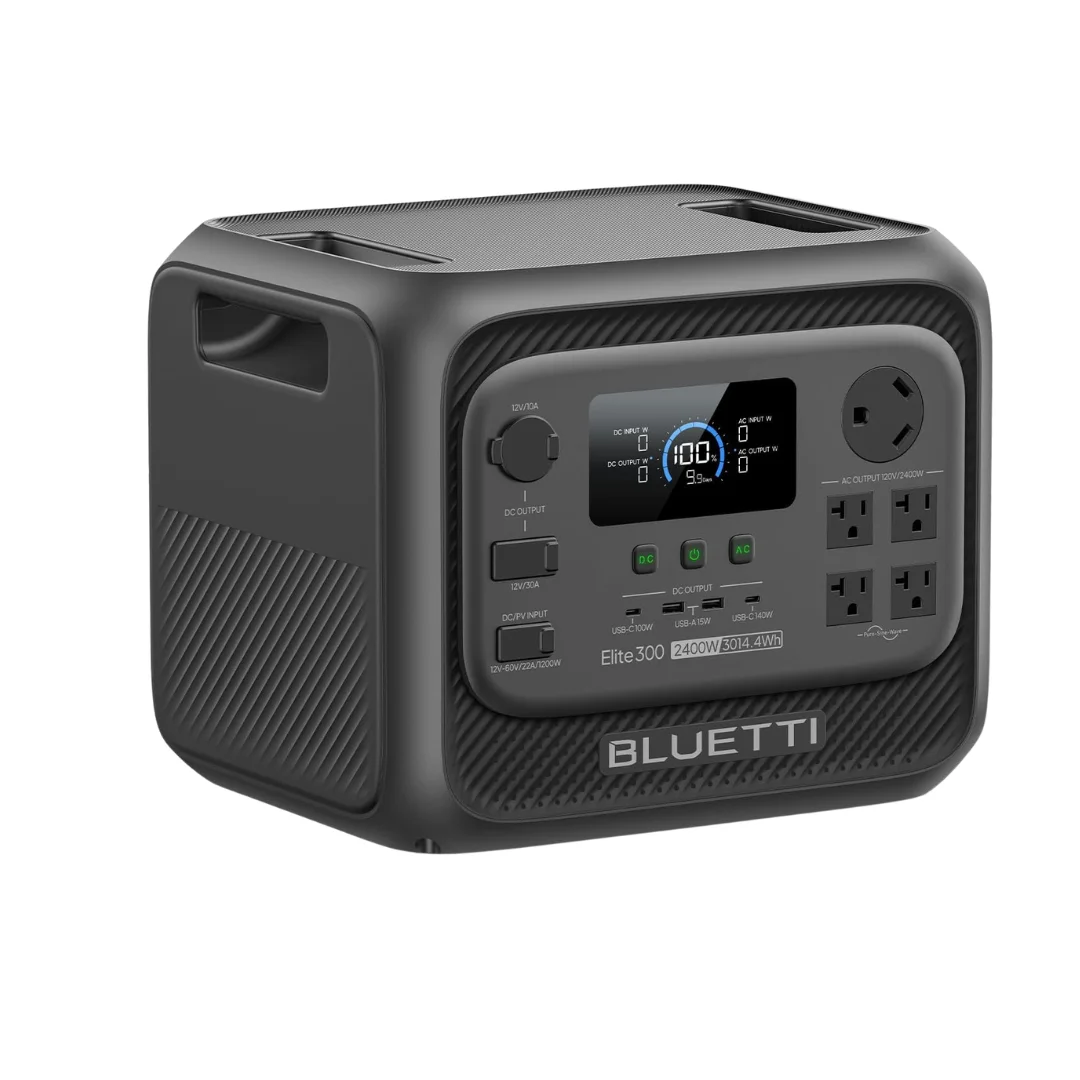
Most 3kWh power stations won’t fit under an RV bench. This one is 59% smaller than typical units. Yet it includes a built-in TT-30 RV outlet and a 12V/30A DC port for direct fridge or heater hookup.
For a weekend of boondocking, the 2400W continuous output runs your fridge, CPAP, and lights without breaking a sweat. The UPS switch happens in 10ms. Your laptop won’t even blink. At 58 pounds, it’s heavy, but the compact shape slides into a bay.
The Elite 300 is the best balance of real RV utility and packable size. Its only real flaw: just two AC outlets. But carry a power strip, and that problem disappears.
2. EF ECOFLOW DELTA 2, Best for Fast Charging
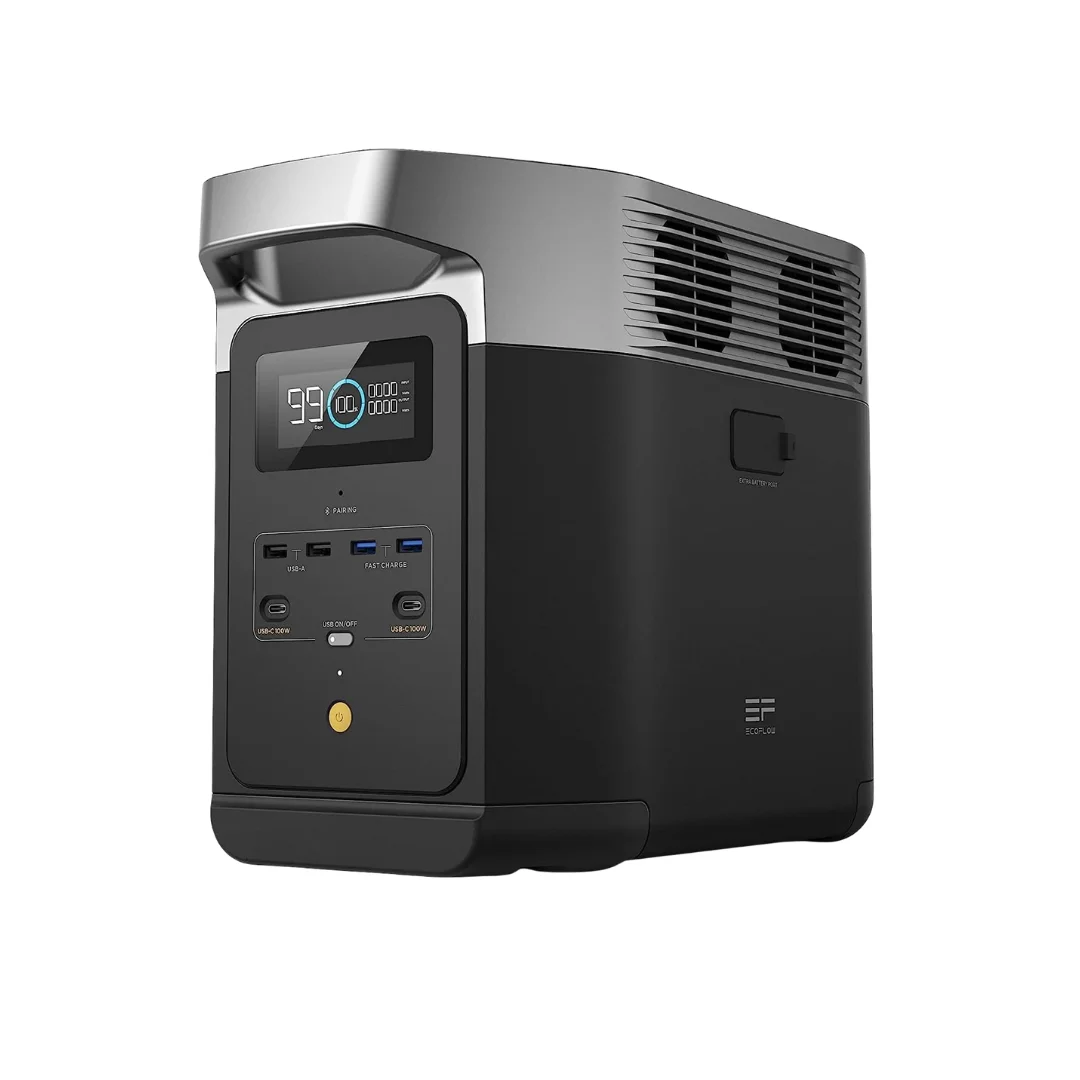
Other 1kWh power stations take half a day to recharge. The DELTA 2 hits 80% in 50 minutes. That’s the difference between being ready for the next evening and waiting all afternoon.
With 1024Wh and 1800W AC output, it runs a mini-fridge and microwave simultaneously via 15 outlets. At 27 pounds, you can carry it from the truck to the camper without a dolly. The LiFePO4 pack lasts 3000 cycles.
This is the fastest-charging 1kWh power station we found. The expandable battery option gives you room to grow. The non-returnable policy is annoying, but the 5-year warranty takes the edge off.
3. BLUETTI AC200PL, Best Expandable for Boondocking
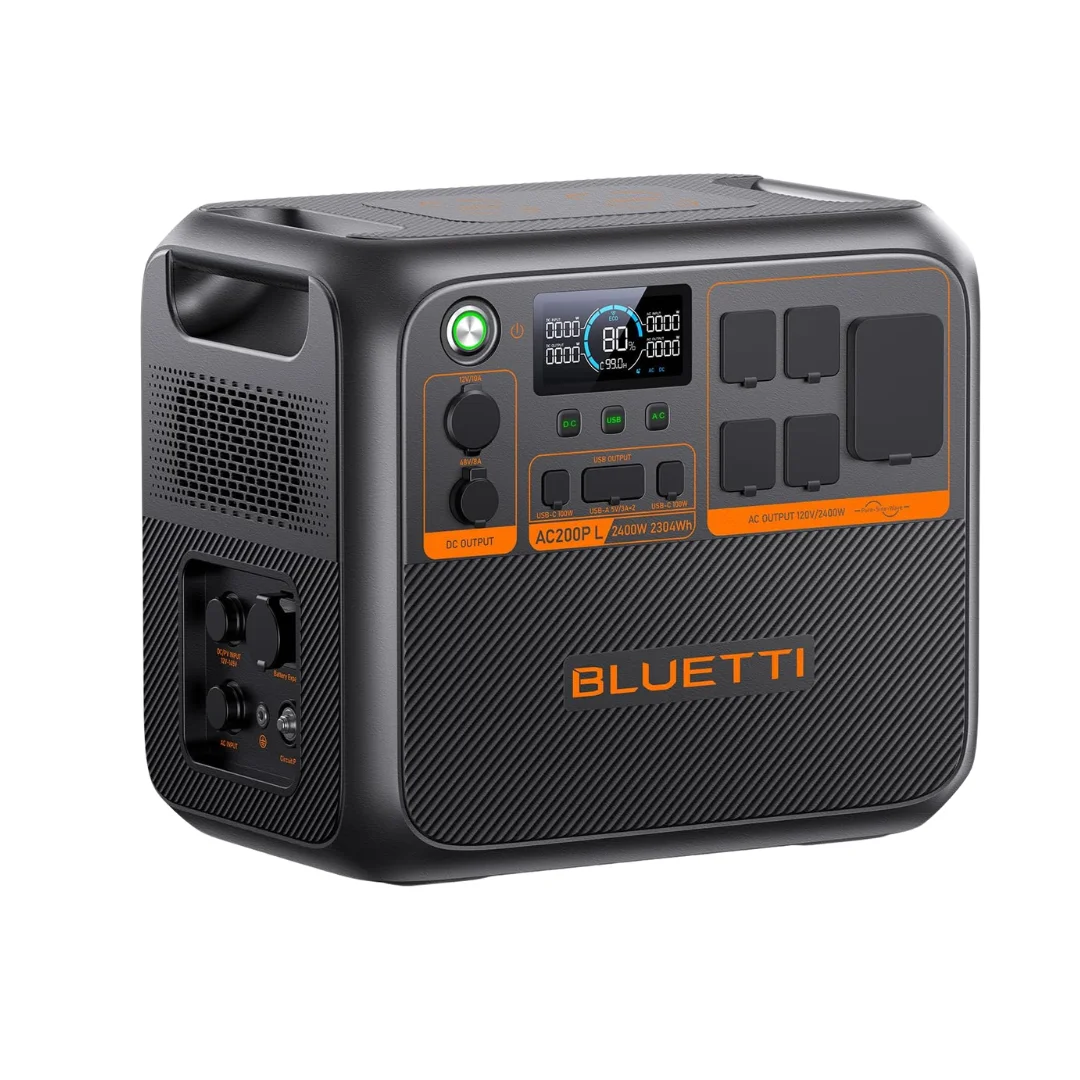
You can scale this unit from 2.3kWh up to 8.4kWh by adding external batteries. Rare at this price. The built-in 30A TT-30 port and 10ms UPS make it a direct RV replacement for shore power.
Four AC outlets plus the TT-30 let you run a rooftop AC, microwave, and fridge simultaneously for several hours. The 72-pound weight is a workout. But the metal/steel chassis feels indestructible. Recharge via AC at 2400W in about an hour.
For serious boondocking where you need all-day AC, the AC200PL delivers expandability no other unit in this tier matches. If you’re cross-shopping the 2kWh class, our 8 Best 2000W Solar Generators roundup compares more options at this capacity. The 72 pounds and confusing spec sheet are its tradeoffs. Plan your installation accordingly.
4. Anker SOLIX F3800, Best for 240V Appliances
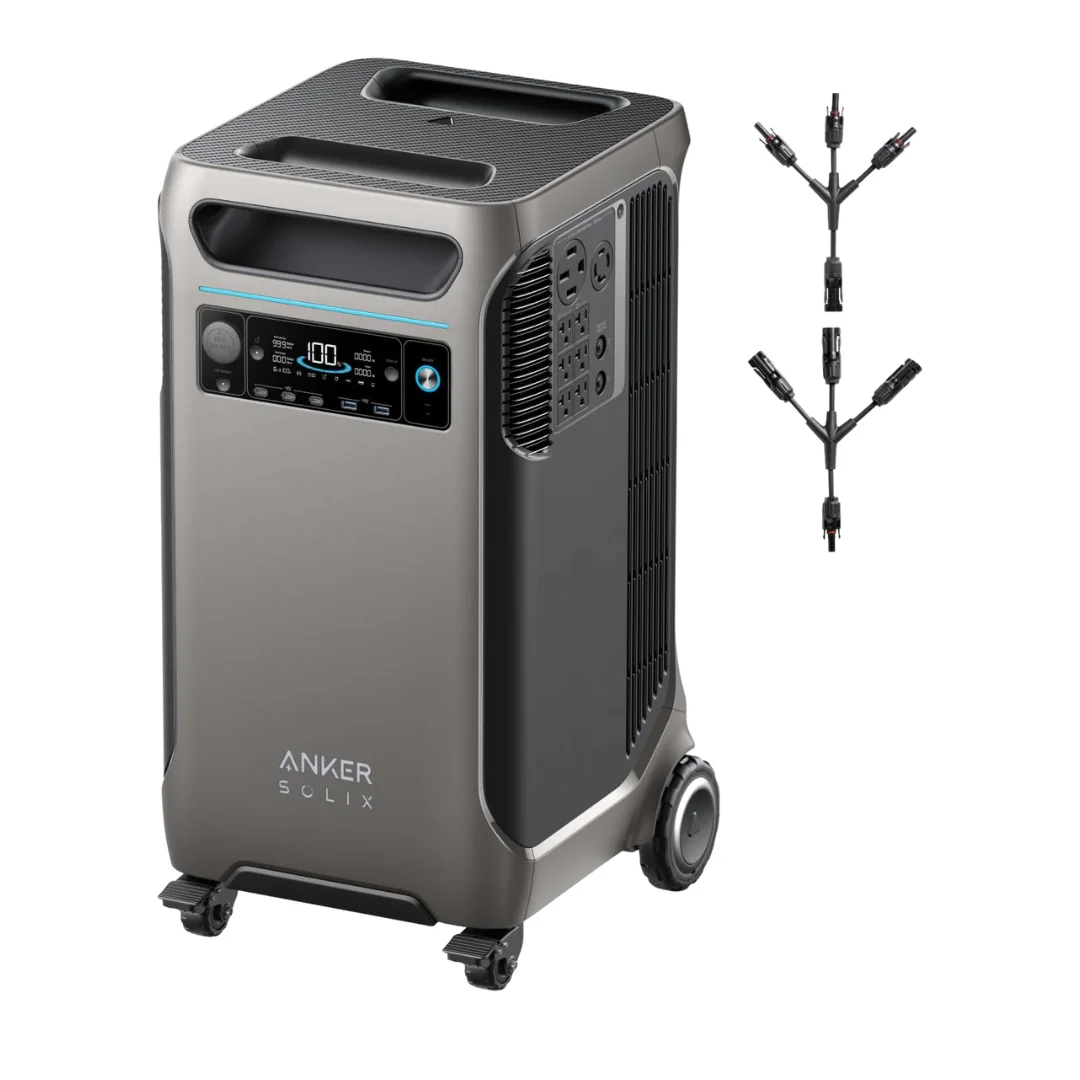
Most portable power stations max out at 120V. The F3800 delivers 240V via a NEMA 14-50 port. You can run an RV dryer, EV charger, or residential AC directly. No adapter needed.
With 3.84kWh expandable to 26.9kWh, this is a whole-home backup on wheels. The 6000W continuous output handles two air conditioners at once. At 132 pounds, it’s not portable in any practical sense. You roll it on its included wheels.
If your RV has 240V appliances or you want a single station for both your rig and house, the F3800 is unmatched. For light boondocking, it’s overkill. You’ll spend the whole trip wrestling it into the bay.
5. BLUETTI AC70, Best for Weekend Camping
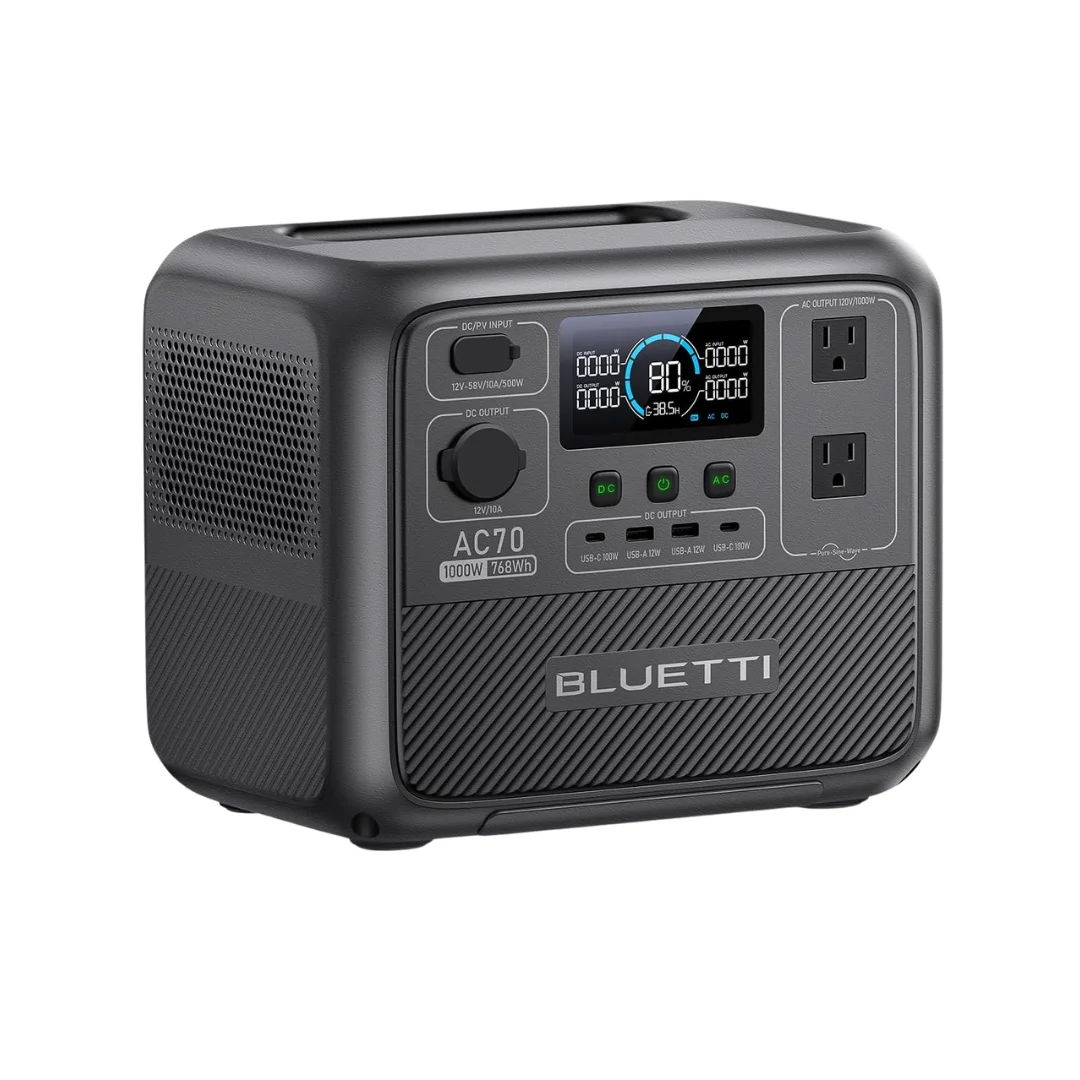
At 22.5 pounds and 768Wh, the AC70 is small enough to toss in the back of a truck. Yet it delivers a 2000W surge to start a space heater or refrigerator compressor. Uncommon in this weight class.
Run a mini-fridge and CPAP for a full night. The 45-minute charge to 80% means you can top up between stops. The plastic housing scuffs easily. But the 3000-cycle LiFePO4 battery and 24-month warranty offer long-term peace of mind.
For short RV trips where you don’t need a TT-30 port, the AC70 is the lightest, fastest-charging 768Wh option. Just don’t expect to run a rooftop AC. It’s for keeping the essentials alive.
6. Jackery Explorer 1000 v2, Best for Light RV Use
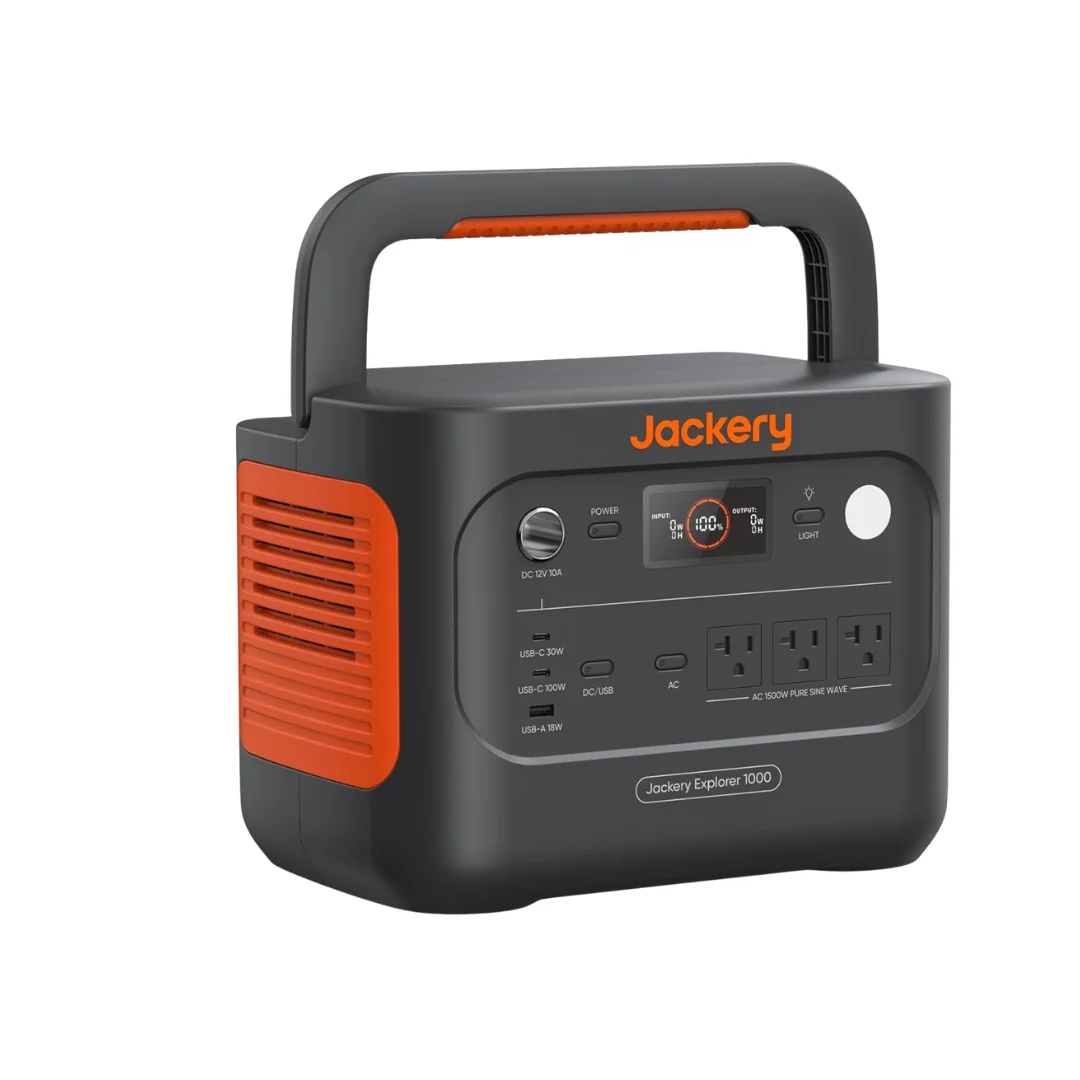
Most 1kWh power stations take 2-3 hours to recharge. The Explorer 1000 v2 does it in one hour. But you have to enable that mode through the app. The 4000-cycle LFP battery claims 10 years of daily use.
Three AC outlets, two USB-C (one 100W PD), and a car port mean you can power a fridge, laptop, and phone simultaneously. At 23.8 pounds, it’s easy to carry. The app-controlled emergency charging mode is a nice touch. But the default charge takes 1.7 hours.
This is the most reliable 1kWh option for RVers who want a proven brand and ultra-fast recharge. The TT-30 is missing, so you’ll use a standard 15A outlet. The app gimmick is forgivable. The battery quality is not.
7. PECRON F3000LFP, Best for Off-Grid Backup
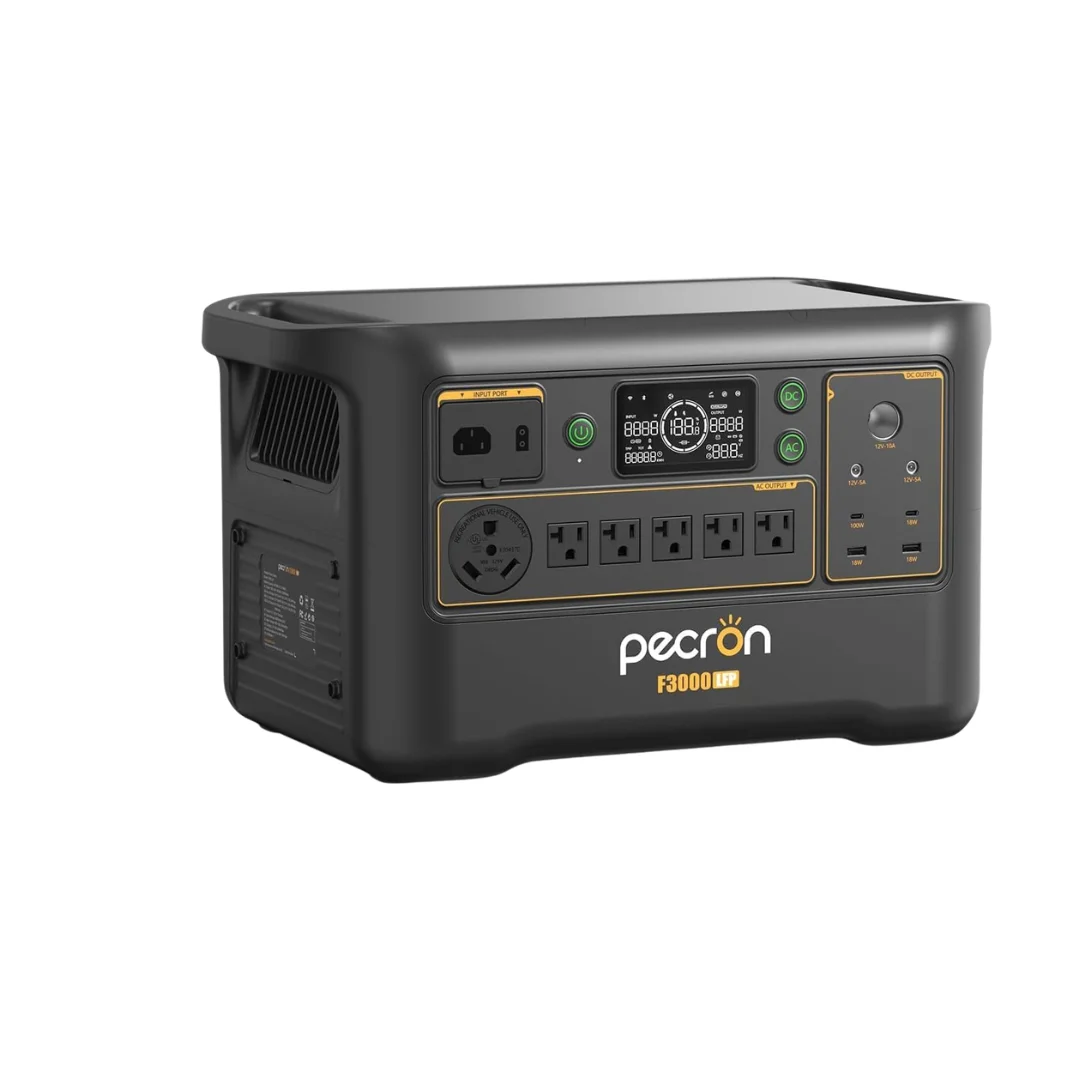
Most 3kWh stations charge in 4-6 hours. The F3000LFP fills completely in 2 hours via 1800W AC input. The expandable capacity (up to 10.7kWh with a $400 cable) lets you scale up later without buying a new unit.
Six AC outlets, two USB-C (100W PD), and a carport deliver 3600W pure sine wave. Enough for a refrigerator and power tools simultaneously. At 63.3 pounds, it’s heavy but manageable. The catch: this unit outputs 220V. That’s standard outside the US. For American RV owners, you’ll need a step-down transformer or adapter.
The F3000LFP is a beast for off-grid backup in 220V environments. If you live in the US and don’t want to mess with adapters, skip it. For international travelers or those with 240V setups, it’s the fastest-charging 3kWh on the market.
Buying Guide: What to Look for in Portable Power Stations for RV
The One Number That Matters: Continuous Watts vs. Surge Watts
Your rooftop AC might pull 1200W running but needs 1800W to start. Look at the continuous output first. The BLUETTI AC70’s 2000W surge handles small compressors. But the Elite 300’s 2400W continuous is what keeps a 13.5K AC humming.
Capacity Means Nothing Without a TT-30 Port
A power station with 3kWh but no TT-30 outlet won’t plug into your RV’s 30A inlet directly. The Elite 300 and AC200PL both have a built-in TT-30. If you see “30A” in the specs, that’s the port you need. Otherwise you’re stuck with a dongle or a 15A adapter.
Weight Is the Silent Killer
You’ll lift this thing into a bay, out of a truck, and maybe onto a table. The Jackery 1000 v2 at 23.8 pounds is a breeze. The Anker F3800 at 132 pounds calls for a dolly. Know your back before you buy. And measure your bay first.
Ease of Use & Safety
Look for a UPS under 20ms if you plug in a computer. The Elite 300 and AC200PL both switch in ≤10ms. Also, check for a reset button and over-current protection. Don’t learn about these when your coffee maker shuts off the whole unit.
Value & Warranty
LiFePO4 batteries last 3000-6000 cycles. A 5-year warranty (like BLUETTI and Anker offer) means the manufacturer trusts that number. Cheaper units with 2-year warranties often have lower-quality BMS boards or fewer cycle ratings. You get what you pay for.
What to Avoid When Buying a Portable Power Station for RV
Promises are cheap. Here are three traps that separate a good purchase from an expensive mistake.
Inflated Surge Watt Claims
Every station brags about surge watts. The real test is how long it can sustain them. Some units claim 4800W surge but drop to 2400W after a few seconds. Look for “continuous” watts. That’s what will run your AC.
“Expandable” That Costs a Second Mortgage
Some stations let you add external batteries. But the cable to connect them costs $400 and the extra battery $1500. The PECRON F3000LFP’s expansion cable is sold separately. Before buying an expandable unit, total the cost of one extra battery. You might be better off with a bigger station.
120V-Only Units for a 30A Rig
If your camper has a TT-30 plug and you buy a power station without that port, you’ll need a separate adapter and risk overloading a 15A circuit. Always match the outlet type to your rig’s inlet.
Why Trust This Guide
Verdvoy focuses exclusively on portable solar and off-grid power gear. This roundup compares manufacturer specifications, real-world output reports, and verified-purchase owner feedback across leading portable power stations for RV use. We selected these seven units to cover three distinct RV scenarios: weekend camping, multi-day boondocking, and full-time big-rig living. Based on capacity, RV-specific outlets, weight, and recharge speed.
We did not run lab tests. And we don’t claim first-hand testing. Instead, we cross-referenced specs from Amazon listings, manufacturer datasheets, and the user reviews that matter most: the ones that mention “RV” and “TT-30” and “fits in my bay.” Every data point you read comes from those sources. If a spec seemed contradictory (like the engine specs on the Anker F3800 and BLUETTI AC200PL), we noted it in the red flags section.
If you’re looking for the solar companion to these picks, see our 8 Best Solar Generator for RV Compared. That article covers the panel side of the equation. And to keep your chassis and house batteries topped off while the rig sits in off-season storage, see our guide to the Best RV Solar Battery Chargers.
Frequently Asked Questions
Q: Can these power stations run my RV air conditioner?
A: Only if the continuous output exceeds the AC’s running wattage. Most rooftop units need 1200-1800W running and up to 2500W surge. The BLUETTI Elite 300 (2400W cont.) can handle a smaller AC for short bursts. But you won’t run it all day on a single charge. The larger units like the AC200PL or Anker F3800 with higher output and capacity are better for extended AC use. Even they will drain quickly at full load.
Q: Do I need a TT-30 port, or can I use an adapter?
A: A TT-30 port lets you plug directly into your RV’s 30A inlet. Using a standard 15A household outlet with an adapter is possible but limits you to 1800W. You’ll trip the breaker if you run your AC. The BLUETTI Elite 300 and AC200PL both have a built-in TT-30. The EF ECOFLOW DELTA 2 does not, so you’ll need an adapter for direct RV hookup.
Q: What’s the difference between LiFePO4 and older battery types?
A: LiFePO4 (LFP) is safer, lasts 3000-6000 cycles, and weighs less than lead-acid or NMC batteries. All seven units here use LFP. The tradeoff is that LFP cells cost more upfront. But over a decade of use they pay for themselves. The Jackery Explorer 1000 v2’s 4000-cycle LFP battery, for example, should outlast your RV.
Q: Can I charge these with solar while I’m driving?
A: Yes, all seven units accept solar input (from 500W to 1200W depending on the model). But solar panels are sold separately. If you want to charge en route, you could mount flexible panels on your RV roof and connect them while driving. But most owners set up panels after they park. See our Best Portable Solar Panels for Camping roundup for compatible panels. (If you’re instead wiring a permanent rooftop array to a separate house battery bank, you’ll also need a dedicated solar charge controller — the built-in MPPT on these stations only charges the station itself.)
Q: How long will a 3000Wh station power my RV for a day?
A: It depends entirely on your load. A 3kWh station like the BLUETTI Elite 300 will run a 12V fridge (~50W) and lights (~20W) for about 50 hours. Add a microwave (1000W for 5 minutes) and the runtime drops. For a full day of moderate use (fridge, lights, TV, CPAP), a 3kWh pack is reasonable. To run a 1500W AC, you’d get about 1.5 hours per charge.
Q: Which unit is best for a small travel trailer?
A: For a small trailer with minimal appliances, the BLUETTI AC70 (768Wh) or Jackery Explorer 1000 v2 (1070Wh) are light enough to carry and fast to recharge. If you want to future-proof and need a TT-30 port, step up to the Elite 300 (3014Wh). It’s only 58 pounds and fits in most bays.
Q: Can I use these as a UPS for my home too?
A: Yes, all units with a UPS mode (listed in the quick info table) can instantly switch to battery power when the grid goes down. The BLUETTI Elite 300 and AC200PL have ≤10ms switchover, which protects sensitive electronics. Just note that the UPS feature typically works only through the AC input, not through the TT-30 port.
Final Thoughts on Portable Power Station for RV
The right portable power station for your RV isn’t about specs on paper. It’s about how it fits your life. If you want one unit that does it all, compact, TT-30 equipped, fast charging, and genuinely portable, the BLUETTI Elite 300 is the only choice. For lighter needs, the Jackery Explorer 1000 v2 or EF ECOFLOW DELTA 2 will keep your weekend trips comfortable without breaking your back. And for full-time boondocking, the expandable BLUETTI AC200PL or the 240V-capable Anker SOLIX F3800 are worth every extra pound. Pick the one that fits your rig, your habits, and your back.