
The best portable power stations under $500 isn’t the one with the biggest number on the box. It’s the one that quietly handles the jobs you actually have. Keeping phones alive. Running a CPAP all night. Powering a mini-fridge through an outage.
Shopping this category? It’s a swamp of inflated wattage claims and spec-sheet confusion. Everyone screams about peak watts. Nobody tells you what a unit can run for more than ten minutes. Nobody mentions how fast it refills. Or how many charge cycles it’ll survive. First-time buyers, campers, tailgaters, van sleepers, and holiday gift shoppers all get lost in the same noise.
We compared seven budget portable power stations from Jackery, EcoFlow, Anker, and Bluetti. Real-world value was the measure: dollars per watt-hour, recharge speed, weight, battery chemistry, and verified-owner feedback. Every pick here lands under $500. This is the sub-$500 budget roundup, not the capacity-first list. No lab, no sponsored hype. If your plan is a rolling RV setup, our best portable power stations for RVs guide covers the bigger builds.
Short on time? Our Best Overall pick is the Anker SOLIX C1000. You get 1056Wh and 1800W of output. Wall recharge? 58 minutes. And it’s one of the best value-per-watt-hour picks in this under-$500 lineup.
Portable Power Stations Under $500 at a Glance
← Swipe to compare →
| Name | Quick Info | Rating | Best For | Link |
|---|---|---|---|---|
| Jackery Explorer 300 Best Budget Buy | 292Wh · 300W AC · LiFePO4 · 7.1 lbs · 100W USB-C | 4.6 out of 537 ratings · Amazon | Light camping, tailgating, and overnight CPAP backup. | Amazon ↗ |
| Anker SOLIX C300 Best Compact | 288Wh · 300W AC · 600W surge · 9.1 lbs · <10ms UPS | 4.6 out of 51,841 ratings · Amazon | Quiet compact backup for tents, bedrooms, and desktops. | Amazon ↗ |
| EcoFlow River 2 Max 500 Best Lightweight Pick | 499Wh · 500W AC · 1000W X-Boost · 13.3 lbs · 220W solar | 4.6 out of 51,378 ratings · Amazon | Portable camping power with a fast wall recharge. | Amazon ↗ |
| BLUETTI AC70 Best for First-Time Buyers | 768Wh · 1000W AC · 2000W lifting · 22.5 lbs · 45-min charge | 4.7 out of 5858 ratings · Amazon | First-time buyers who want a do-it-all starter station. | Amazon ↗ |
| EcoFlow Delta 2 Best Expandable Power | 1024Wh · 1800W AC · 2200W X-Boost · expandable to 3kWh | 4.7 out of 55,218 ratings · Amazon | Home backup and RVs needing expandable 1-3kWh power. | Amazon ↗ |
| Anker SOLIX C1000 Best Overall | 1056Wh · 1800W AC · 2400W surge · 58-min charge · 11 ports | 4.7 out of 51,826 ratings · Amazon | Campers and outage households wanting 1800W and fast refills. | Amazon ↗ |
| BLUETTI AC180 Best High-Wattage Surge | 1152Wh · 1800W AC · 2700W peak · 35.3 lbs · 500W solar | 4.6 out of 51,836 ratings · Amazon | High-wattage surge for campers, vans, and outages. | Amazon ↗ |
1. Jackery Portable Power Station Explorer 300 with 16.4 Ft Extension Cable: Best Budget Buy
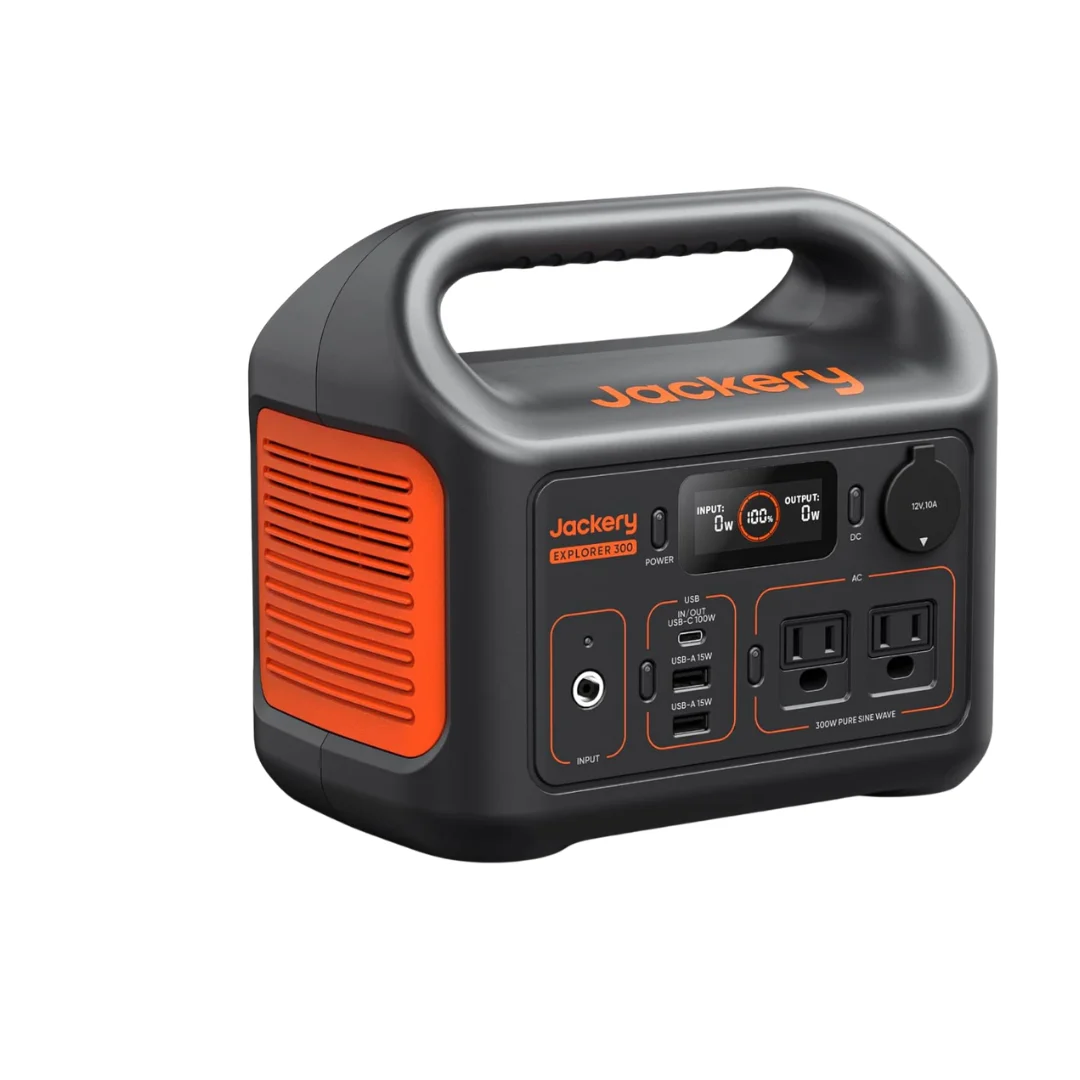
You don’t need a 50-pound generator just to keep your phone alive at a campsite. Jackery’s Explorer 300 delivers 292Wh and 300W from a 7.1-pound body. And the battery is LiFePO4, rated for more than 4,000 cycles.
Six ports cover phones, laptops, and 12V gear. AC recharge takes about four hours. One verified buyer ran a 75-inch TV plus Wi-Fi for three hours. That’s a useful gauge of what 292Wh handles.
Buy it for light camping, CPAP backup, or gift-giving when you want a compact LiFePO4 station that disappears into a duffel. Skip it if you need fridge-class power.
2. Anker Portable Power Station SOLIX C300: Best Compact
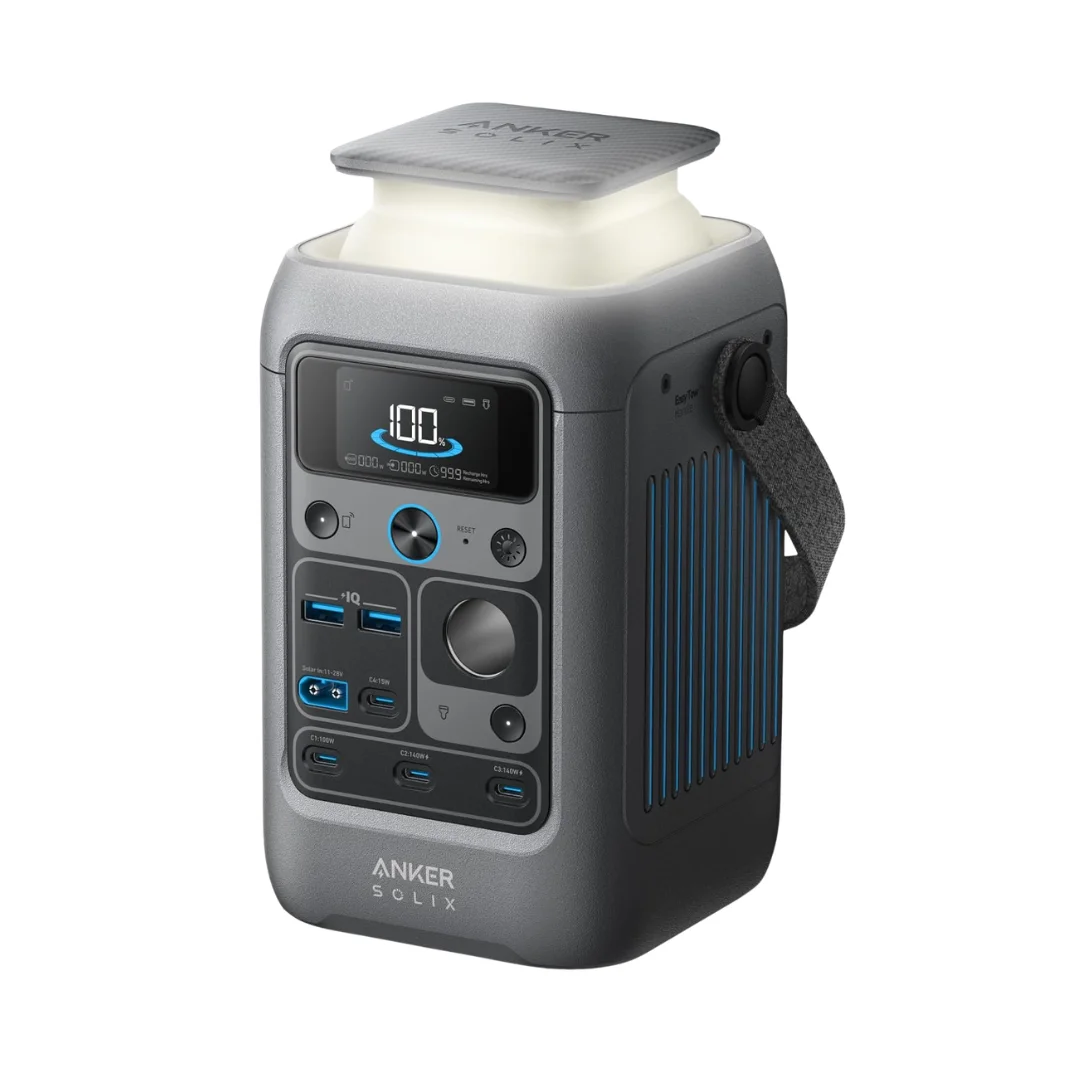
Anker’s C300 runs at 25dB. AC switchover lands under 10ms. 80% recharge? 50 minutes. So you get quiet, compact backup for a bedroom or desk. One owner caveat: the AC-outlet switchover can lag for desktop PCs, so use the USB-C ports for sensitive computer gear.
Eight ports, including three AC outlets and dual 140W USB-C. You get a 9.1-pound body with a solid handle, a 3,000-cycle LiFePO4 pack, and a 5-year warranty. The catch: no carry strap included. So this is car-camping gear, not a hiking battery.
Buy it for tents, bedrooms, and desktop workspaces where quiet, compact UPS-style power matters. Skip it if you’ll carry it far or need more than 300W continuous.
3. EF ECOFLOW Portable Power Station River 2 Max 500: Best Lightweight Pick
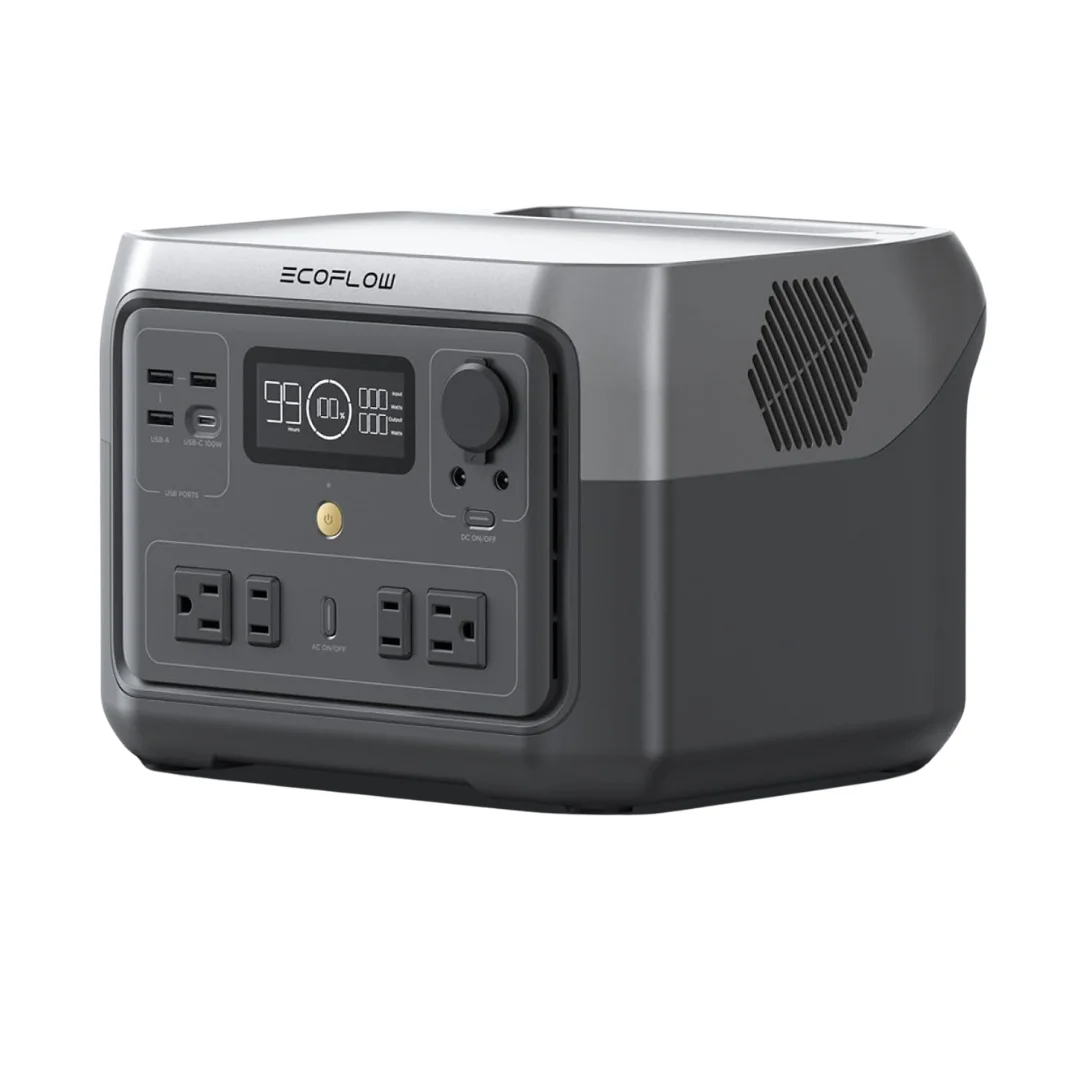
Most 500Wh stations take all afternoon to recharge. EcoFlow’s RIVER 2 Max refills its 499Wh pack in about an hour. Solar tops out at 220W. Weight lands at just 13.3 pounds.
Eleven ports run phones, laptops, a CPAP, a TV, lights, and a car fridge. You get a 13.3-pound body with an integrated handle, so carrying it is easy. Just don’t expect UPS behavior: low-draw devices can trip the auto-shutoff.
Buy it for camping, CPAP backup, or light outages when you want the best power-to-weight trade in this roundup. Skip it for voltage-sensitive gear that needs true no-break power.
4. BLUETTI AC70 Portable Power Station: Best for First-Time Buyers
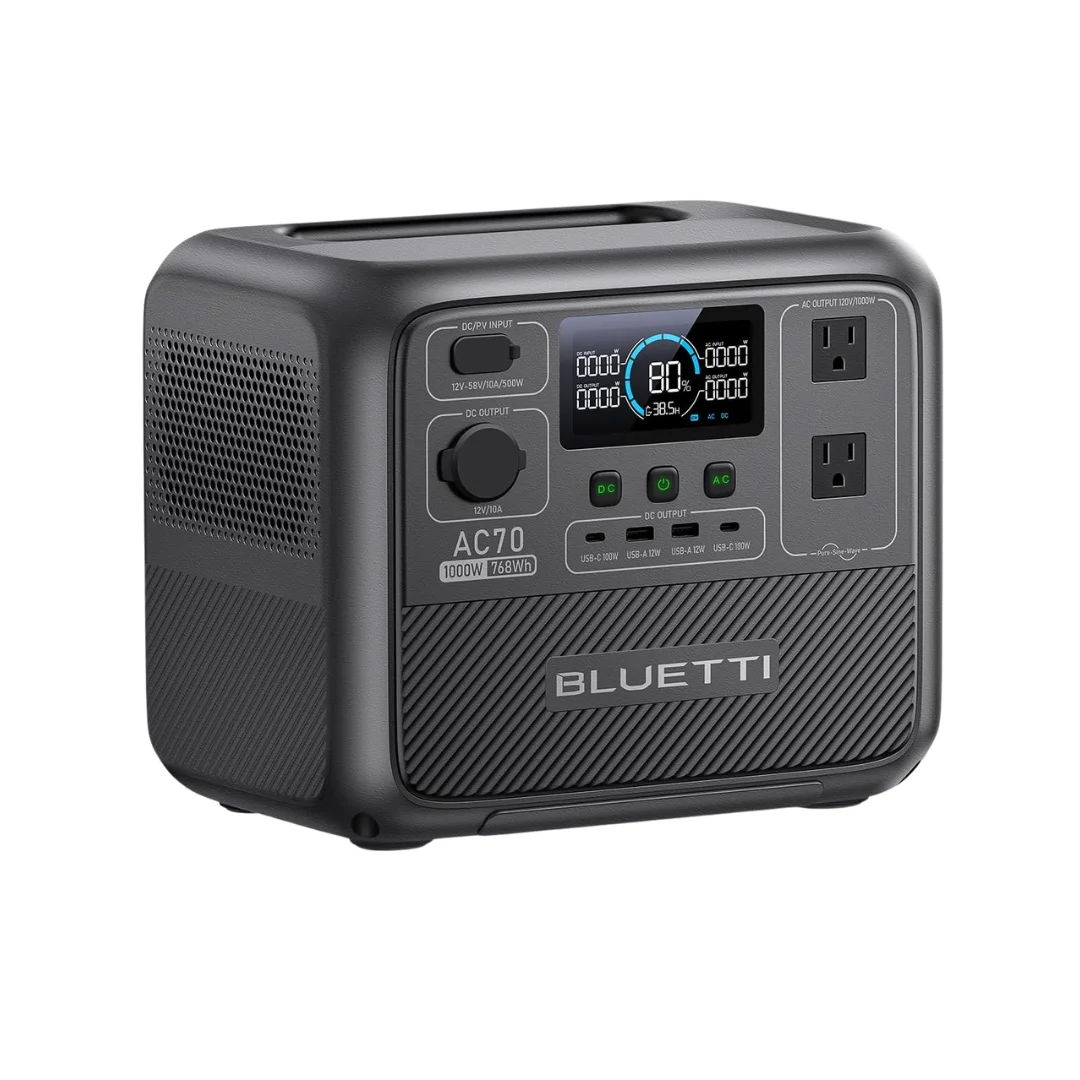
First-time buyers don’t need the biggest spec sheet. They need a station that’s easy to understand, easy to carry, and hard to outgrow. BLUETTI’s AC70 delivers 768Wh, 1000W continuous, and 2000W Power Lifting in a 22.5-pound package.
Two AC outlets, two 100W USB-C ports, USB-A, and a car port run a TV, mini-fridge, laptop, and lights. App control handles monitoring and charge modes for you. Heavier loads, like a 1,200W heater, only run in short Power Lifting bursts.
Buy it for camping, road trips, and outage prep as one do-it-all starter station. Skip it if you need 2000W for hours on end.
5. EF ECOFLOW Portable Power Station Delta 2: Best Expandable Power
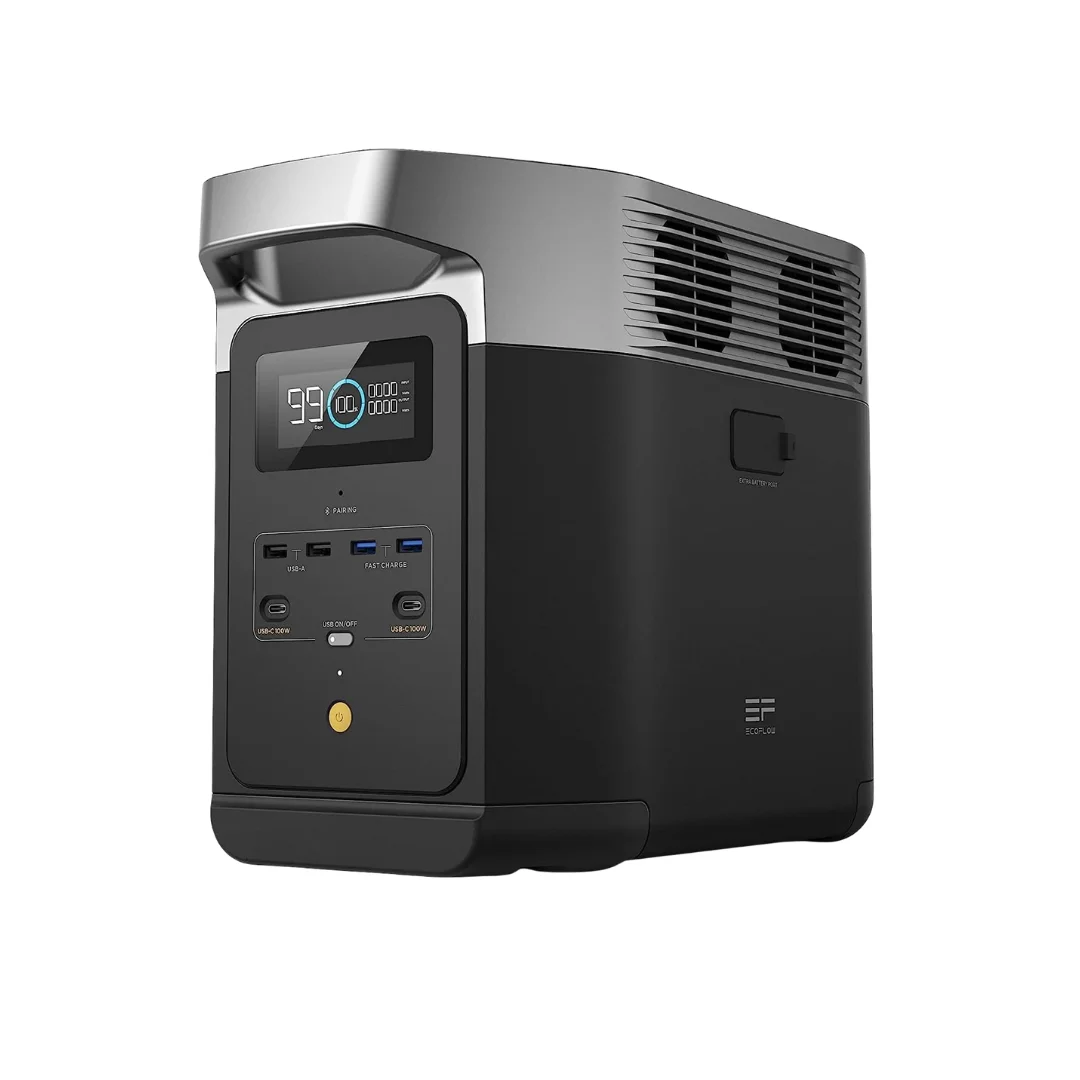
Here’s a station that grows with you. EcoFlow Delta 2 starts at 1024Wh and expands past 3kWh with add-on batteries. You get 1800W continuous, an 80-minute wall recharge, and a 5-year warranty.
Fifteen outlets cover fridges, kitchen gear, and tools that stay under its 1800W ceiling. Wall input hits 1200W, filling 0-80% in 50 minutes. Owners praise the construction and the clear display. Just know the base capacity won’t power a whole home without extra batteries.
Buy it for home backup, RVs, or off-grid setups where expandable 1800W power matters more than the lowest price. Skip it if you want the most capacity per dollar today.
6. Anker SOLIX C1000 Portable Power Station: Best Overall
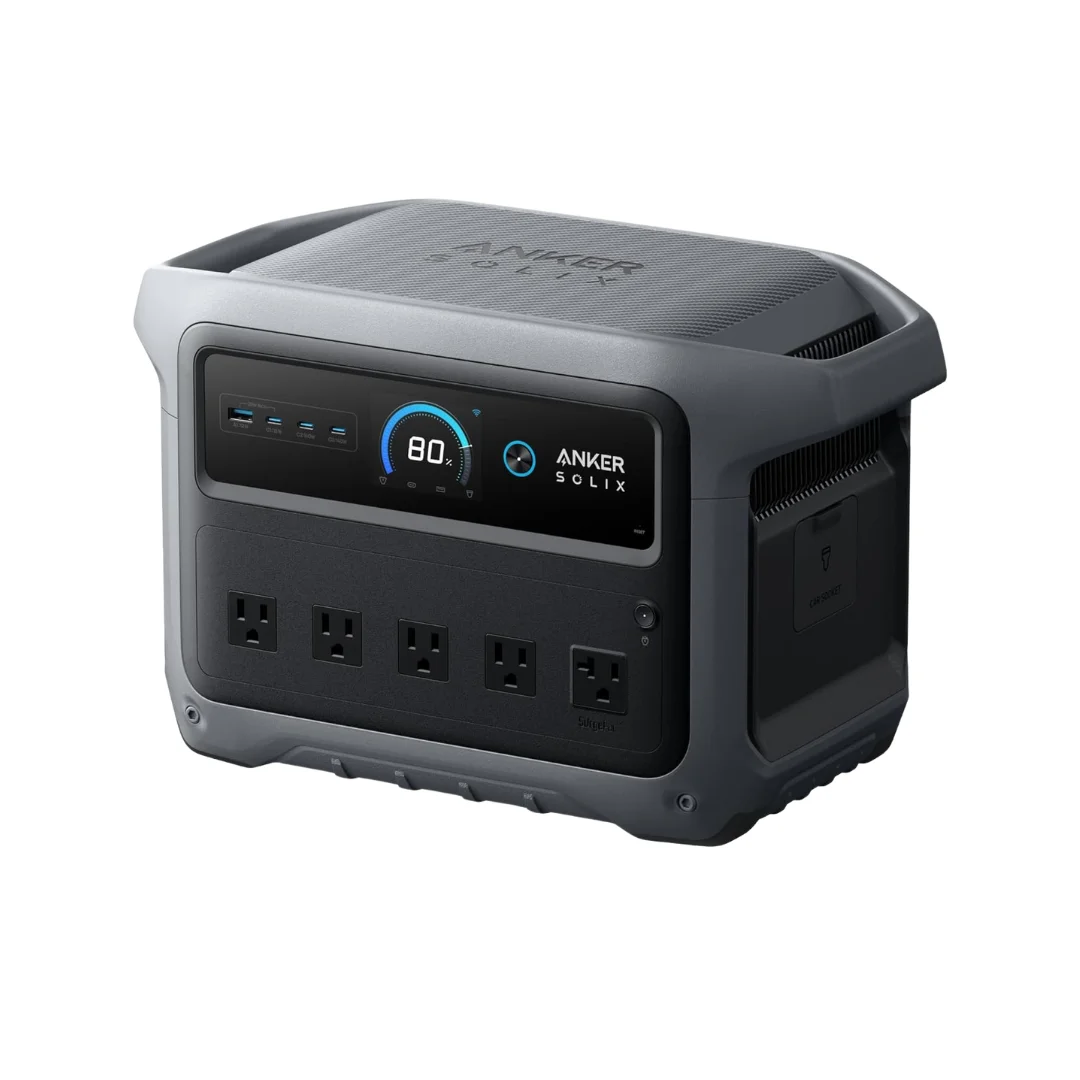
Plenty of stations make you choose between power and refill speed. Anker’s C1000 delivers 1056Wh and 1800W continuous. Recharge hits 80% in 43 minutes. Backing it up: LiFePO4 cells rated for 3,000 cycles.
Eleven ports cover fridges, microwaves, and CPAP machines within its 1800W limit. UPS switchover runs under 20ms. Owners call it sturdy but heavy. They also say solar runs slower than the 600W rating. One measured 30-40W from a 200W panel.
Buy it for camping, RVing, or home backup when you want one station that covers the most ground. Heavy and slow to solar-charge, but neither is a dealbreaker.
7. BLUETTI AC180 Portable Power Station: Best High-Wattage Surge
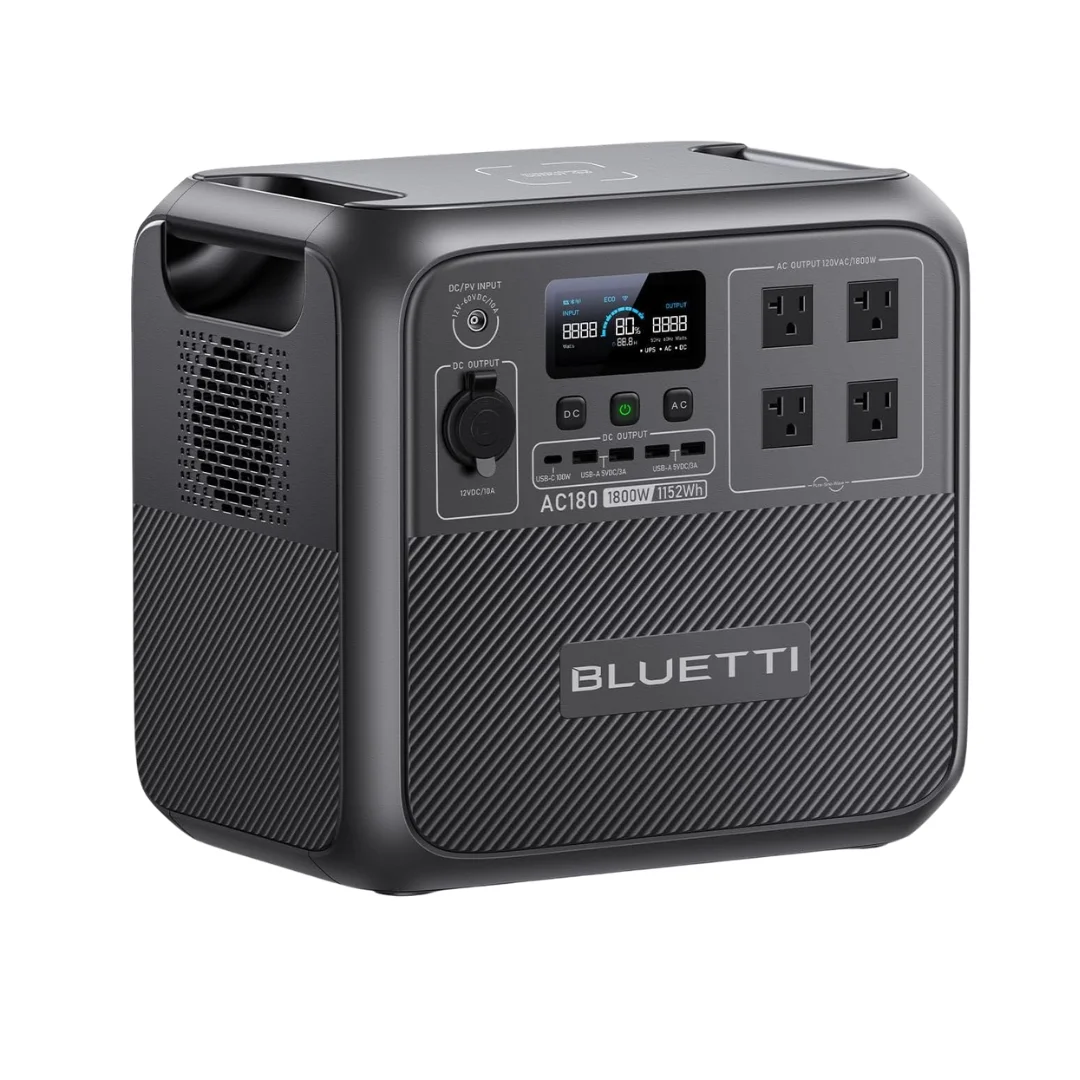
For heavier loads that need surge headroom, BLUETTI’s AC180 steps up. 2700W peak. 1152Wh of LiFePO4 storage. 45-minute recharge. 500W solar input.
Four AC outlets plus USB run CPAP machines, routers, TVs, and PCs, with 20ms UPS switchover. Owners call the 35.3-pound build solid but heavy. One pegged usable capacity near 904Wh after inverter losses. Idle draw sits around 20W. Factor both into your runtime math.
Buy it for camping, van life, or outages if you need serious surge power. Skip it if you want something light or plan to rely on the wireless charging pad.
Buying Guide: How to Choose the Best Budget Portable Power Station
Capacity and What It Can Actually Run
Capacity is measured in watt-hours, and watt-hours set expectations. A 768Wh station like the BLUETTI AC70 keeps a mini-fridge going through an outage. It’ll charge laptops for days. A 288Wh unit like the Anker SOLIX C300 handles phones, lights, and a night of CPAP. Match the Wh to the job, not to the marketing.
Continuous Watts vs Surge Watts
Continuous output is the number that matters. BLUETTI AC70 delivers 1000W continuous and 2000W Power Lifting. Yet a 1,200W heater drained it in under an hour. Surge watts help a fridge compressor kick on. They don’t run big loads forever.
Recharge Speed
Budget stations used to take all day to refill. Anker SOLIX C1000 hits 80% in 43 minutes. BLUETTI AC70 and AC180 do it in 45. EcoFlow Delta 2 takes 50. If you live with outages, this number matters as much as capacity.
Build & Durability
LiFePO4 chemistry is the new baseline, and every station in this roundup uses it. Delta 2, C1000, and River 2 Max are rated for 3,000 or more cycles. That’s a decade of weekly use. Weight is the tradeoff. The 35.3-pound BLUETTI AC180 feels like a tank. Anker’s 9.1-pound SOLIX C300 feels like a tool.
Ease of Use & Safety
Look for a clear display, a decent handle, and UPS-level AC switching if you’ll plug in sensitive gear. Anker SOLIX C300 switches in under 10ms. BLUETTI AC70 and AC180 offer app control and 20ms or faster UPS response. And read the listing carefully: the Jackery 300’s spec sheet contradicts itself on weight and peak output. Check the live page before you buy.
Value & Warranty
Dollars per watt-hour is the number that separates a deal from a trap. In this class, the best value sits in the middle, not at the bottom. Measured that way, the BLUETTI AC180 and Anker SOLIX C1000 stretch each dollar furthest. They’re the most watt-hours per dollar in this lineup. That’s exactly why the C1000 takes Best Overall. The Jackery Explorer 300 and Anker C300 cost the most per watt-hour. You’re paying for pocket-sized portability, not raw capacity. Warranty matters too. EcoFlow and Anker back the Delta 2, River 2 Max, and C300 with 5-year coverage.
Jackery vs EcoFlow vs Anker vs Bluetti: Which Budget Brand Wins?
At the entry end, brand strengths split cleanly. The Jackery Explorer 300 is the lightest and simplest. Best if portability beats everything, though it costs the most per watt-hour. EcoFlow’s River 2 Max 500 wins power-to-weight and the fastest wall refill (about an hour). That makes it the sharpest camping value. Anker’s SOLIX C300 is the quiet, compact pick with the best warranty-and-app package. BLUETTI’s AC70 hands you the most capacity and continuous watts per dollar of the entry group, so it’s the do-it-all starter. Step up to the C1000 or AC180 only when you need 1,000Wh-plus and 1800W.
What to Avoid When Buying a Portable Power Station
Buyers get burned in five predictable ways. Here’s how to dodge them.
Peak-Watt Inflation
The box screams 2400W. The spec sheet says 1800W continuous. Most appliances only care about the second number. Surge helps a fridge kick on, but it won’t run a space heater.
Sticker Watt-Hours vs Real Usable Capacity
BLUETTI AC180’s 1152Wh pack delivers roughly 904Wh of usable energy once the inverter does its work. Add idle draw of about 20W, and your runtime math shrinks fast. Never plan a weekend around the sticker.
The Solar Charging Fantasy
A 600W solar rating doesn’t mean a 200W panel charges at 200W. One Anker SOLIX C1000 reviewer measured 30-40W from a 200W panel. EcoFlow River 2 Max’s ideal 2.3-hour solar fill stretched past 5 hours with a 100W panel. Panel angle, sun, and cable length all cut into it. Treat solar as a bonus, not a promise. Our guide to the best portable solar panels for camping explains how to size one properly.
Expecting Whole-Home or Rooftop AC Output
No budget-tier portable station runs a rooftop A/C or a whole house. That’s a 2000W-plus job. If that’s your actual plan, our roundup of the best 2000W solar generators is the step up you need.
Ignoring Battery Chemistry
Older budget stations used NMC lithium-ion and faded after a few hundred cycles. LiFePO4 lasts 3,000-plus, and the Jackery 300 is rated for over 4,000 cycles to 70% capacity. Chemistry is not a footnote; it’s the difference between a tool and a toy.
Why Trust This Guide
Verdvoy covers portable solar and off-grid power gear exclusively. This roundup is the budget tier of that obsession, built for first-time buyers who want value without the spin.
We compared manufacturer specs. We calculated dollar-per-watt-hour value. We combed verified-purchase owner feedback across Jackery, EcoFlow, Anker, and Bluetti. Where the numbers conflicted, we flagged the conflict instead of smoothing it over.
No hands-on lab testing happened here. We won’t pretend otherwise. What you get is an honest map of the budget tier: what each unit does well, where it cuts corners, and who should choose it.
Frequently Asked Questions
Q: What can a budget portable power station under $500 actually run?
A: Small electronics for a long time and big appliances for a short time. A 288-499Wh unit like the Anker C300 or EcoFlow River 2 Max keeps phones, laptops, lights, and a CPAP going overnight. A 768-1152Wh unit like the BLUETTI AC70 or AC180 adds a mini-fridge, TV, or router for hours. Estimate runtime as usable watt-hours divided by your load’s watts.
Q: Can a budget portable power station run a CPAP overnight?
A: Yes. A CPAP without heated humidity draws roughly 30-60W, so a 499Wh EcoFlow River 2 Max or a 768Wh BLUETTI AC70 covers a full night with margin, and even the 292Wh Jackery Explorer 300 handles a lighter setup. Our portable power stations for CPAP guide goes deeper.
Q: Which of these picks is best for camping?
A: For light, carry-anywhere camping, the 7.1-pound Jackery Explorer 300 wins. If you want more capacity without much extra weight, the 13.3-pound EcoFlow River 2 Max 500 gives the best power-to-weight in the roundup.
Q: Can any of these run a mini-fridge during an outage?
A: Yes. A typical mini-fridge cycles around 50-100W, so the 768Wh BLUETTI AC70, 1024Wh EcoFlow Delta 2, 1056Wh Anker C1000, and 1152Wh BLUETTI AC180 can keep one cold for many hours. Remember that usable capacity runs below the sticker number once inverter losses are counted.
Q: Which budget portable power station is the best value?
A: On watt-hours per dollar, the BLUETTI AC180 and Anker SOLIX C1000 lead this lineup, which is why the C1000 is our Best Overall. The Jackery 300 and Anker C300 cost more per watt-hour because you’re paying for portability.
Final Thoughts on the Best Budget Portable Power Station
The best budget portable power station is the one that matches your real loads, not the biggest number on the box. For value, the Anker SOLIX C1000 does the most per dollar and takes our Best Overall. Weekend campers who want light and simple should grab the 7.1-pound Jackery Explorer 300 or the fast-charging EcoFlow River 2 Max 500. First-time buyers get a do-it-all starter in the BLUETTI AC70, while the EcoFlow Delta 2 and BLUETTI AC180 add expandable capacity and surge headroom when you need more. Whichever you choose, keep it under $500, check the live listing before you buy, and match the watt-hours to the job.