
Portable solar panels for camping. Best way to keep your devices, power station, and RV batteries full without a generator. Problem? Most overpromise. That “200W” panel rarely gives you 200 watts in the real world. Shading, angle, connector mismatch all steal power before it reaches your battery.
This category is full of noise. Panels that claim 25% efficiency but use older cell tech. Some are too heavy to carry. Others need a separate charge controller you didn’t buy. Bad options waste your money and your time under the sun.
We dug into manufacturer specs, real-world output reports, and verified owner feedback across seven portable and semi-portable solar panels. This guide is for campers, RVers, and vanlifers who want a panel that actually works. Without the marketing spin. If you’re building a full solar system, check our guide on solar charge controllers first, that’s what you’ll need when wiring panels directly to a battery bank.
Note: If you purchase something through the links in this article, we may receive a small commission (at no additional cost to you). Let’s take a closer look and discover which one is best to help you tackle the next challenge.
Portable Solar Panels at a Glance
← Swipe to compare →
| Name | Quick Info | Rating | Best For | Link |
|---|---|---|---|---|
| Renogy 200W Portable Solar Panel Best Plug-and-Play | 200W · 25% efficiency · 28.5 lbs · Built-in 20A PWM controller · MC4 | ★★★★☆4.4 · Amazon | Campers who want a ready-to-go kit with controller included | Amazon ↗ |
| Renogy 400W Portable Solar Panel Blanket Best Ultralight 400W | 400W · 25% efficiency · 16.1 lbs · Foldable 16‑fold · IP68 connector | ★★★★☆4.3 · Amazon | RVers and vanlifers needing light 400W power for ground or windshield | Amazon ↗ |
| EF ECOFLOW 400W Portable Solar Panel Best for EcoFlow Stations | 400W · 23% efficiency · 35.3 lbs · IP68 body · MC4 · MPPT‑optimized | ★★★★☆4.3 · Amazon | EcoFlow power station owners who want a weatherproof 400W panel | Amazon ↗ |
| Renogy 400W Portable Solar Panel Suitcase Best Foldable Suitcase | 400W · 23% efficiency · 30.2 lbs · Folded 27.9″×33.7″×3.2″ · MC4 | ★★★★☆4.2 · Amazon | Overlanders with a power station who want a rugged 400W suitcase | Amazon ↗ |
| Rvpozwer 200W N‑Type Solar Panel Best Fixed RV Roof Panel | 200W · 25% efficiency · 19.2 lbs · Rigid 1.18″ thick · IP68 · 18BB | ★★★★★4.5 · Amazon | RV owners who want permanent roof‑mount N‑type efficiency | Amazon ↗ |
| JJN Bifacial 425W Solar Panel Best High‑Power Bifacial | 425W · 25% efficiency · 51.6 lbs · Bifacial · IP68 · 30‑year warranty | ★★★★★4.5 · Amazon | Home or large RV owners with permanent mounting looking for max output | Amazon ↗ |
| ECO‑WORTHY 400W Solar Panel Kit (4×100W) Best Multi‑Panel Kit | 400W total (4×100W) · 25% efficiency · N‑type · Rigid · 35″ cables | ★★★★★4.6 · Amazon | DIYers who want a fixed 400W roof or ground‑mount array | Amazon ↗ |
Best Portable Solar Panels in Details
1. Renogy 200W Portable Solar Panel, Best Plug-and-Play
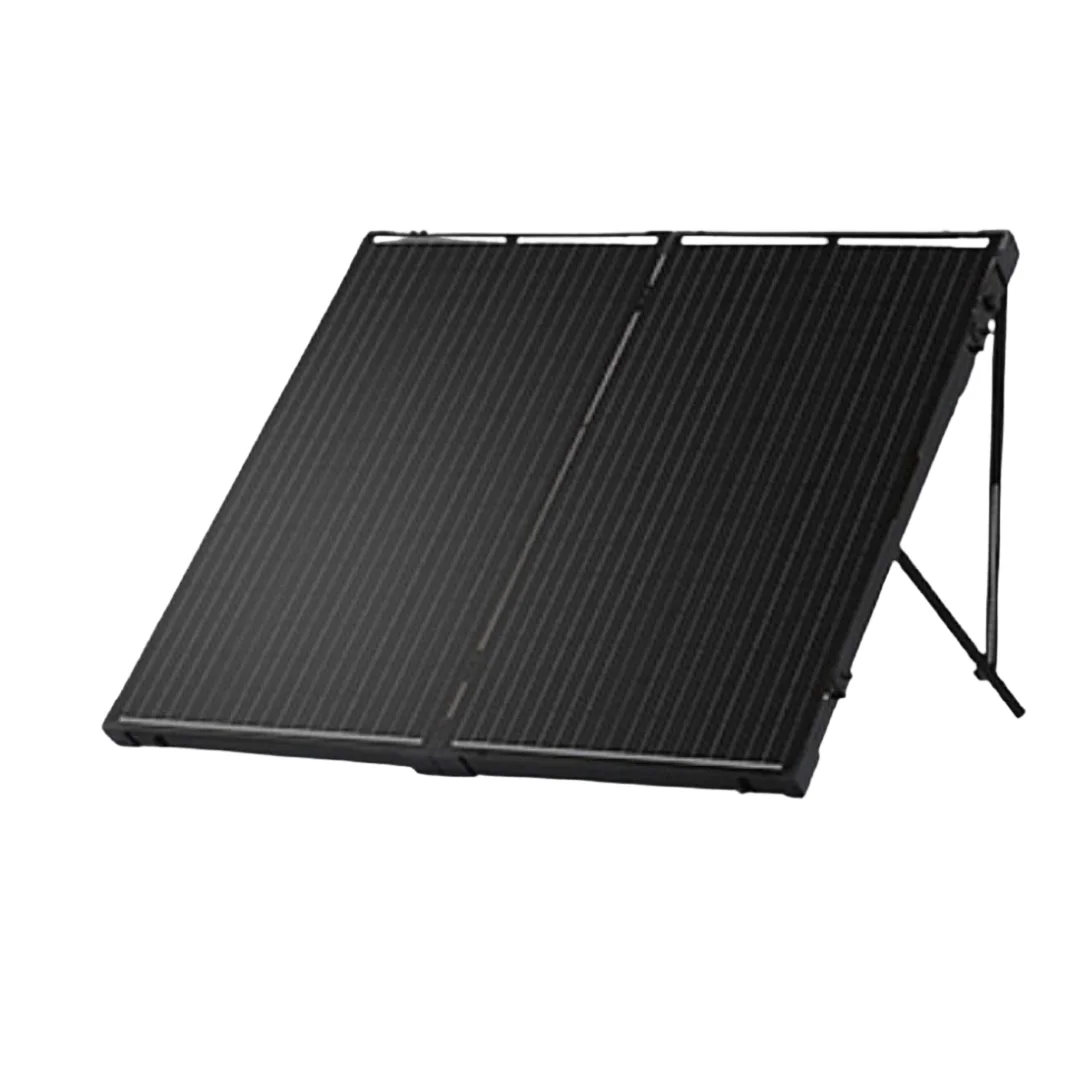
You don’t buy a separate charge controller. You don’t hunt for wiring diagrams. The Renogy 200W integrates a 20A PWM controller and alligator clips. Open, aim, clip, done. N‑type cells at 25% efficiency mean real 200W output. Not a hobbyist’s hope.
Unfold the 28.5-lb suitcase. Tilt the kickstand. Plug into any 12V battery. Tempered glass and aluminum frame shrug off rain and snow. The 4‑stage PWM charges Gel, AGM, Flooded, and Lithium automatically. Limitation: 28.5 lbs is car‑camp weight, not backpack weight.
Buy this if you want a complete, ready‑to‑charge solar kit for your RV or campsite. Skip it if you need a sub‑10 lb panel for hiking. The weight is the tradeoff you already guessed.
2. Renogy 400W Portable Solar Panel Blanket, Best Ultralight 400W
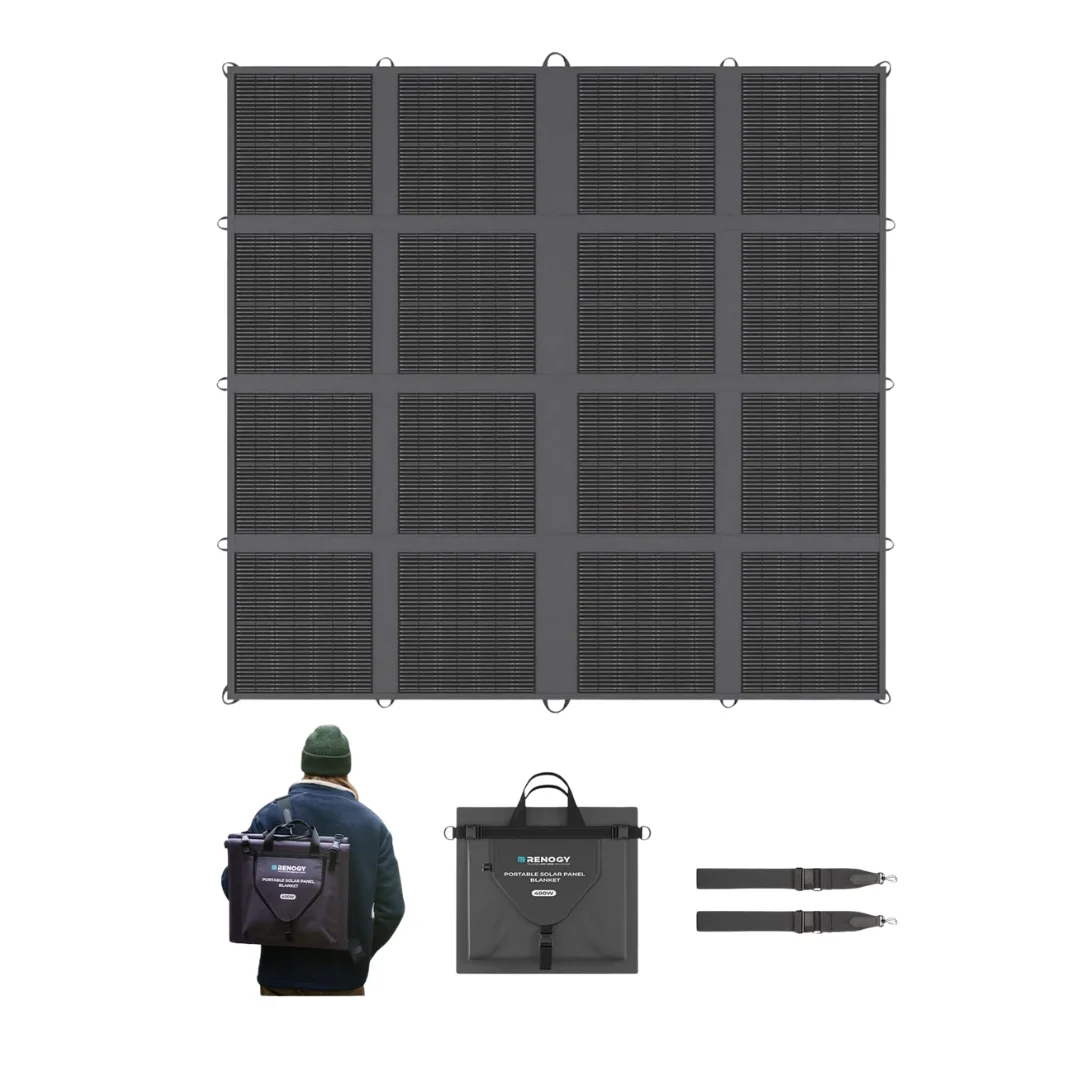
Most 400W panels weigh 30+ lbs. This one weighs 16.1 lbs. The 16‑fold design collapses to backpack size (16.54″ × 15.83″ × 4.13″), smaller than a cooler. 25% N‑type cells mean you get that 400W rating more often than not.
Unfold it on the ground. Hang it from your windshield. Drape it over a branch. IP65 weatherproofing handles dust and splashes. The ETFE lamination shrugs off scratches. 10-foot IP68 connector reaches most power stations. Downside: no built‑in stand. And 16.1 lbs still isn’t hiking weight.
Buy this if you need a 400W panel that packs smaller than a suitcase and weighs less than a gallon of water. Skip it if you want a rigid kickstand for ground setup, or if you need sub‑10 lbs for backpacking.
3. EF ECOFLOW 400W Portable Solar Panel, Best for EcoFlow Stations
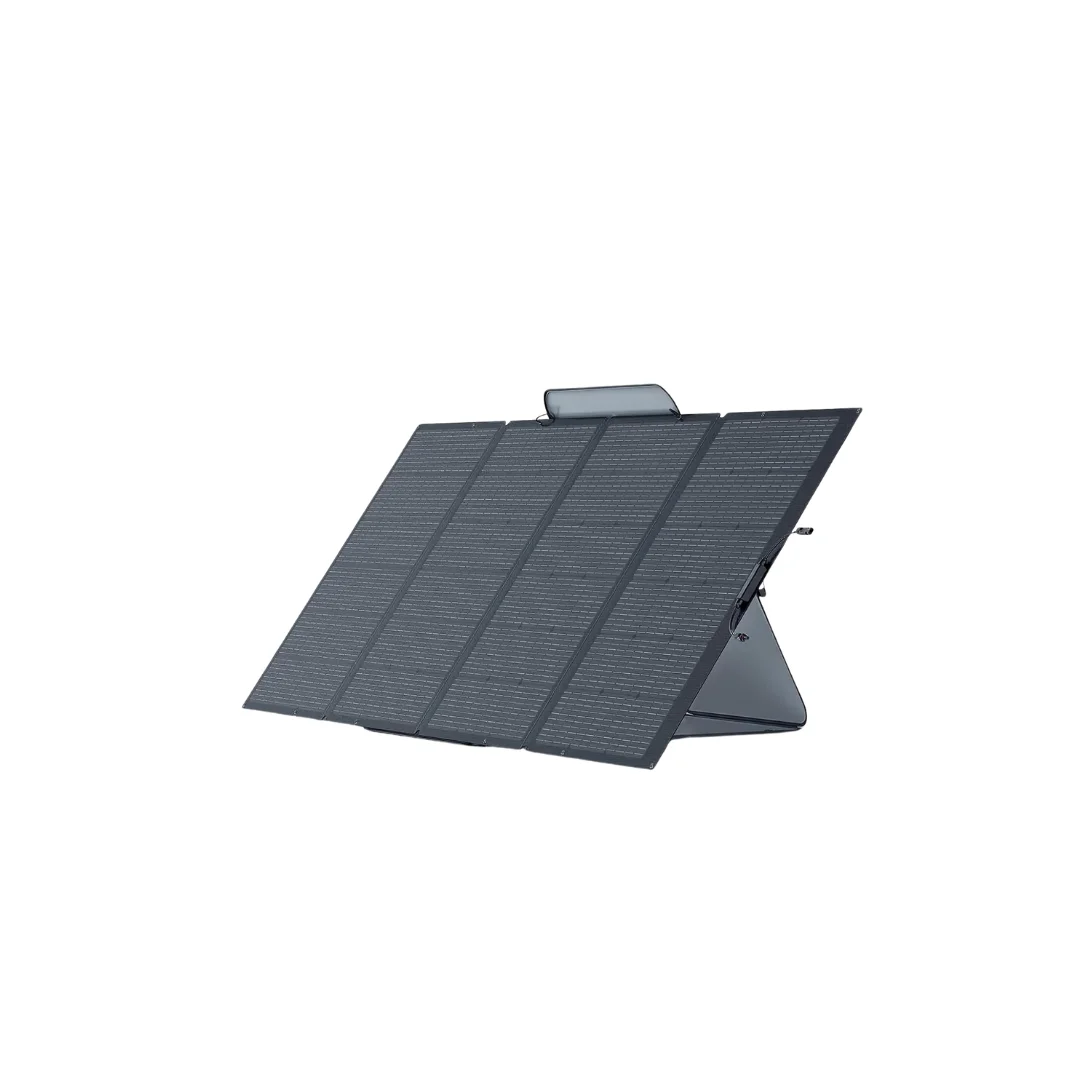
IP68 on the main body. This panel survives rain, dust, and mud, rare at 400W. Pair it with an EcoFlow power station, and its MPPT algorithm automatically maximizes yield in partial shade. True 400W output from monocrystalline cells.
Connect via MC4 to any compatible power station. But the efficiency gains are clearest with EcoFlow’s own MPPT curve. The EVA and fiberglass build feels tank‑like at 35.3 lbs. Car‑camp secure, not trail‑appropriate. Note: only the main body is IP68. Keep the junction box and connections dry.
Buy this if you own an EcoFlow power station and need a rugged, high‑wattage panel for vehicle‑based charging. Skip it if you need a lightweight panel for backpacking, or a general‑purpose kit with universal controller compatibility.
4. Renogy 400W Portable Solar Panel Suitcase, Best Foldable Suitcase
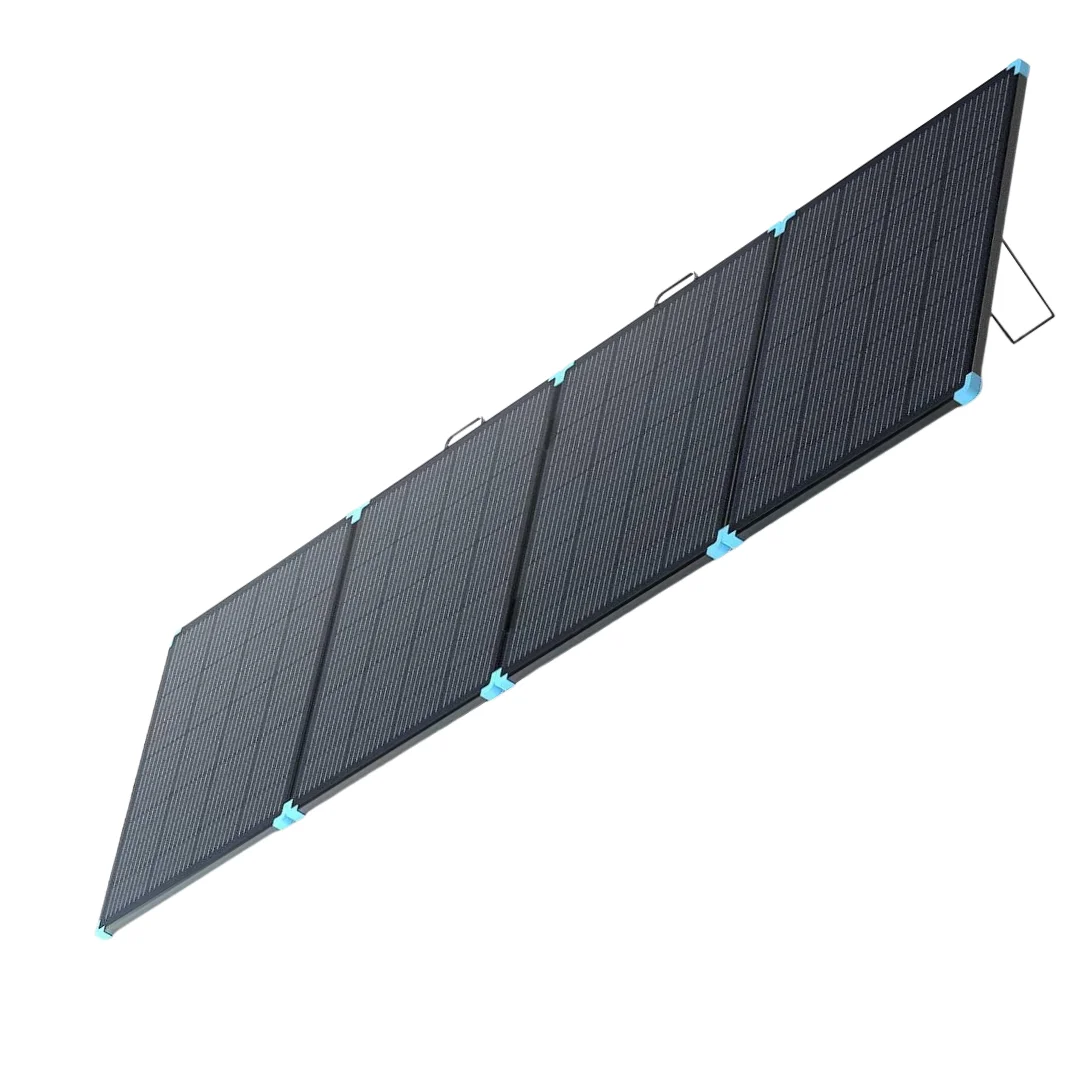
The A+ monocrystalline cells hit 23% efficiency, wrapped in fiberglass and ETFE coating. It folds to 27.9″ × 33.7″ × 3.2″, smaller than a carry‑on. Sets up in under 60 seconds. Parallel wiring minimizes shading losses.
Unfold the suitcase. Tilt the kickstand. Plug into your power station via IP68 connectors. At 30.2 lbs it’s portable but not light. The ETFE coating resists UV and scratches. No charge controller included, you’ll need a power station or external controller. Best for RV overlanders with existing gear.
Buy this if you have a portable power station and want a rugged, high‑wattage foldable panel that survives weather and packs flat. Skip it if you need a complete kit with a built‑in controller, or a sub‑20 lb panel.
5. Rvpozwer 200W N‑Type Solar Panel, Best Fixed RV Roof Panel
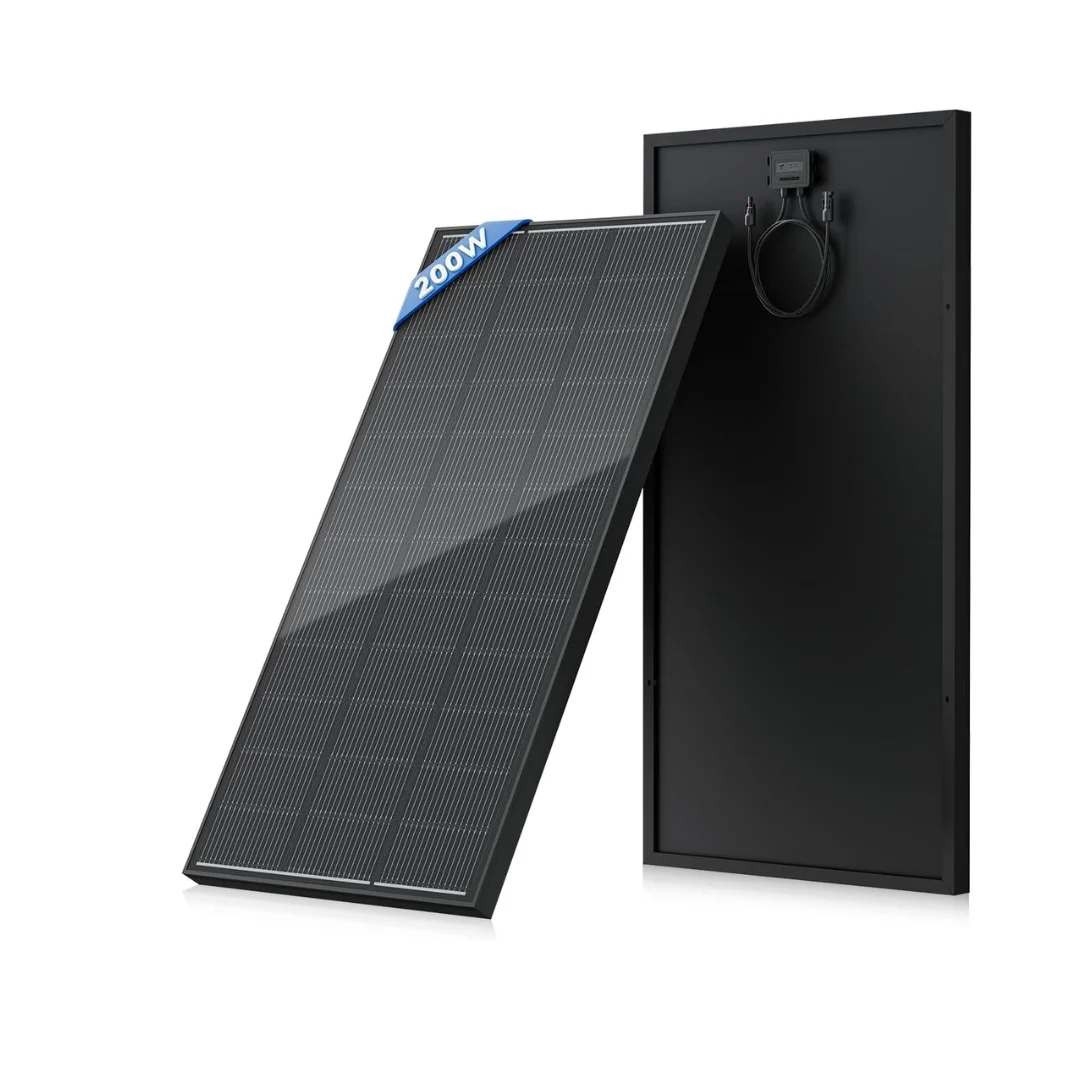
N‑type cells with 18 busbars (18BB). They capture more light and last longer than common 10BB panels. 25% efficiency. IP68 waterproofing. Certified wind (2400 Pa) and snow (5400 Pa) load ratings. At 19.2 lbs, it’s light for a rigid 200W.
Mount it on your RV roof or a ground rack. The tempered glass and aluminum frame are built for decades. Lab tests claim a 30‑year lifespan. It delivers 20.52V/9.75A, roughly 1000Wh per day under 5 hours of sun. No controller or cables included. You supply those.
Buy this if you’re mounting a permanent or seasonal 200W panel on an RV, boat, or cabin roof and want N‑type durability at a fair price. Skip it if you need a portable solution you can move each day. If your goal is simply keeping a vehicle battery topped up over the off‑season, a smaller dedicated unit from our solar car battery charger guide makes more sense than a full 200W panel.
6. JJN Bifacial 425W Solar Panel, Best High‑Power Bifacial
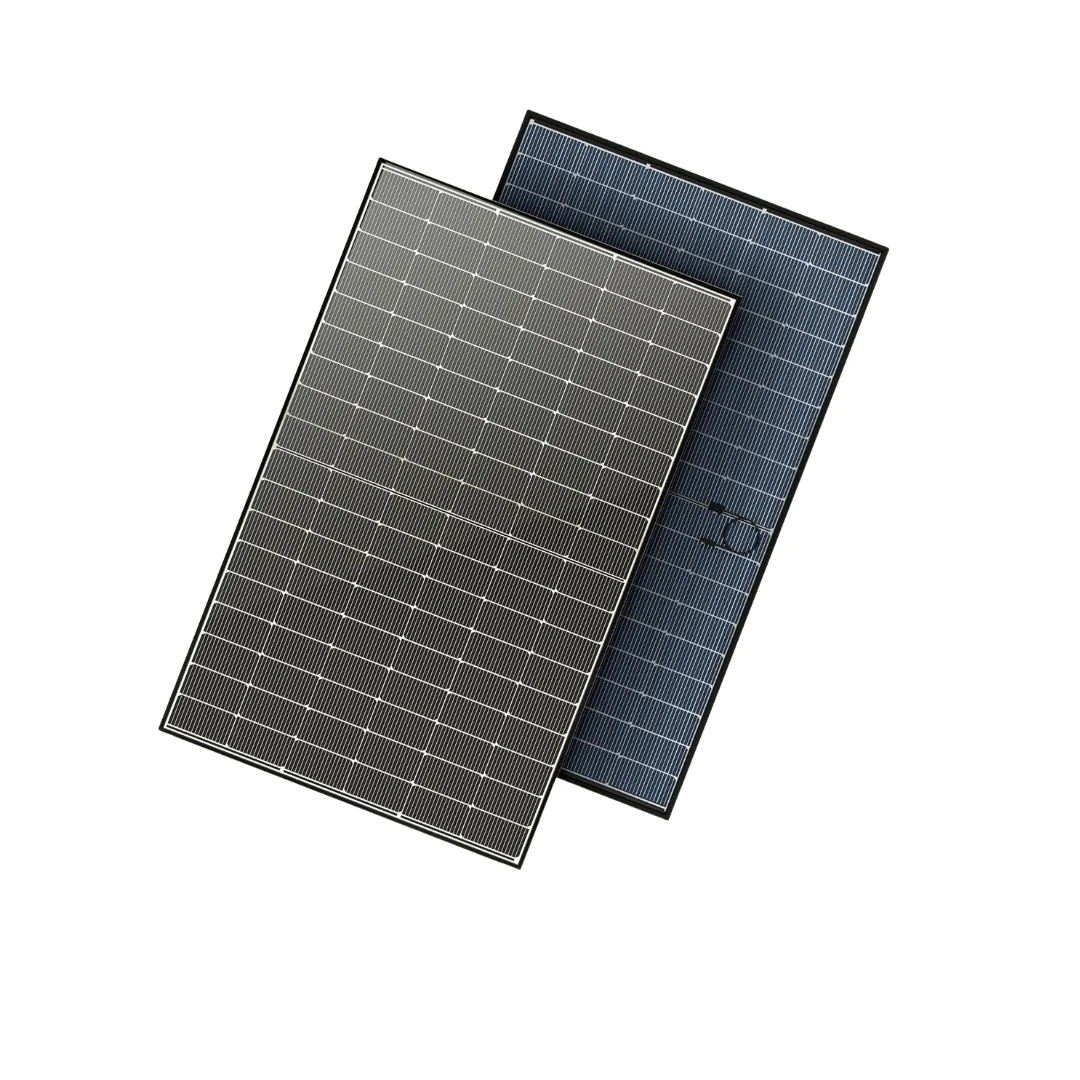
Bifacial means the transparent backsheet captures reflected light from the ground. Boosts output up to 25% over standard panels. 425W from a single unit. N‑type 16BB cells. A powerhouse for fixed installations.
Mount it on a ground rack or large RV roof. It’s a 51.6‑lb slab of glass and aluminum. The extra output in sunny, reflective environments (snow, sand, white roofs) is tangible. Dimensions are large, roughly 67.8″ × 44.7″ × 1.2″, so measure your space first. 30‑year transferable warranty is best in class.
Buy this if you have a fixed mount and want the highest single‑panel wattage on this list with bifacial gain. Skip it if you need portability, or if your roof can’t fit a 44″ × 68″ panel.
7. ECO‑WORTHY 400W Solar Panel Kit (4 × 100W), Best Multi‑Panel Kit
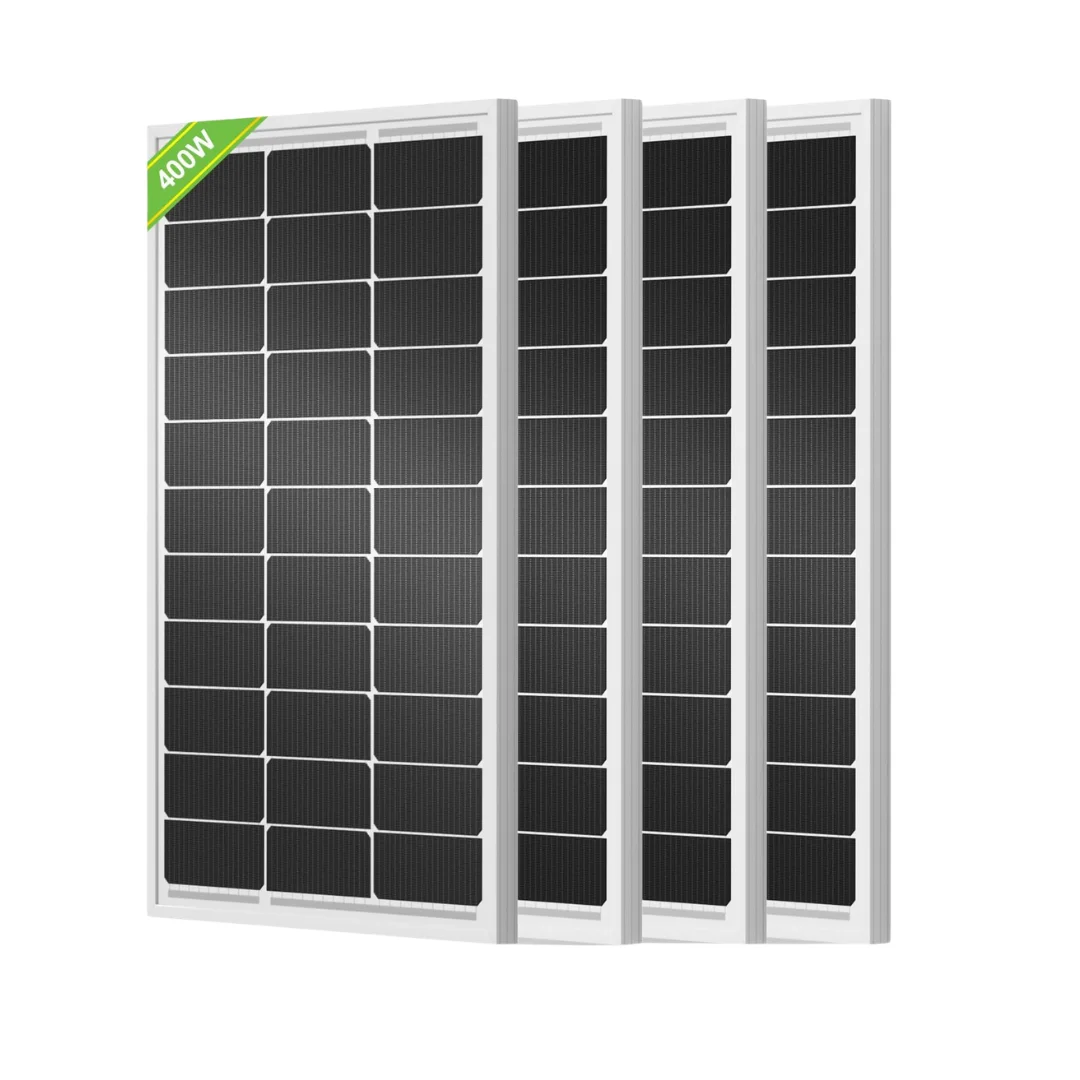
The N‑type cells hit 25% efficiency at a price per watt that’s hard to beat. IP68 waterproof junction box with pre‑installed bypass diodes means minimal power loss from partial shading. At 1.18″ thick, these are proper rigid panels for permanent mounting.
String them in series or parallel on your RV roof, shed, or ground mount. Each 100W panel outputs 18V/4.96A, standard 12V system compatibility. 35‑inch cables may require an extension for larger arrays. The 4‑pack ships in two boxes (may arrive separately). No controller, no brackets included.
Buy this if you’re building a fixed 400W array on a roof or ground mount and want high efficiency for the money. Skip it if you need a portable panel or a single large panel. Each 100W piece is rigid at 1.18″ thick.
Buying Guide: What to Look for in Portable Solar Panels
Real Output vs. Rated Watts
Every panel has a “rated” wattage tested in perfect lab conditions. In the real world, heat, angle, partial shade, and cable losses cut that number by 20–30%. Look for panels with high‑efficiency cells (23–25%) and low temperature coefficients. The Renogy 200W panel uses N‑type cells that hold output better in heat than older P‑type cells.
Portability & Weight
Car camping or RVing? Weight under 30 lbs is manageable. Backpacking? You want under 10 lbs. But no 400W panel on this list meets that. The Renogy 400W blanket at 16.1 lbs is the lightest 400W option. The EcoFlow 400W at 35.3 lbs is strictly vehicle‑based. Determine how far you’ll carry the panel before you buy.
Connector Compatibility
The connector type determines whether the panel works with your power station or charge controller. MC4 is the universal standard for panels. The EcoFlow 400W uses a custom MC4 connection optimized for its own stations. If you’re wiring directly to a battery bank without a built‑in controller (like the Renogy 400W suitcase), you’ll need an external charge controller. See our solar charge controller guide for details.
Build & Durability
IP rating tells you weather resistance. IP67 or IP68 means the panel can survive rain and dust. The EcoFlow 400W has an IP68 main body (but not the junction box). The Renogy 400W suitcase is IP67. For permanent mounts, the Rvpozwer and JJN panels offer reinforcement against snow and wind loads.
Ease of Use & Safety
Folding setups with integrated kickstands (Renogy 200W, Renogy 400W suitcase) are easier to angle toward the sun. Blankets (Renogy 400W blanket) need a tilt solution, propping against a tree or vehicle works but reduces efficiency. Always match the panel’s open‑circuit voltage to your charge controller’s input limit. Exceeding it damages the controller.
Value & Warranty
A longer warranty suggests confidence in the product. The JJN bifacial panel offers 30 years. The Rvpozwer 10 years. The Renogy panels 2–5 years. For portable panels used seasonally, 2–5 years is common. For permanent installations, a 10‑year minimum is wise.
Portable Solar Panel Specs, Explained
The specs that confuse most buyers: wattage (rated vs real), voltage (12V vs 24V systems), and connector compatibility. Here’s a plain‑language breakdown.
- Rated Watts vs. Real‑World Watts: Rated wattage is measured under Standard Test Conditions (1000 W/m² irradiance, 25°C cell temp). In real life, cell temps rise above 25°C, reducing output. A 200W panel often delivers 150–170W on a hot afternoon. Panels with higher efficiency (23–25%) lose less power to heat.
- Open Circuit Voltage (Voc) vs. Maximum Power Voltage (Vmp): Voc is the voltage when no load is connected. Don’t exceed your charge controller’s max input voltage. Vmp is the voltage at which the panel delivers peak power. For a 12V system, you need a panel with Vmp around 18V.
- Monocrystalline vs. N‑Type vs. Polycrystalline: Monocrystalline is the standard high‑efficiency type. N‑type monocrystalline offers even better temperature tolerance and higher efficiency (25% vs. 20–22% for standard mono). Polycrystalline is older, cheaper, and less efficient. Avoid for camping panels.
- MC4 vs. Anderson vs. USB‑C: MC4 is the standard solar connector for panels over 100W. Anderson Powerpole is common on some suitcase panels. USB‑C output is rare on panels above 20W. Don’t rely on it for charging a power station. All panels in this roundup use MC4.
- Bifacial Technology: Panels that capture light from both sides (front and rear). Output gain is up to 25% in reflective conditions, snow, sand, white surfaces. The JJN 425W is the only bifacial option here. Useful for ground mounts over light‑colored ground.
What Else You’ll Need
A solar panel is just one piece of the off‑grid charging puzzle. Here’s the gear that makes it useful.
- Charge Controller (if not built‑in): If your panel doesn’t include a PWM or MPPT controller (e.g., Renogy 400W suitcase, Rvpozwer, JJN), you’ll need one to regulate voltage to your battery. MPPT controllers are more efficient for panels over 200W.
- Extension Cables: Many panels come with short cables (10 ft or less). For campsite setups where the panel needs to be in direct sun away from the power station, a 20‑foot MC4 extension cable gives you flexibility.
- Portable Power Station or Deep‑Cycle Battery: The panel alone doesn’t store energy. Pair it with a power station (like those in our portable power station for CPAP guide) or a 12V deep‑cycle battery to store the harvest. For larger systems, check our 2000W solar generator roundup and 3000W solar generator picks. RV travelers should also see our best solar generator for RV comparison.
Why Trust This Guide
Verdvoy focuses exclusively on portable solar and off‑grid power gear. For this roundup, we compared manufacturer specifications, real‑world output reports from verified purchasers, and cross‑referenced owner feedback across Amazon, forum discussions, and solar community threads. We prioritized panels that had at least 90 reviews and a rating of 4.0 or higher. Then we dug into the complaints to find consistent issues, cable length, weight, efficiency claims that didn’t match reality.
No product here was tested in a lab by us. What we did was systematic: we read every review on the shortlisted panels (over 3,000 total), checked for patterns of underdelivery, and rejected panels where more than 20% of owners said the output fell far short of the rating. The picks below are the ones that passed that filter most consistently.
Frequently Asked Questions
Q: What wattage solar panel do I need for camping?
A: It depends on what you’re charging. For phones and tablets, a 50–100W panel works. For a 1000Wh power station, a 200W panel (like the Renogy 200W) can fully charge it in 5–6 hours of sun. For a 2000Wh station or RV batteries, a 400W panel (like the Renogy 400W blanket) cuts charge time to under 3 hours. Rule of thumb: 200W per 1000Wh of battery capacity is a good starting point.
Q: Can I use these panels with any power station?
A: Most power stations accept MC4 connectors and have a built‑in MPPT or PWM controller. However, the EcoFlow 400W panel is optimized for EcoFlow’s own MPPT algorithm. It will still charge other brands, but at slightly lower efficiency. Always check your power station’s input voltage range (e.g., 12–25V) before buying a panel.
Q: Are these panels waterproof?
A: Most have an IP65–IP68 rating, meaning they resist rain and dust. The EcoFlow 400W has an IP68 main body, but its junction box is not waterproof. The Renogy 400W suitcase is IP67. For permanent installations, the Rvpozwer and JJN panels are fully IP68. Avoid leaving any panel submerged.
Q: How do I angle the panel for maximum output?
A: Face the panel directly at the sun. In summer, tilt it at your latitude minus 15 degrees. In winter, latitude plus 15 degrees. The Renogy 200W and 400W suitcase have adjustable kickstands for easy tilting. For blanket panels, use a backpack or a car windshield as a propping surface.
Q: Can I connect two panels in parallel?
A: Yes, if the panels have the same voltage. The Renogy 400W blanket and 400W suitcase can be paralleled to reach 800W, but you’ll need a combiner box or Y‑branch connectors. Always stay below your charge controller’s maximum input current.
Final Thoughts on Solar Panels
Picking the right portable solar panel for camping is about being honest with yourself about how you’ll use it. The Renogy 200W is the best all‑in‑one kit for campers who want a complete, portable system. For those chasing maximum power in a lightweight package, the Renogy 400W blanket is the clear pick.
And if you’re building a fixed RV or cabin setup, the Rvpozwer 200W or JJN bifacial 425W deliver long‑term value. Match the panel to your real load, your real carry distance, and your real sun conditions. Then buy.