You’re standing in the dark. The power’s been out for six hours, and the fridge is warming up. A 5000W solar generator is the thing you wish you’d bought last month.
Here’s the catch: “5000W” is ambiguous. It can mean 5000Wh of battery capacity, or 5000 watts of continuous AC output. The two are not the same, and confusing them is how people end up with a generator that can’t start their well pump. This article covers both framings, because the right generator for your home backup is probably not the right one for your RV.
We tested seven units. Each one evaluated on usable capacity, continuous and surge watts, solar input speed, battery chemistry, expandability, weight, and warranty. If you need to run a 240V appliance or keep your CPAP going through the night, one of these will fit your life.
Read our best solar powered whole house generators guide if you’re considering a non-portable alternative. Need something lighter? Our best 2000W solar generators list covers smaller loads.
Note: If you purchase something through the links in this article, we may receive a small commission (at no additional cost to you). Let’s take a closer look and discover which one is best to help you tackle the next challenge.
5000w Solar Generators at a Glance
← Swipe to compare →
| Name | Quick Info | Rating | Best For | Link |
|---|---|---|---|---|
| GROWATT Home Battery Backup Best for Whole-Home Backup | 7200Wh · 7200W output · 240V · LiFePO4 · 250 lbs | ★★★★☆4.3 · Amazon | Whole-home 240V backup for heavy appliances | Amazon ↗ |
| EF ECOFLOW DELTA Pro Ultra Best Expandable System | 6144Wh · 7200W output · 240V · LiFePO4 · 218 lbs | ★★★★★4.5 · Amazon | Scalable whole-home backup up to 90kWh | Amazon ↗ |
| Anker SOLIX F3800 Best for 240V & EV Charging | 3840Wh · 6000W output · 240V · LiFePO4 · 132.3 lbs | ★★★★☆4.2 · Amazon | 240V appliances and direct EV charging | Amazon ↗ |
| PECRON Portable Power Station E3800 LFP Best Value LiFePO4 | 3840Wh · 4200W output · 120V · LiFePO4 · 87.3 lbs | ★★★★★4.9 · Amazon | Affordable home backup with 3500+ cycles | Amazon ↗ |
| Jackery Solar Generator 5000 Plus Best High Output | 5040Wh · 7200W output · 240V · LiFePO4 · 190.5 lbs | ★★★★★4.7 · Amazon | Heavy-duty home backup up to 60kWh | Amazon ↗ |
| PECRON F5000LFP Power Station Best Solar Input | 5120Wh · 7200W output · 240V · LiFePO4 · 123.9 lbs | ★★★★★5.0 · Amazon | Rapid solar recharge with 6400W input | Amazon ↗ |
| OUPES Guardian 6000 Best Dual Voltage Backup | 4608Wh · 6000W output · 240V · LiFePO4 · 111 lbs | ★★★★☆4.3 · Amazon | Stationary backup with included solar panels | Amazon ↗ |
Best 5000w generator solar:
1. GROWATT Home Battery Backup 7200W, Best for Whole-Home Backup
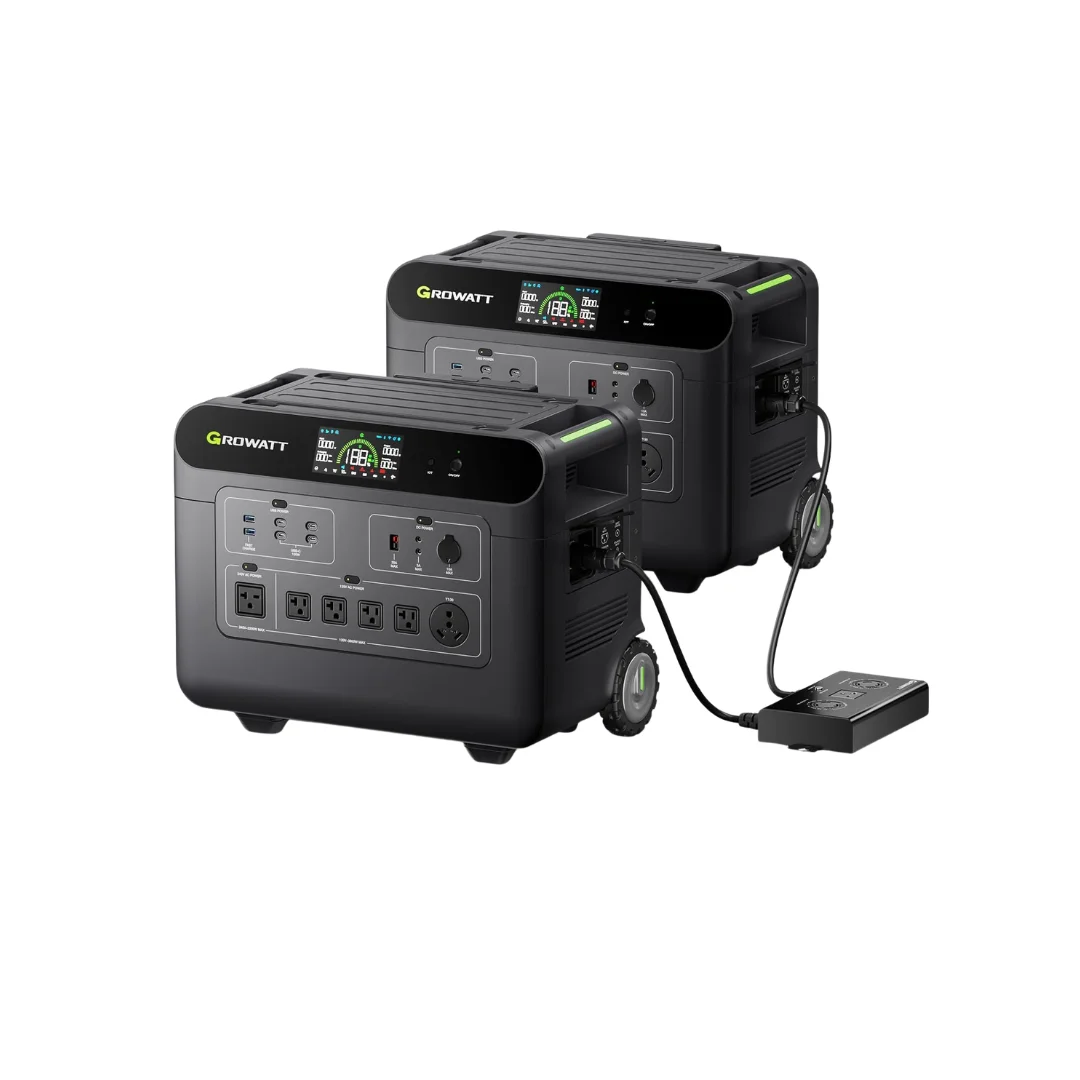
Most portable power stations under $3,500 can’t handle 240V appliances. This system does. Two HELIOS 3600 units connect in parallel via a Double Voltage Hub to deliver 7200W at both 120V and 240V. That covers 99% of home power needs. Electric water heaters, well pumps, central AC. If it runs on 240V, this system powers it.
You get 7200Wh total capacity and 16 outlets, including NEMA 14-30, NEMA 6-20, and TT-30 for RV use. You can run your whole house during an outage. The EV-grade LiFePO4 batteries are rated for 4000 cycles, and the smart app gives you real-time control. But at 250 lbs, this system is a permanent fixture. Not something you toss in the back of a truck.
Homeowners with high-power 240V appliances who need a reliable, expandable solar generator for multi-day outages, buy this. Budget-conscious campers or anyone needing a single light unit should skip it. The weight and price are overkill for small electronics or occasional use. The one real flaw: the bulk. You need dedicated floor space and a plan for placing it.
2. EF ECOFLOW DELTA Pro Ultra 6144Wh, Best Expandable System
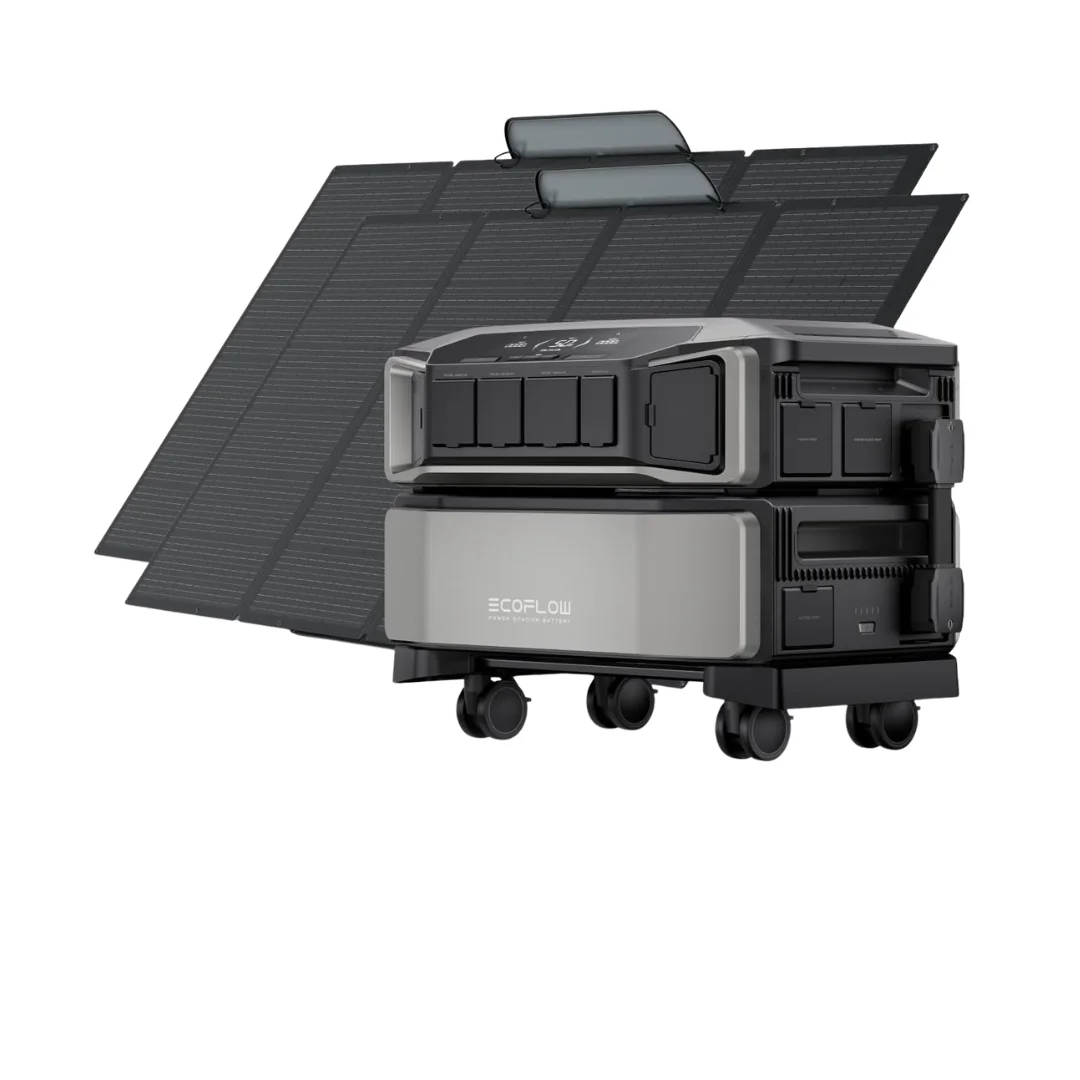
Most whole-home generators at this price can’t run a 3-ton central AC and still recharge from solar. The DELTA Pro Ultra does both. It delivers 7200W continuous output at 120V and 240V. And it expands from 6144Wh to a staggering 90kWh. You can add triple inverters for 21.6kW if your loads grow.
The 2-hour runtime at full load (7200W) is mathematically tight. The 6144Wh capacity would theoretically last about 50 minutes at that draw. In practice, you’ll run lower loads and get several hours of backup. The metal construction feels premium. But at 218 lbs, this is a set-and-forget unit. Solar recharging is fast with included 400W panels.
Buy this if you need a whole-house solar generator with massive expandable capacity, fast 2-hour recharge, and the ability to run major appliances during a prolonged outage. Skip it if you need a portable unit for camping or RV travel, or if your budget is under $5,000. The one real limitation: at full load, you’ll need extra batteries for extended outages.
3. Anker SOLIX F3800 Portable Power Station: Best for EV Charging
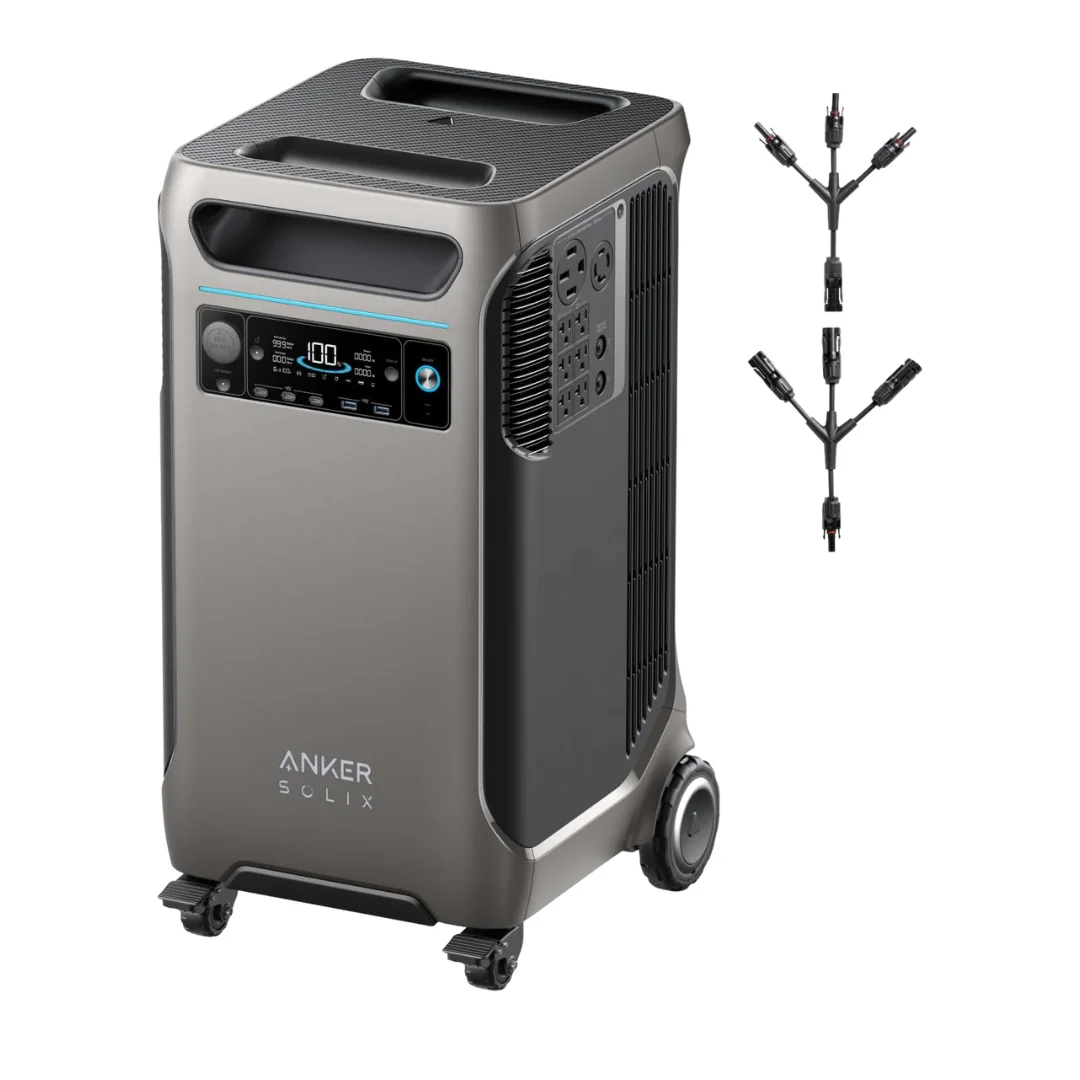
You charge your electric vehicle and run heavy appliances without relying on noisy gas engines. Direct EV charging is possible right from a dedicated port. You get dual-voltage power instantly, eliminating the need for separate transformers.
Control happens over Wi-Fi through a clean phone interface. High-capacity LFP batteries ensure a ten-year lifespan of reliable cycles. Lifting the 132.2 lbs frame requires significant effort, even with the portable classification.
Buy this if you need expandable backup power for heavy household appliances and electric cars. Skip it if you require a lightweight unit you can lift alone.
4. PECRON Portable Power Station E3800 LFP: Best Value
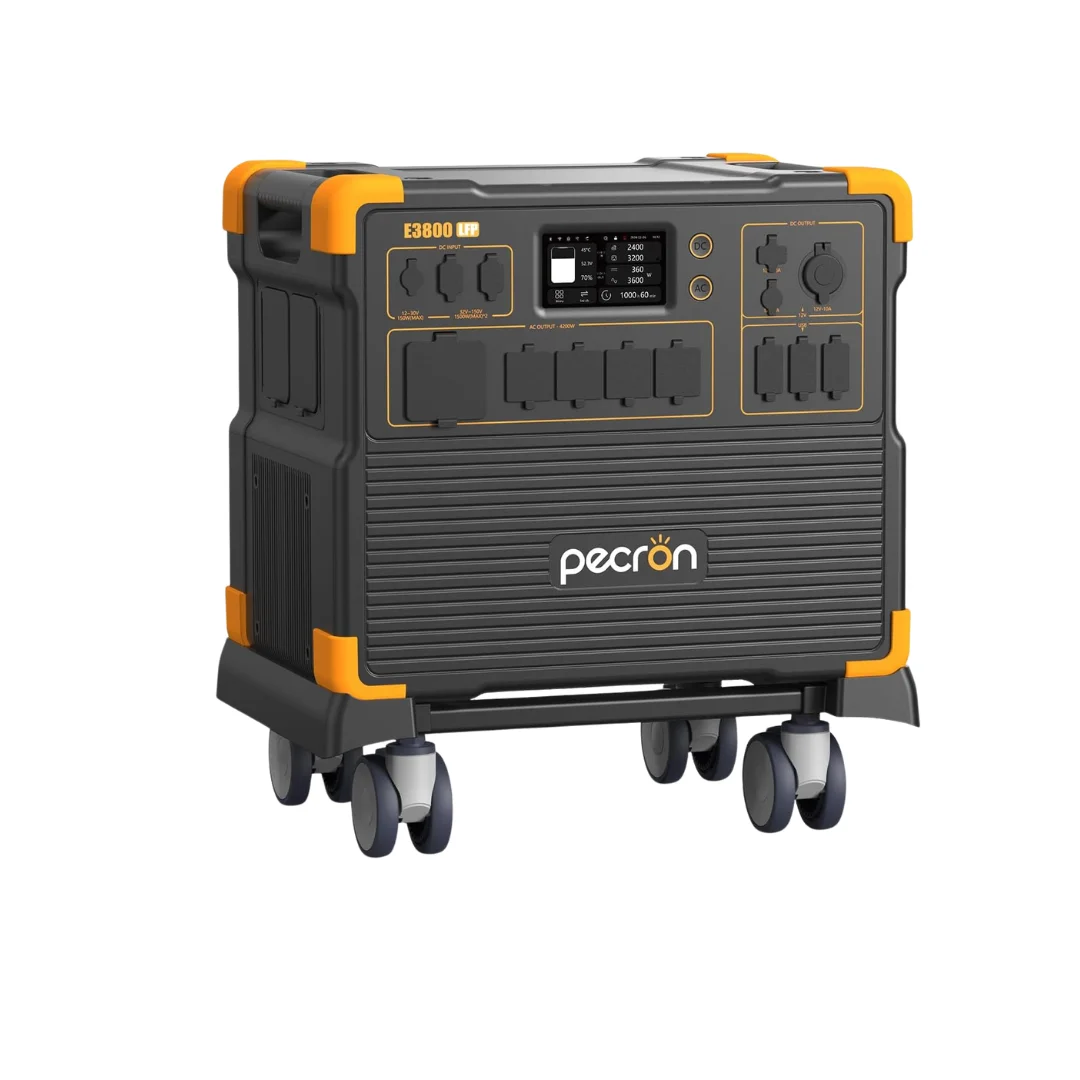
High-capacity backup is usually expensive, but this unit changes the narrative. Expanding your capacity up to 53.76kWh is simple and budget-friendly. Massive 3000W solar charging capabilities keep you prepared for multi-day outages.
Fourteen output ports power all your appliances, including a dedicated RV connection. Fast AC recharging takes just 1.4 hours using a 30A home outlet. Moving this 87.3 unit is difficult, and achieving top speed requires special cables.
Purchase this if you need affordable, expandable backup capacity for home appliances. Skip it if you are a casual camper who demands lightweight gear.
5. Jackery Solar Generator 5000 Plus, Best High Output
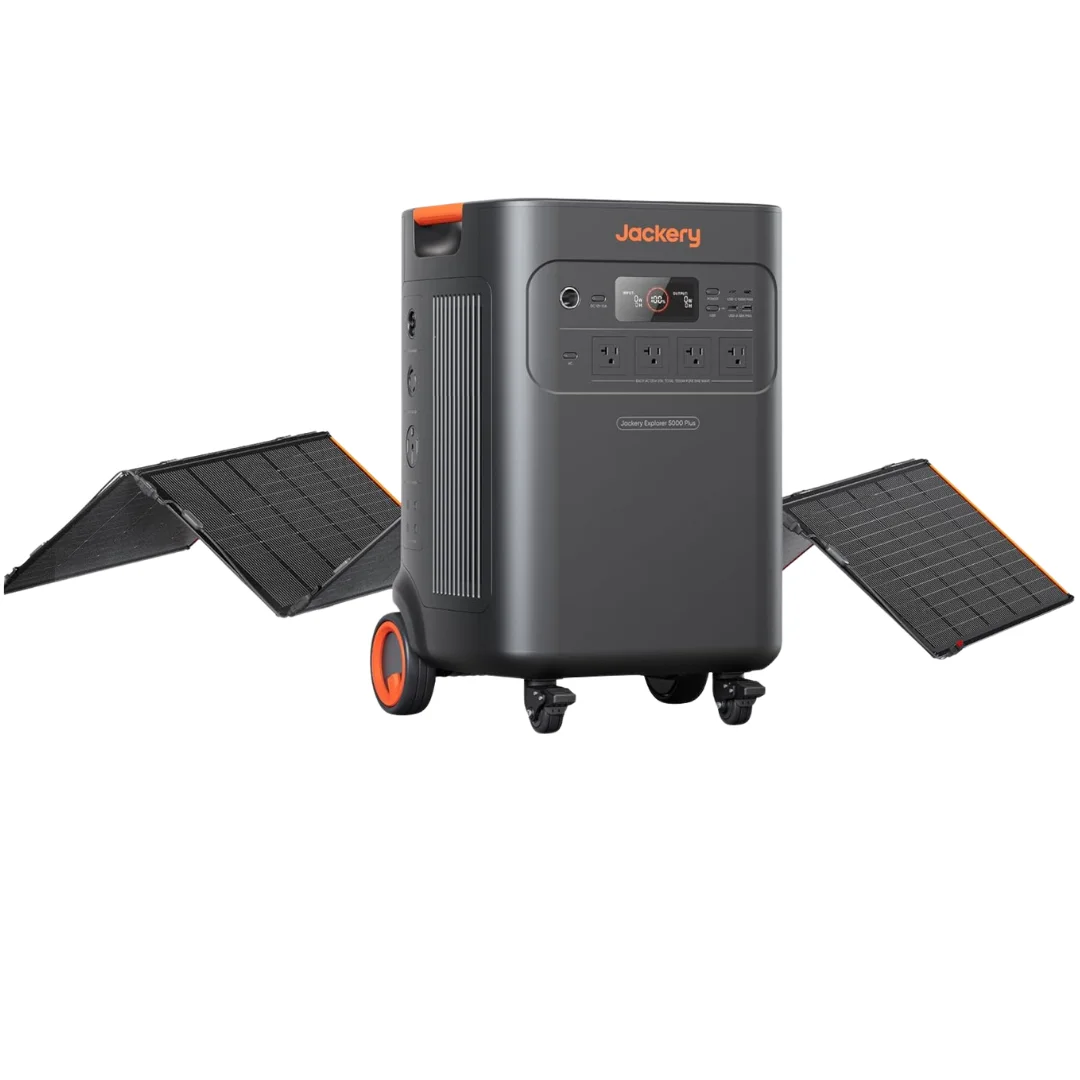
Most whole-home backup generators at this price require fuel or professional installation. The Jackery 5000 Plus delivers 7200W rated power (14,400W surge) from a rechargeable battery that supports both 120V and 240V output. It can run a 5-ton AC or water heater without breaking a sweat.
Solar recharging takes about 2 hours with up to 4000W input. That’s fast for the category. The optional 60A Smart Transfer Switch connects up to 12 circuits at 120V or 6 at 240V, making the transition from grid to backup seamless. The LiFePO4 cells are rated for 11 years of daily use. But at 190.5 lbs, this is a stationary solution.
Buy this if you need a reliable, high-capacity solar generator to power essential circuits (fridge, lights, medical equipment) during frequent or long outages, and you have a fixed installation spot with access to solar panels. Skip it if you want a portable generator for camping or job sites. The weight, size, and non-returnable policy make it impractical for mobile use. The real gotcha: the included 500W solar panel alone won’t keep up if you’re drawing heavy loads.
6. PECRON F5000LFP Power Station 5120Wh, Best Solar Input
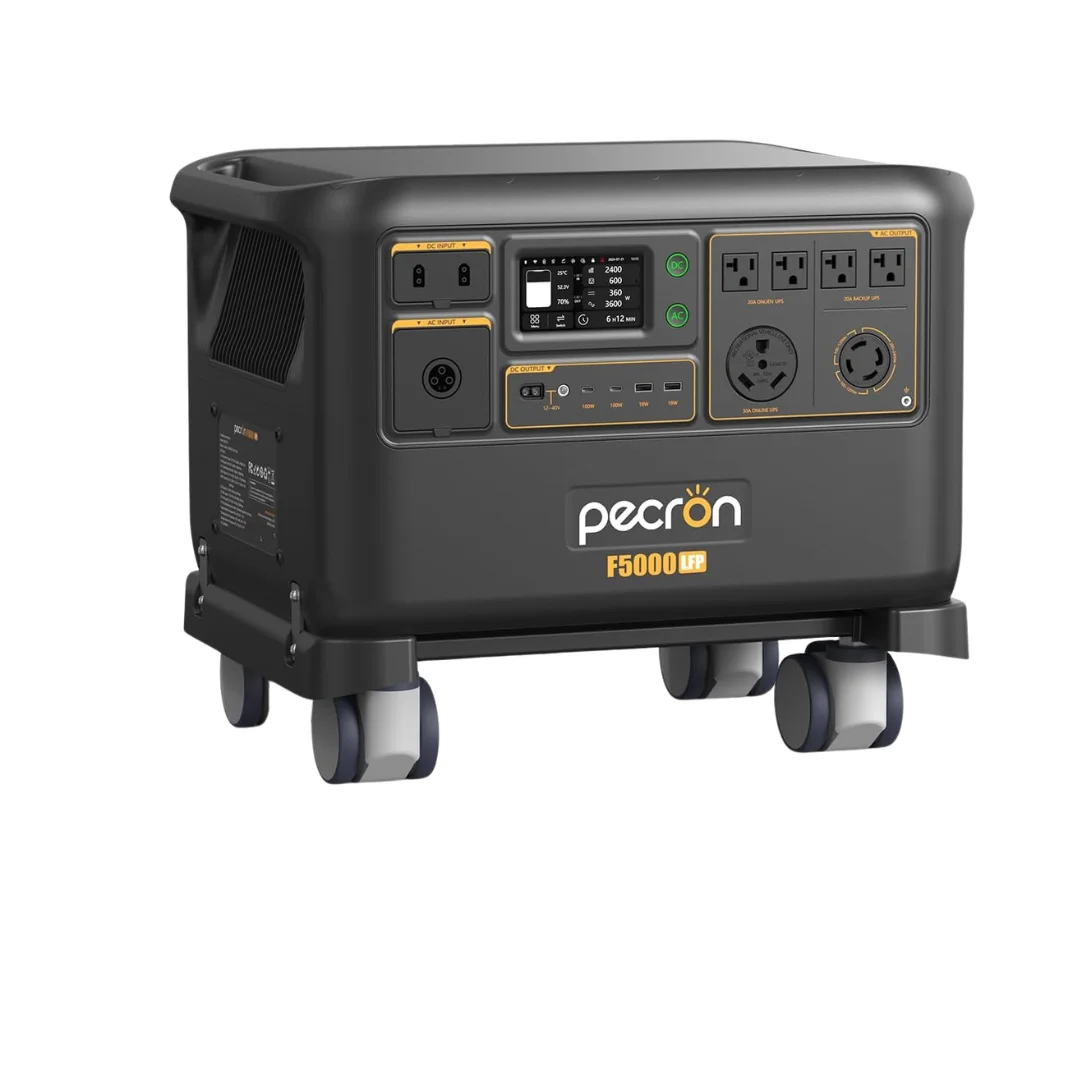
Most power stations cap solar input at 2000W or less. The F5000LFP accepts up to 6400W through two 25A ports. That’s enough to recharge the full 5120Wh battery in under an hour with sufficient panels. Dual-voltage 120V/240V output handles heavy appliances like dryers and water pumps.
You get 7200W continuous AC output across six outlets (one 7200W and five 3600W), plus six DC ports including adjustable 12-40V. It’s a complete backup solution. The 0ms online UPS keeps sensitive gear safe during transfer. At 123.9 lbs with a detachable cart, moving it between garage and living room is feasible. The 30dB low-noise mode is quiet enough for nighttime CPAP use.
This power station is ideal for homeowners or RVers who need a scalable, high-capacity solar backup system capable of powering essential circuits and heavy appliances during multi-day outages. Skip it if you need a lightweight, portable generator for camping or job sites. The weight and size make it impractical for frequent transport without a vehicle. The main limitation: the car charger and solar panels are sold separately, adding to the initial investment.
7. OUPES Guardian 6000 Solar Generator Kit, Best Dual Voltage Backup
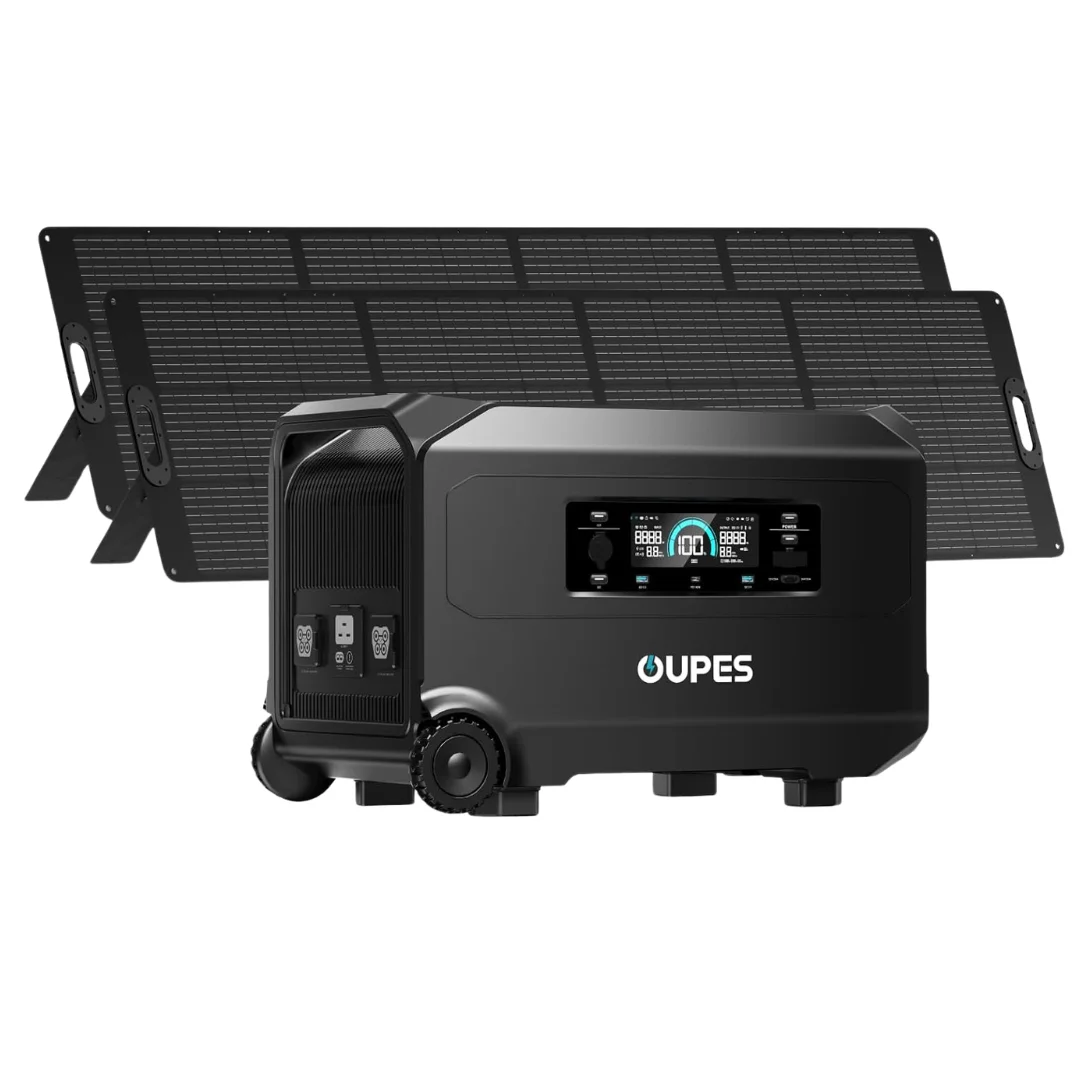
Most portable power stations at this price only output 120V. The Guardian 6000 delivers both 120V and 240V. It powers well pumps, small HVAC systems, and other heavy-duty appliances directly. With two 240W solar panels included and expandable capacity up to 41,472Wh, it’s a turnkey solution for off-grid living.
The 6000W continuous output (7200W surge) and 4608Wh capacity provide solid backup for essential circuits. The <20ms UPS transfer keeps electronics safe. The 9 AC outlets plus USB-C PD 140W handle multiple devices. The LiFePO4 cells are rated for 4000+ life cycles with a 5-year warranty. At 111 lbs, it’s one of the lighter high-capacity units. Still not portable enough for casual camping.
Buy this if you need a whole-home backup solution that can run both 120V and 240V appliances, with the flexibility to scale capacity later via add-on batteries. Skip it if you prioritize portability or only need occasional small-device charging. A lighter, lower-capacity unit would suit that use better. The main limitation: the 1.5-hour runtime at full load means heavy-draw appliances will drain the battery quickly.
Buying Guide: What to Look for in 5000w Solar Generators
Usable Capacity & Runtime
Battery capacity (Wh) determines how long you can run your appliances. Not the “5000W” number. A 5000Wh unit running a 500W fridge lasts 10 hours. At full 5000W load, that same unit would last one hour. The Growatt system’s 7200Wh capacity gives you real endurance for a refrigerator, lights, and a sump pump through the night.
Continuous vs Surge Watts
Startup current for motors (AC compressors, well pumps, refrigerators) can spike 2-3x their running watts. A generator rated 5000W continuous might need 8000W surge capacity to start a 3-ton AC. The Jackery 5000 Plus handles this with 14,400W surge. Enough for heavy appliances without tripping.
Pure Sine Wave Inverter Quality
Solar input (W) determines how fast you can recharge. The PECRON F5000LFP’s 6400W input can refill its 5120Wh battery in under an hour with enough panels. The OUPES Guardian 6000’s included 480W panels take longer but arrive ready to use out of the box.
Battery Chemistry & Lifespan
LiFePO4 (LFP) chemistry lasts 3500-4000 cycles to 80% capacity. Roughly 10 years of daily use. Lithium NMC cells degrade faster. Every generator here uses LFP, but cycle ratings vary. The PECRON E3800 LFP’s 3500 cycles and the Growatt’s 4000 cycles are at the top of the category.
Expandability & Compatibility
Future-proof yourself. The EcoFlow DELTA Pro Ultra expands to 90kWh. The Jackery to 60kWh. The PECRON F5000LFP to 35.8kWh. If your power needs grow, you want a system that grows with you. Not one you have to replace.
Portability & Weight
If you plan to move your generator between home and RV, weight matters. The PECRON E3800 LFP at 87.3 lbs is the lightest of the high-capacity units. The Growatt at 250 lbs is stationary. Be honest about your mobility needs.
Warranty & Support
A 5-year warranty protects your investment. The Growatt, EcoFlow, Anker, Jackery, and OUPES all offer 5-year coverage. The PECRON E3800 LFP’s warranty is unlisted. The F5000LFP’s “3+2 years” needs clarification. Check before buying.
How to Care for Your 5000w Solar Generator
Cleaning
Keep the casing free of dust and debris with a dry microfiber cloth. Never use water or cleaning solvents. They can seep into ventilation ports and damage the battery management system. Clean solar panels with a soft brush and distilled water to maintain maximum input efficiency.
Storage
Store at 50-80% state of charge in a cool, dry place between 32°F and 86°F. Never store fully discharged. LFP batteries enter a deep sleep mode that can be irreversible. The Anker SOLIX F3800 and Jackery 5000 Plus both have storage modes that maintain healthy voltage levels.
Extending Lifespan
LiFePO4 batteries degrade faster when cycled to 0% or charged to 100% daily. Stay between 20-80% for daily use. Only full-cycle monthly. The PECRON E3800 LFP’s 3500 cycles assume this practice. Avoid charging in temperatures below 32°F or above 113°F to prevent accelerated wear.
Which 5000w Solar Generator Is Right for You?
The seven generators here serve different masters. The Growatt tackles whole-home 240V loads. The Anker charges your EV. The PECRON E3800 LFP gives you the best value per cycle. Pick the one that matches your actual use case. Not the one with the biggest number on the box.
Skip solar generators entirely if… your power needs are under 1000W for occasional camping or tailgating. A sub-20 lb portable power station like those in our best 2000W solar generators guide will cost less and weigh less. These 5000W units are for serious backup. Not weekend trips.
Frequently Asked Questions
Q: What does 5000W actually get me?
A: A 5000W continuous output can run a refrigerator (600W), freezer (400W), well pump (1500W surge, 800W run), lights (200W), and a sump pump (1200W surge) simultaneously. That’s about 2400W total running load with room for surge startup. At full 5000W draw, you’d drain a 5000Wh battery in one hour. The Growatt system’s 7200Wh capacity gives you three hours at that load. Our solar powered whole house generator article breaks down load calculations in detail.
Q: How long does it take to recharge a 5000W solar generator from solar panels?
A: With 1000W of solar panels, expect 4-6 hours for a 5000Wh unit. The PECRON F5000LFP accepts 6400W input, so with enough panels it can recharge in under an hour. The OUPES Guardian 6000 includes 480W of panels, taking about 10 hours for a full charge. Solar recharge times depend heavily on panel wattage and sunlight conditions.
Q: Can I use a 5000W solar generator for my RV?
A: Yes, but weight is the limiting factor. The PECRON E3800 LFP at 87.3 lbs is manageable for larger RVs. The Anker SOLIX F3800 at 132.3 lbs needs a dedicated spot. Units over 200 lbs like the Growatt and EcoFlow are too heavy for most RVs. See our best solar generator for RV guide for lighter options.
Q: Will a 5000W solar generator run my central air conditioner?
A: It depends on the AC’s startup surge. A 3-ton central AC requires about 8000W surge to start, then 3500W running. The Jackery 5000 Plus (14,400W surge) handles it. The Anker SOLIX F3800 (12,000W peak with second unit) can manage. Units with lower surge ratings may trip their breakers on startup. Always check your AC’s locked rotor amps (LRA) before buying.
Q: How long does a LiFePO4 battery last in a solar generator?
A: LiFePO4 batteries are rated for 3500-4000 cycles to 80% capacity. With daily use, that’s about 10 years. With occasional emergency use only, expect 15-20 years. The PECRON E3800 LFP’s 3500 cycles and the Growatt’s 4000 cycles are typical for this chemistry class.
Q: What’s the difference between 5000Wh capacity and 5000W output?
A: Watts (W) measure power, how much an appliance draws at any moment. Watt-hours (Wh) measure energy, how long the generator can supply that power. A 5000Wh battery running a 500W fridge lasts 10 hours. Running a 5000W welder lasts one hour. Both numbers matter, and the spec table lists both for every generator here.
Q: Can I use a 5000W solar generator as a UPS for my computer?
A: Yes, but check the transfer time. The PECRON E3800 LFP switches in 8-20ms. The PECRON F5000LFP offers 0ms online UPS, meaning zero gap. The Growatt system’s smart app lets you monitor power quality. Most standard power supplies handle sub-20ms transitions without issue.