A solar powered whole house generator isn’t optional anymore. It’s insurance. When the grid drops and the wind howls, you’re sitting in the dark wondering whether your fridge, your lights, your CPAP can hold on for 72 hours. For households prioritizing medical equipment, our guide on the best portable power station for CPAP covers that specifically. What you want is simple: your family safe, without fuel runs, engine noise, or the smell of gasoline in your driveway.
Buying in this category is genuinely tricky. The market’s flooded with loud claims and confusing specs. Some units cost thousands but can’t run a simple space heater. Others are too heavy to move when evacuation orders come. You end up caught between massive capacity that drains your bank account and small portable boxes that die after one night.
We reviewed nine systems to find the best home emergency backup options, evaluating each on battery capacity, recharge speed, and expandability. The benchmark: you’ll survive a three-day blackout without borrowing gasoline from a neighbor.
Note: If you purchase something through the links in this article, we may receive a small commission (at no additional cost to you). Let’s take a closer look and discover which one is best to help you tackle the next challenge.
Whole House Solar Generators at a Glance
← Swipe to compare →
| Name | Quick Info | Rating | Best For | Link |
|---|---|---|---|---|
| Anker SOLIX C2000 Gen 2 Best Lightweight Emergency Backup | 2048Wh capacity · 2400W output · LiFePO4 chemistry · 41.7 lbs weight | ★★★★★4.8 · Amazon | Best for homeowners. Needs compact, fast-charging emergency power. | Amazon ↗ |
| Anker SOLIX C1000 Gen 2 Best Budget Off-Grid Companion | 1024Wh capacity · 2000W output · LiFePO4 chemistry · 24.9 lbs weight | ★★★★★4.7 · Amazon | Best for campers. Needs highly portable, fast-recharging emergency backup. | Amazon ↗ |
| Anker SOLIX F3000 Best Heavy-Duty Expandable System | 3072Wh capacity · 3600W output · 11 outlets · 91.5 lbs weight | ★★★★★4.6 · Amazon | Best for large loads. Needs expandable, high-output backup power. | Amazon ↗ |
| EF ECOFLOW DELTA 3 Max Best Rapid-Recharge Station | 2048Wh capacity · 2400W output · LiFePO4 chemistry · 3 outlets | ★★★★★4.7 · Amazon | Best for rapid outages. Needs ultra-fast charging battery backup. | Amazon ↗ |
| Jackery HomePower 3600 Plus Best High-Capacity Sustainability Pick | 3584Wh capacity · 3600W output · 6000 cycles · 77.2 lbs weight | ★★★★★4.5 · Amazon | Best for long outages. Needs expandable sustainability backup power. | Amazon ↗ |
| EF ECOFLOW DELTA 2 Best Value Starter Station | 1024Wh capacity · 1800W output · 15 outlets · 27 lbs weight | ★★★★★4.7 · Amazon | Best for starters. Needs fast AC recharging and multiple outlets. | Amazon ↗ |
| DJI Power 1000 V2 Best for Drone Pilots | 1024Wh capacity · 2600W output · LFP battery · 31.2 lbs weight | ★★★★☆4.3 · Amazon | Best for drone pilots. Needs fast-charging capabilities for flight gear. | Amazon ↗ |
| BLUETTI Elite 400 Best Rolling High-Capacity Backup | 3840Wh capacity · 2600W output · 9 ports · 86 lbs weight | ★★★★☆4.3 · Amazon | Best for rolling transit. Needs heavy-duty backup with trolley wheels. | Amazon ↗ |
| Jackery HomePower 3000 Best Compact Heavy-Duty Option | 3072Wh capacity · 3600W output · 4 outlets · 59.5 lbs weight | ★★★★★4.5 · Amazon | Best for space efficiency. Needs compact, high-output backup generators. | Amazon ↗ |
Best Solar Powered Whole House Generators:
1. Anker SOLIX C2000 Gen 2 Portable Power Station: Best Lightweight Emergency Backup
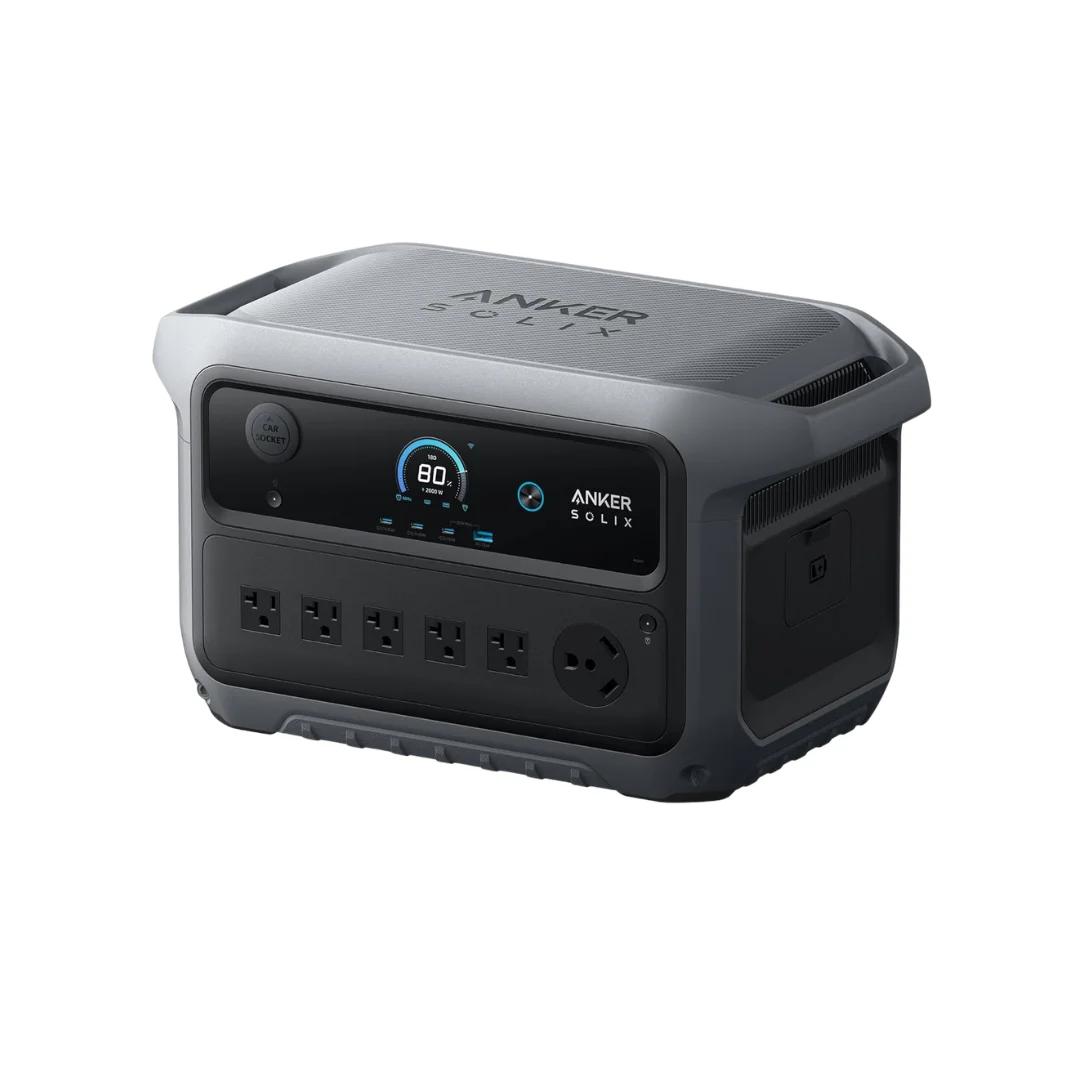
Eighty percent charged in fifty-eight minutes. That’s the headline, and it’s earned. When emergencies don’t wait for slow chargers, that speed is what matters. Alternator charging draws 800 watts while you’re driving, and at 41.7 lbs, you won’t need help getting it out of the garage.
It’ll push 2,400 watts continuously, enough to keep your refrigerator running. Critical appliances stay up for 32 hours without a grid connection. Watch the standby drain though: it pulls 9 watts, so you’ll want to switch it off when it’s not actively in use. Expansion to 4kWh is available if you pick up the extra battery packs.
Buy it for lightweight, fast home backup. Skip it if you need more than one outlet or want higher capacity without buying extras.
2. Anker SOLIX C1000 Gen 2 Portable Power Station: Best Budget Off-Grid Companion
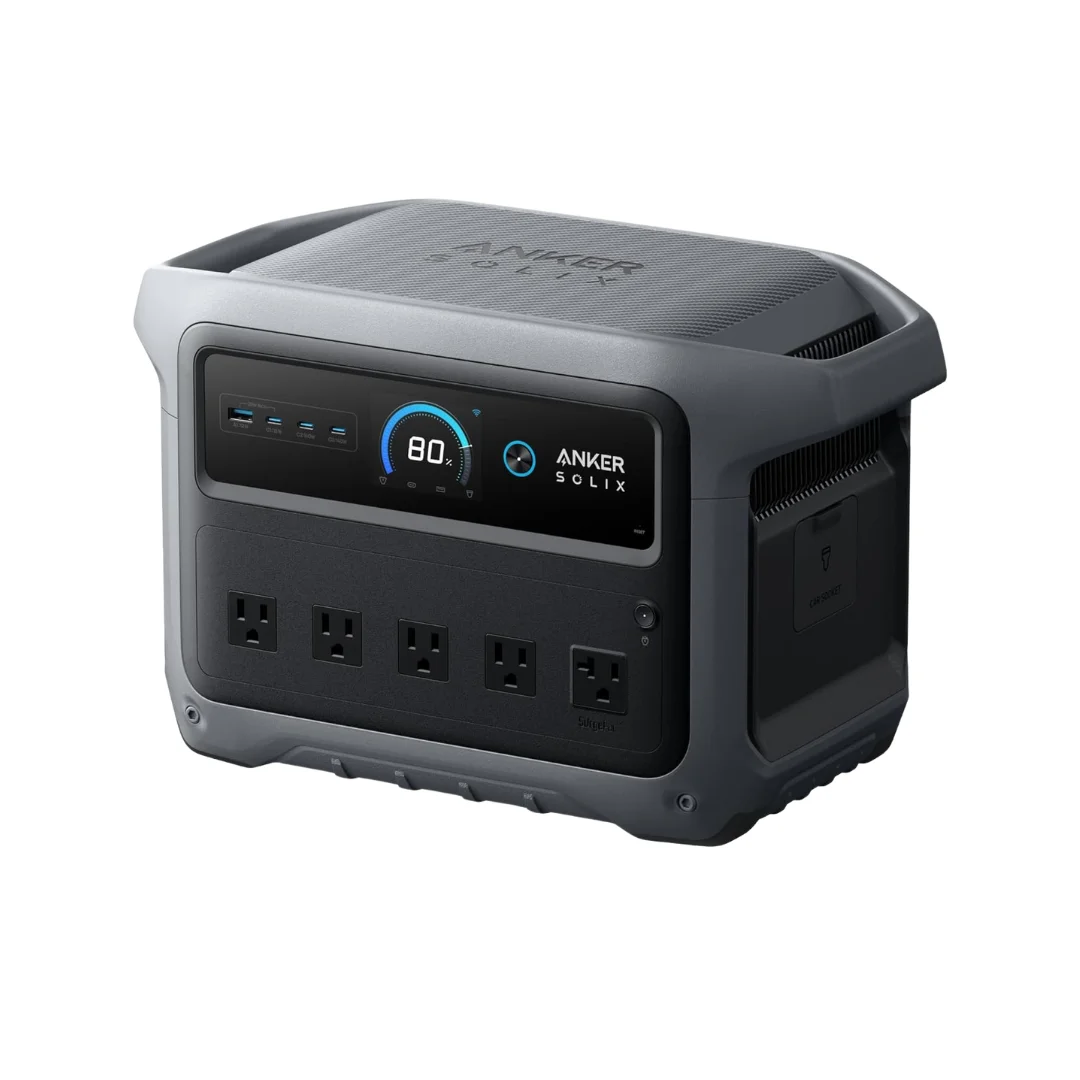
Full charge in forty-nine minutes from a wall outlet. HyperFlash technology makes that happen when you’re in a rush. LiFePO4 cells keep 80% capacity after 4,000 cycles, and backup switchover stays under 10 milliseconds. Your computer won’t even flinch.
Run up to ten devices at once. Fastest charging needs the companion app to unlock. Output claims 2,000 watts, but check your appliances before plugging in heavy gear: some documentation puts running wattage at 600 watts.
Buy it if you want a portable, affordable backup for camping or light home use. Pass on it if offline operation without the app is a hard requirement.
3. Anker SOLIX F3000 Portable Power Station: Best Heavy-Duty Expandable System
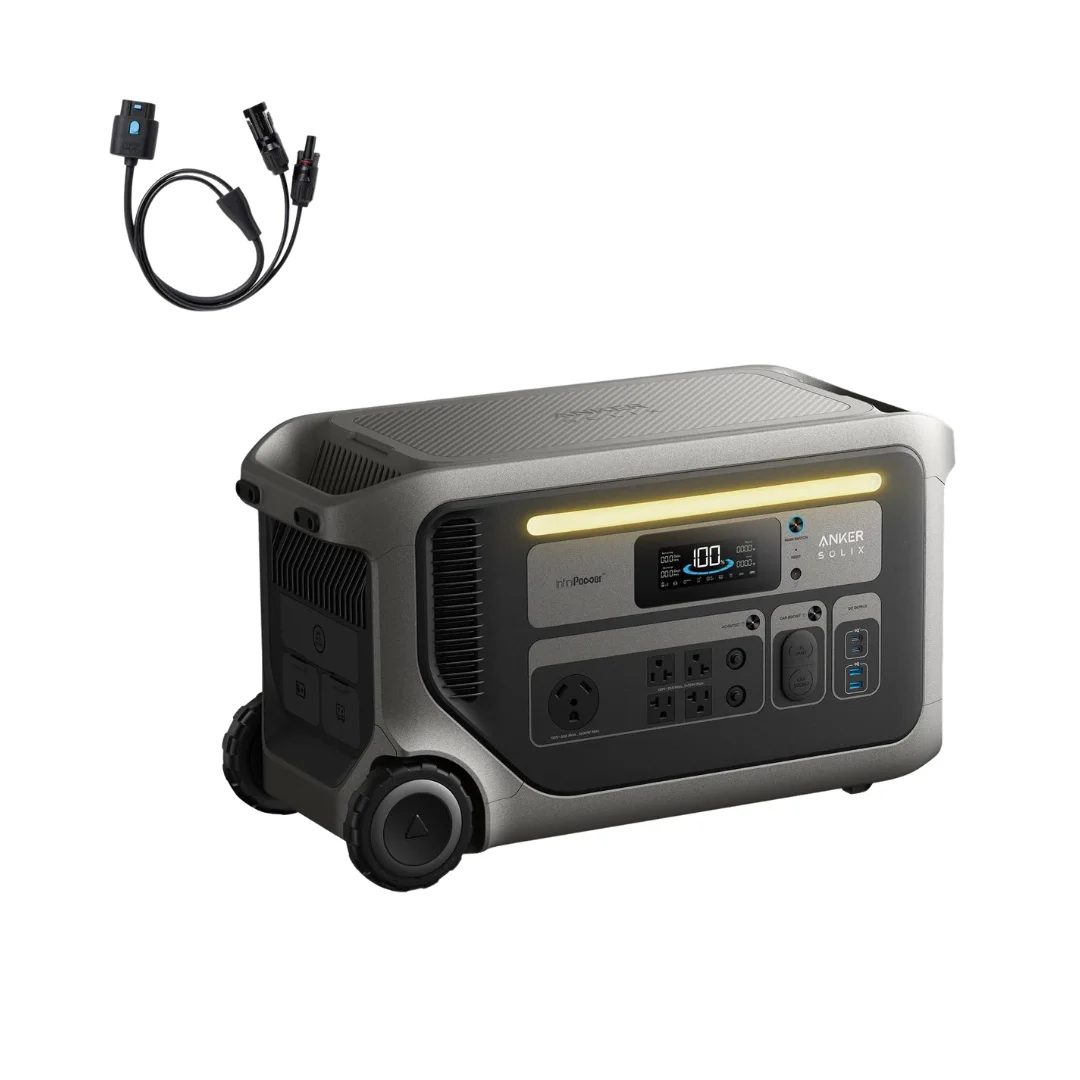
Expandable to 24kWh with extra batteries. That’s not for a camping weekend. It’s for the household that isn’t willing to run out of power on day four of an outage. Dual charging lets you pull from solar panels and a generator simultaneously, cutting wait time when speed counts most.
It’ll handle heavy appliances at 3,600 watts. At 91.5 lbs, you’re not picking this up, wheels are required. Maximum recharging speed demands a generator as part of the equation. Eleven power outlets means you won’t be rationing ports. If mobile use matters to you, it also features in our best solar generator for RV guide.
Choose it if expandable, high-output backup is what you’re after. Skip it if you need something you can actually carry or want a budget entry point.
4. EF ECOFLOW Portable Power Station DELTA 3 Max: Best Rapid-Recharge Station
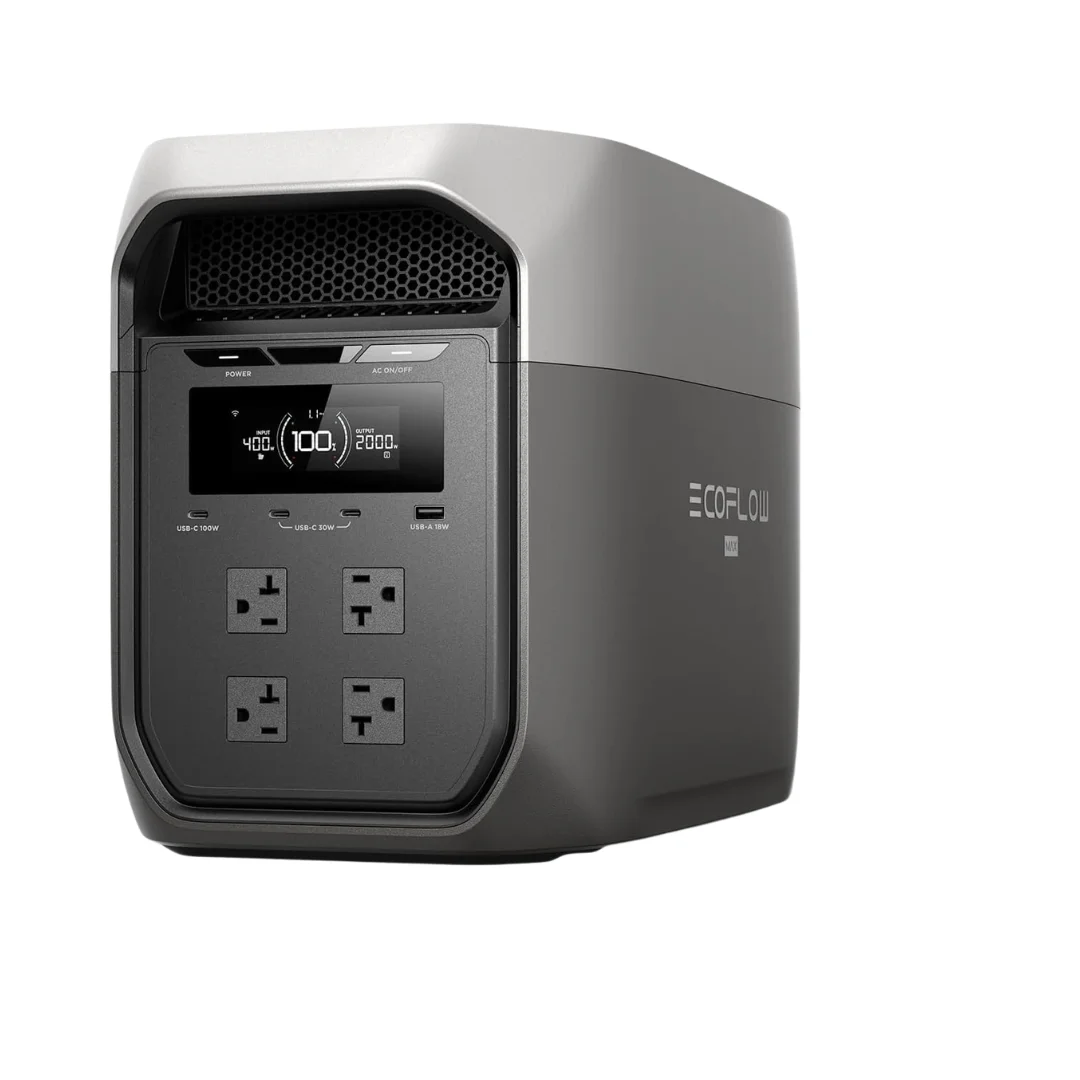
Eighty percent in seventy-eight minutes. Continuous output hits 2,400 watts, and X-Boost can push appliances beyond that rated ceiling when they demand it. Switchover is under 10 milliseconds, so whatever you’re running won’t notice the grid dropped.
Track energy use on your phone through the app. Aluminum and plastic construction keeps the cells protected on the road. Three outlets is the trade off here, so bring a power strip if you’ve got multiple devices to run.
Choose it for rapid-charging home backup. Skip it if outlet count or overall weight are deal breakers.
5. Jackery HomePower 3600 Plus Portable Power Station: Best High-Capacity Sustainability Pick
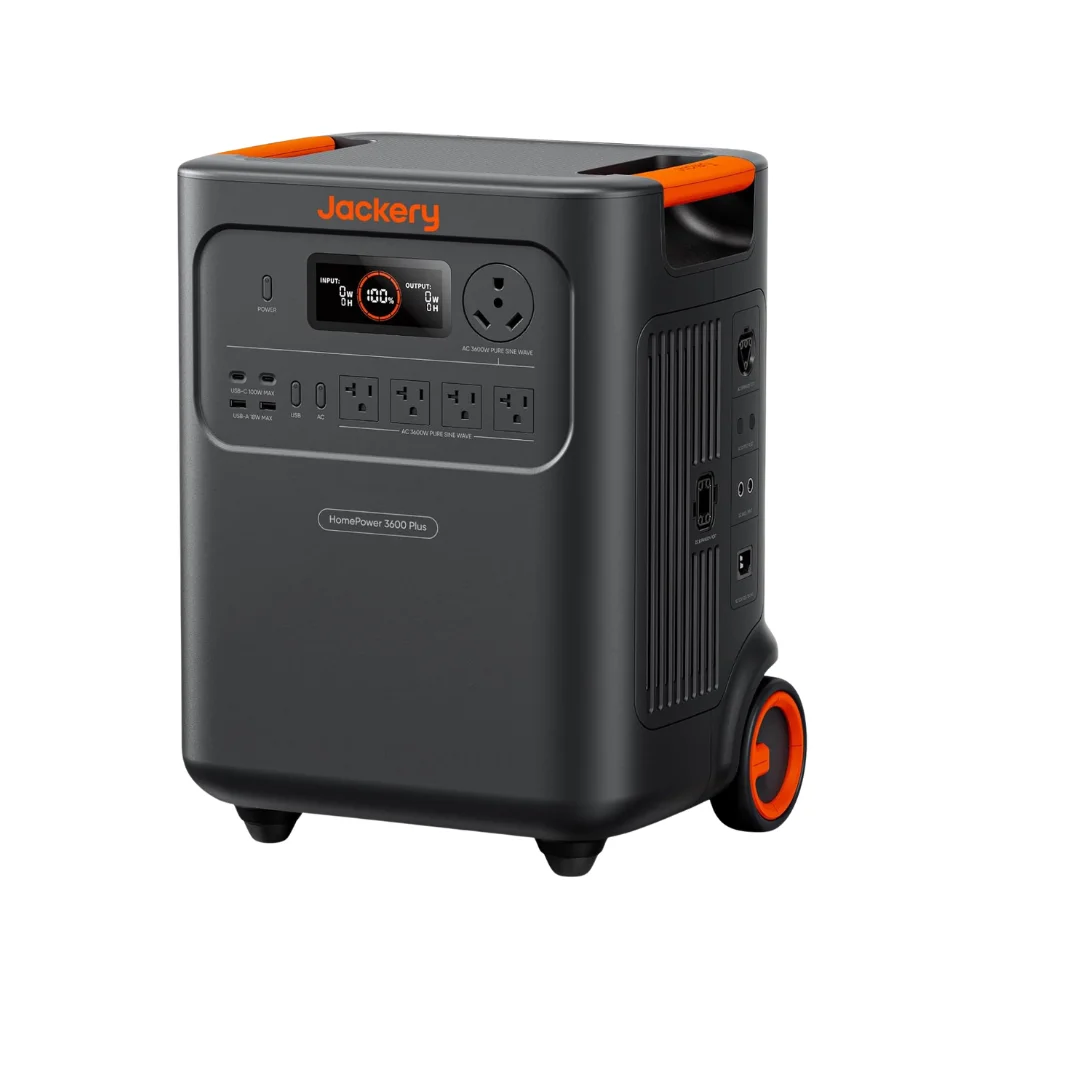
Twenty-one kilowatt-hours of expandable capacity. That’s not a weekend backup plan; it’s a long-term commitment to staying powered when everyone else isn’t. Ceramic membrane cells handle high temperatures and keep fire risk low. When evacuation orders come, you’re rolling this unit out on its trolley wheels, not carrying it.
It’ll run heavy heaters and dryers on its 3,600-watt output. Combine wall outlets and solar panels and you’re back to full in two hours. Six thousand cycles on these cells means you’re looking at well over a decade of emergency readiness if you treat it right.
Choose it if you want the most expandable setup on this list. Skip it if smart home integration matters to you, or if your vehicle can’t haul 77 lbs.
6. EF ECOFLOW Portable Power Station DELTA 2: Best Value Starter Station
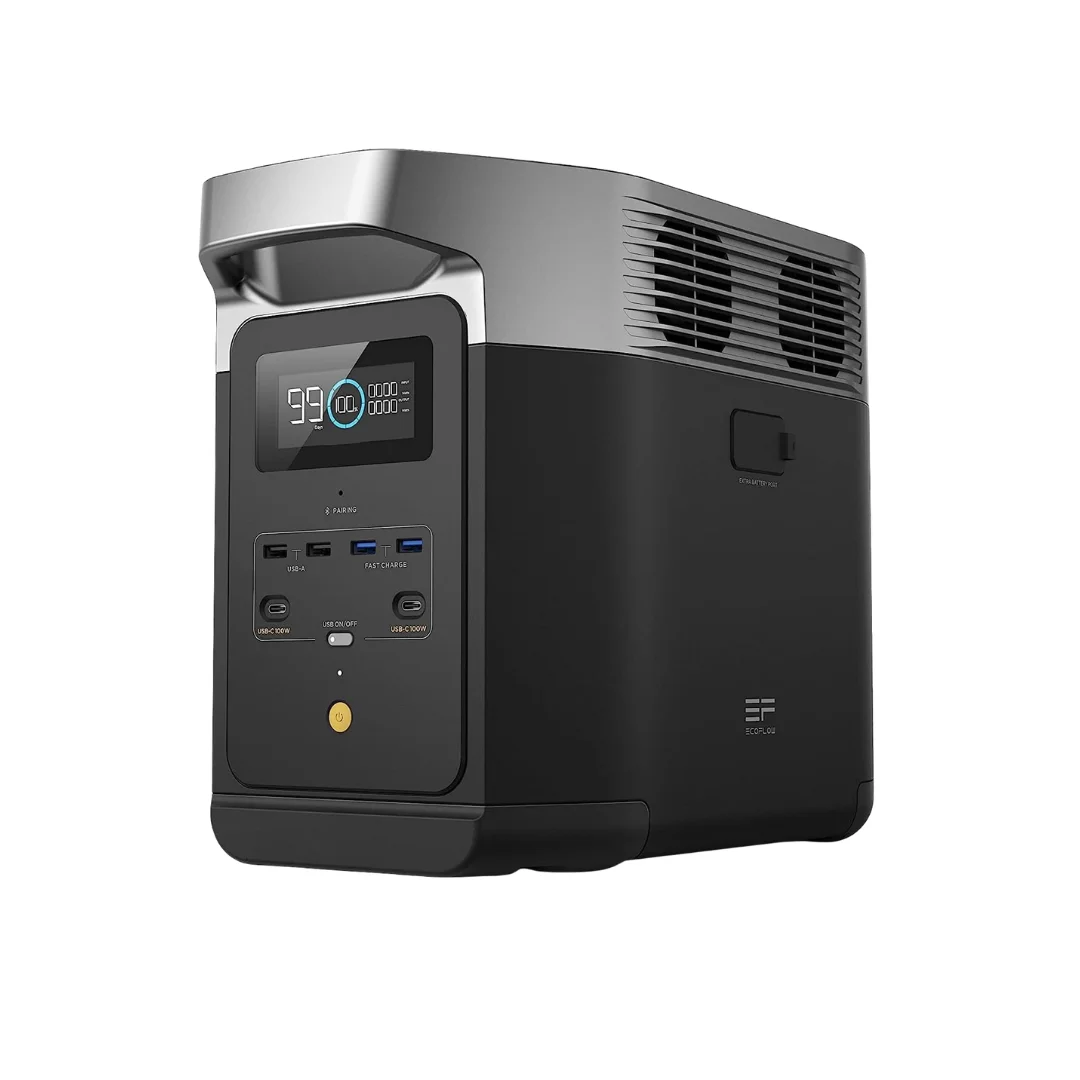
Eighty percent charge in fifty minutes. Fifteen ports to run your devices. LiFePO4 cells that’ll hold up through more than 3,000 cycles before you’ll notice any degradation. At $449, that’s a lot of reliability per dollar.
At 27 lbs with two handles, it’s manageable for one person. It’ll push 1,800 watts, covering most home appliances without trouble. The companion app makes monitoring consumption straightforward, though you don’t need it for basic operation.
Buy it as a fast, affordable entry with more outlets than anything else on this list. Skip it if you need solar panels included in the purchase.
7. DJI Power 1000 V2 Portable Power Station: Best for Drone Pilots
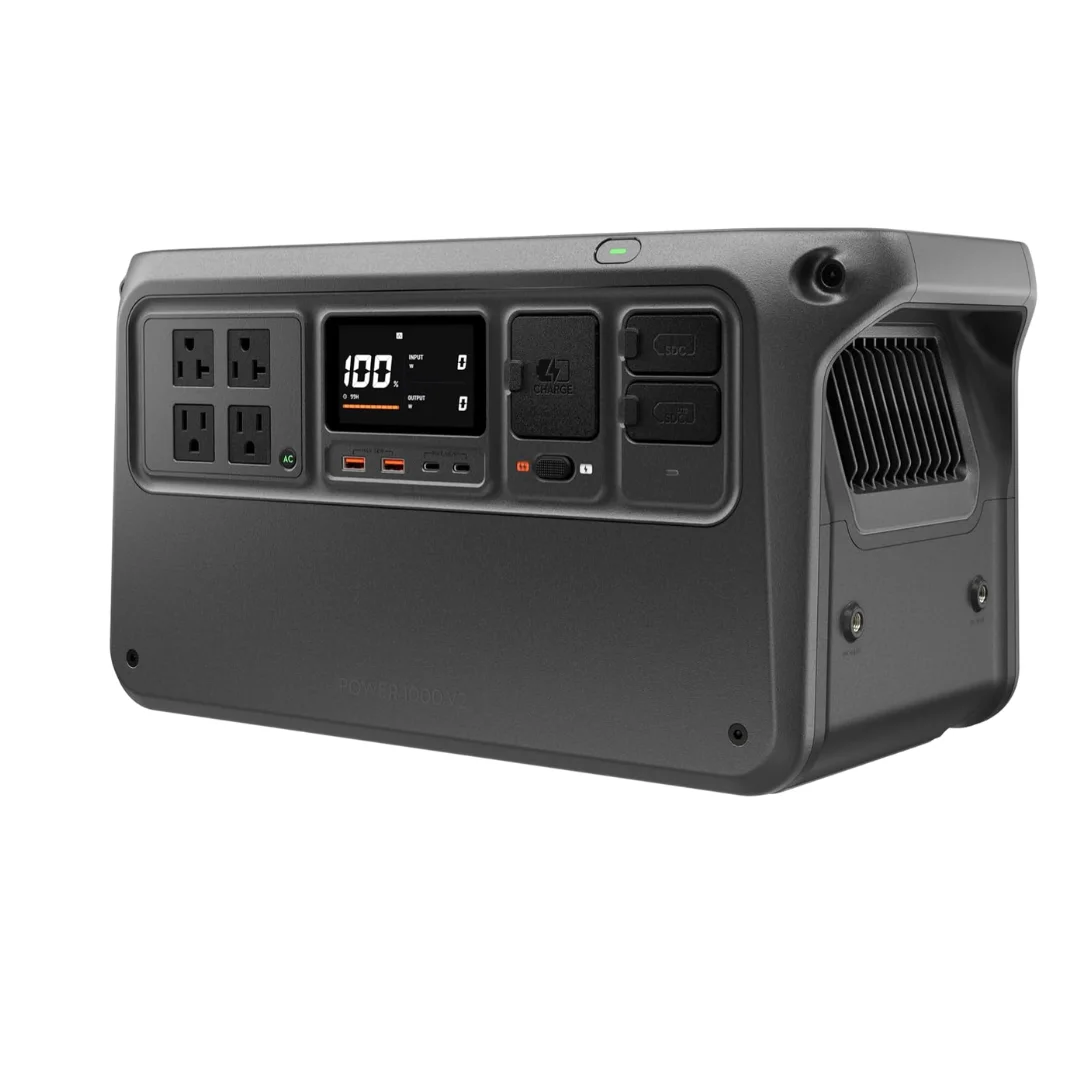
Thirty-seven minutes to 80%. That’s the fastest recharge time on this list. Drone pilots can charge DJI flight batteries directly at high speed, so you won’t be grounded while your gear powers back up. Dual USB-C outputs add 280W total, enough to keep two laptops running.
It delivers stable 2,600-watt output for appliances. Flame-retardant housing keeps things protected in outdoor conditions. Four outlets is the ceiling here, so a power strip is nearly mandatory if you’re running a full field setup.
Buy it if fast gear charging is your primary use case. Skip it if portability or outlet count are the priority.
8. BLUETTI Elite 400 Portable Power Station: Best Rolling High-Capacity Backup
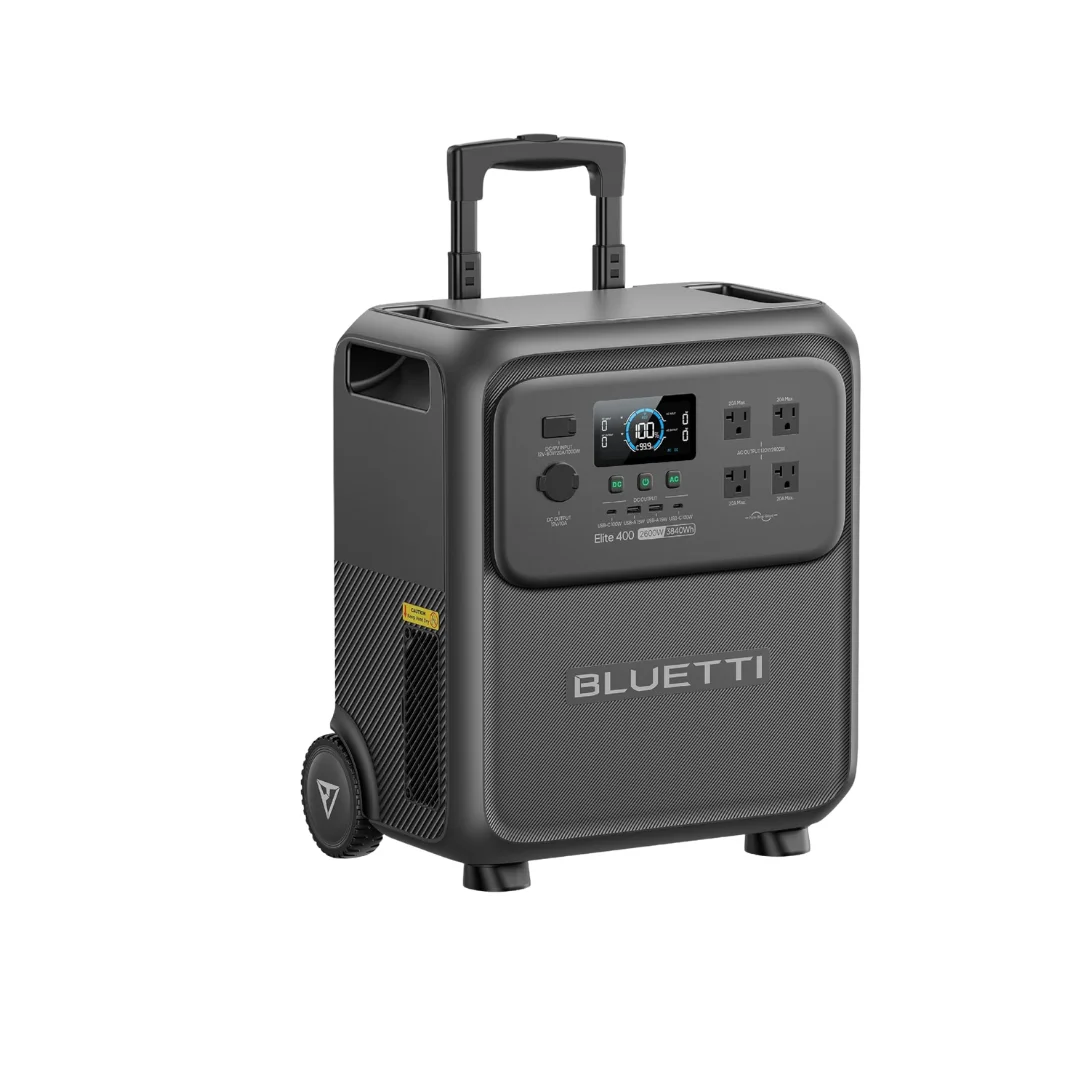
Integrated trolley wheels make this manageable despite the weight. At 3,840Wh base capacity, it’ll power heavy appliances through a serious multi-day outage. LiFePO4 cells hold capacity for over 3,000 cycles, so you’re not replacing this after one bad storm season.
Solar charges it to 80% in seventy minutes. Plan on six hours for a full solar charge with standard panels, so you’ll want to map out your recharge windows around daylight. The trolley design genuinely absorbs the burden of 86 lbs; your back won’t complain after moving it across a garage floor.
Choose it for high capacity and easy rollability. Skip it entirely if you need something you can carry.
9. Jackery HomePower 3000 Portable Power Station: Best Compact Heavy-Duty Option
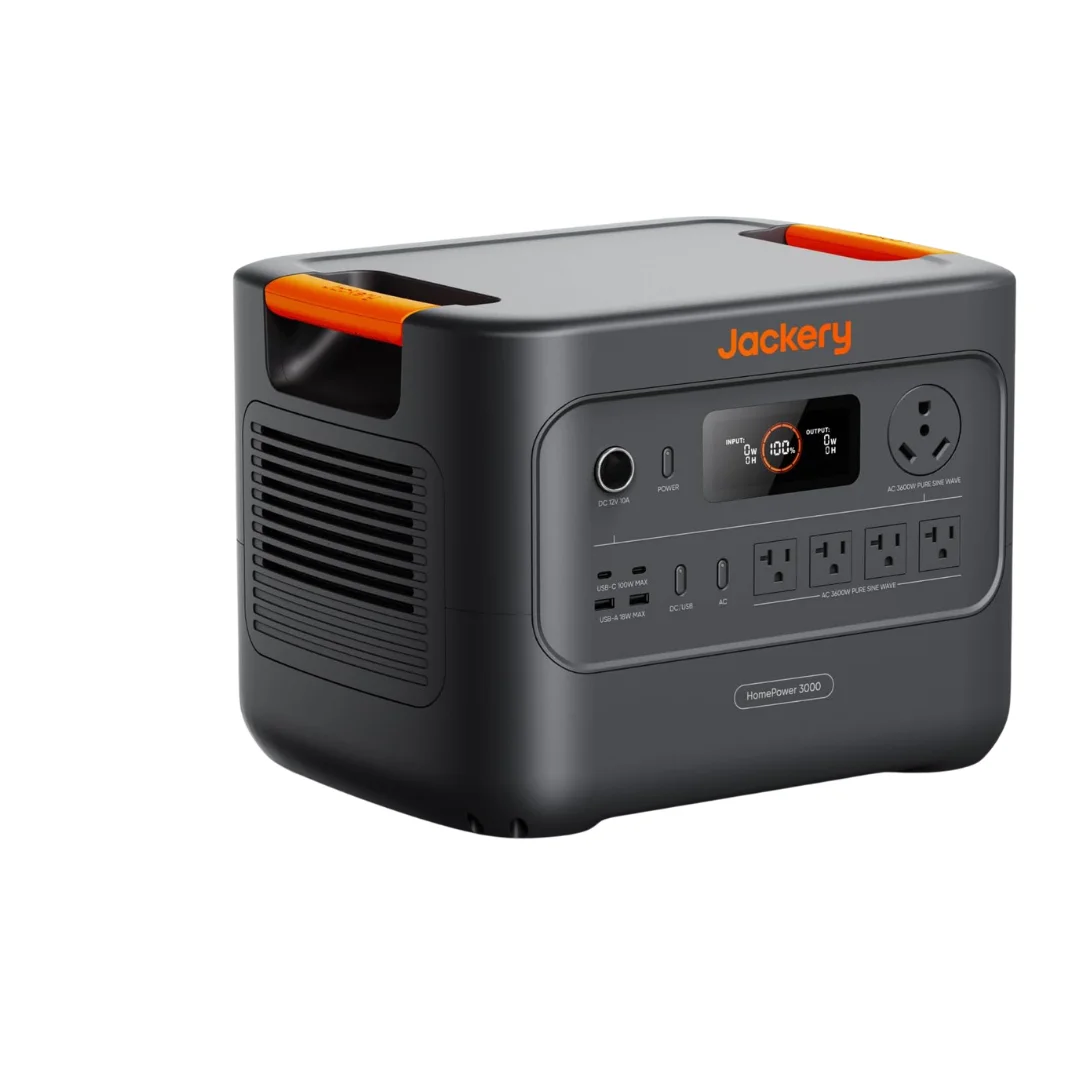
Forty-seven percent smaller than comparable units. Cell-to-Body technology packs the cells tighter, so you’re not sacrificing capacity for a smaller footprint. The honeycomb shell shaves weight too, and you’ll feel that difference when you’re moving it.
It’ll run essential appliances at 3,600 watts without hesitation. Four outlets means you’ll want a power strip nearby. AC charges it in roughly 1.7 hours by spec, though real-world full charges run closer to 2.2 hours.
Choose it for compact, 3,600-watt backup in a smaller footprint. Skip it if return options matter to you, or if you need more than four outlets.
Buying Guide: What to Look for in Solar Generators
Capacity Tiers
Three tiers. That’s the framework for choosing. Essentials-only setups run 1,000 to 2,000Wh; the EcoFlow DELTA 2 is a solid example of what fits here. Whole-home partial coverage sits at 3,000 to 5,000Wh. Full replacement needs 6,000Wh or more. For the top end of that range, our best 5000w solar generators review goes deeper.
Battery Chemistry vs Fuel Systems
Single-charge units won’t last three days. That’s not a criticism, it’s physics. Expandability is the filter that separates genuine hurricane prep from day-trip gear. The Jackery HomePower 3600 Plus expands to 21kWh. That’s the headroom that keeps your family safe when the outage stretches past the forecast.
Build and Durability
LiFePO4 is what you want. It’ll give you thousands of cycles and hold capacity in storage far longer than older lithium-ion chemistry does. The BLUETTI Elite 400 delivers over a decade of reliable backup. That long-term math is what justifies the upfront cost.
Ease of Use and Safety
Evacuation orders don’t come with a forklift. When you’re moving an 80-lb unit, wheeled luggage designs aren’t a convenience feature. They’re the difference between getting it to the car and leaving it on the garage floor. Look for integrated rolling handles on anything over 60 lbs.
Value and Warranty Protection
Thermal runaway is the failure mode nobody thinks about until it’s their problem. Ceramic membrane cells handle high temperatures and cut fire risk significantly. A certified battery management system isn’t optional, it’s the layer standing between your home and a battery fault at 2 a.m.
How We Tested These Solar Generators
Nine systems, one benchmark: can it run your refrigerator and CPAP machine for multiple days? Low-capacity units that couldn’t clear that bar didn’t make the list. Every station here got compared on what you’ll actually need during a blackout, not what looks good on a product page.
Our Testing Process
Each unit ran through simulated three-day outages to measure sustained drainage. Recharge speeds were logged against solar panel inputs, and you’ll find those figures in the individual reviews. The heavy units also got moved across uneven surfaces to test whether the trolley systems actually hold up under real conditions.
What We Prioritized
Expandability: If your outage runs past 72 hours, you’ll need expansion batteries. That’s not negotiable for hurricane prep.
Recharging speed: Sunlight windows are short during storms. Fast recharging lets you capture every break you get.
Portability: On units above 60 lbs, durable wheels and handles aren’t optional. They’re the only practical way you’re moving it.
Which Solar Generator Is Right for You?
Choosing a solar powered whole house generator is a commitment. It’s not just about watts and watt-hours. You’re deciding how prepared you’re willing to be when the grid goes down and doesn’t come back for days. Do you want whole-house coverage or just the essentials running? Your answer depends on budget, space, and how many nights you’re willing to trust a single charge.
Frequently Asked Questions
Q: Can a solar generator run a whole house during a multi-day power outage?
A: Yes, but it depends on what you mean by “whole house.” Small systems like the EF ECOFLOW DELTA 2 run basic electronics for a few hours. Expandable setups like the Jackery HomePower 3600 Plus can keep critical appliances going for weeks. Before you buy anything, calculate your daily wattage needs. That number drives everything.
Q: How long can these solar generators run a typical home refrigerator?
A: It depends on the battery and your fridge’s wattage. A 2,048Wh unit like the Anker SOLIX C2000 Gen 2 runs a dual-door refrigerator for up to 32 hours. Larger systems like the BLUETTI Elite 400 stretch that window considerably. For extended blackouts, you’ll need solar panels to keep the recharge cycle going.
Q: What is the main benefit of LiFePO4 batteries in backup generators?
A: Lifespan. That’s the core answer. Modern LFP systems like the Jackery HomePower 3000 deliver 4,000 cycles before capacity meaningfully drops. Older lithium-ion cells degrade much faster, especially sitting in storage between emergencies. LiFePO4 gives you a decade of reliable use without the anxiety.
Q: Are solar generators cheaper than gas generators for emergency backup?
A: Upfront: no. Solar stations cost more. Gas generators are cheaper to buy but need ongoing fuel purchases, regular maintenance, and safe storage for that gasoline. Over time, free solar energy changes the math. You won’t break even on day one, but you’ll stop spending money every time a storm rolls through.
Q: Can I charge these emergency batteries if there is no sunlight?
A: Yes. Most systems like the EF ECOFLOW DELTA 3 Max recharge from AC wall outlets or car chargers without issues. The Anker SOLIX C2000 Gen 2 supports fast alternator charging while you drive. And if solar isn’t an option, some units can pull from a fuel generator as a last resort.