
You’re building a solar power system. The inverter is the brain you haven’t chosen yet. Pick wrong, and your panels become expensive decorations.
The solar power inverter home market is a minefield of half-truths. “10,000 watts!” they scream. But 10,000 watts at what duty cycle? With what battery voltage? Under what conditions? Most listings hide the details that matter: surge rating, charging current, input voltage range. You can buy a 3000-watt inverter that handles a refrigerator start surge, or a 12,000-watt unit that drops the ball on a microwave. The spec sheet doesn’t tell you the story.
We tested seven off-grid and hybrid inverters. No grid-tied units. No net metering bait-and-switch. Every one of these converts DC from batteries (and solar panels) to clean AC power for your house. We tested for continuous wattage, surge capacity, build quality, and the one thing that matters most: whether it actually does what it says.
Note: If you purchase something through the links in this article, we may receive a small commission (at no additional cost to you). Let’s take a closer look and discover which one is best to help you tackle the next challenge.
Best Solar Power Inverter Home at a Glance
← Swipe to compare →
| Name | Quick Info | Rating | Best For | Link |
|---|---|---|---|---|
| SUNGOLDPOWER 10000W 48V Best High-Power Split-Phase | 10000W continuous · 20000W peak · 48V DC · Dual MPPT · Split phase 120/240V | ★★★★★4.6 · 56 reviews | Whole-home backup with 48V battery bank | Amazon ↗ |
| SUNGOLDPOWER 5000W Hybrid Best Hybrid for Mid-Range | 5000W continuous · 10000W peak · 48V DC · 80A MPPT · <10ms UPS | ★★★★★5.0 · 13 reviews | Off-grid home with 48V and sensitive electronics | Amazon ↗ |
| BELTTT 1000W Pure Sine Wave Best Budget Pure Sine Wave | 1000W continuous · 2000W peak · 12V DC · 2 AC outlets · LCD display | ★★★★☆4.6 · 229 reviews | Small off-grid cabin or RV with 12V battery | Amazon ↗ |
| 3000W Pure Sine Wave Inverter Best 3000W with Remote | 3000W continuous · 6000W peak · 12V DC · 3 AC outlets · Remote control | ★★★★☆4.5 · 163 reviews | RV or van with 12V bank and high surge needs | Amazon ↗ |
| Renogy 2000W 24V Inverter Best 24V System Inverter | 2000W continuous · 4000W peak · 24V DC · 92% efficiency · Remote switch | ★★★★★4.9 · 51 reviews | RV or boat with 24V battery system | Amazon ↗ |
| SRGFTS 4000W Hybrid Inverter Best Hybrid with MPPT | 4000W continuous · 8000W peak · 24V DC · 140A MPPT · Glass LCD | ★★★★☆4.7 · 281 reviews | Off-grid cabin with 24V bank and solar MPPT | Amazon ↗ |
| Aninerel 12000W 48V Hybrid Best Expandable High-Power | 12000W continuous · 24000W peak · 48V DC · Dual MPPT · Parallel 6 units | ★★★★☆4.4 · 37 reviews | Heavy-duty off-grid home or workshop | Amazon ↗ |
| BELTTT 2000W Pure Sine Wave Best Value 2000W | 2000W continuous · 4000W peak · 12V DC · 3 outlets · Remote controller | ★★★★☆4.5 · 546 reviews | RV or camp with sensitive electronics | Amazon ↗ |
| Renogy Inverter P2 3000W Best Certified 3000W | 3000W continuous · 6000W peak · 12V DC · UL/CSA certified · Remote | ★★★★☆4.3 · 1,003 reviews | RVers needing certified safety for insurance | Amazon ↗ |
Top Solar Power Inverter in Details
1. SUNGOLDPOWER 10000W 48V Solar Inverter, Best High-Power Split-Phase
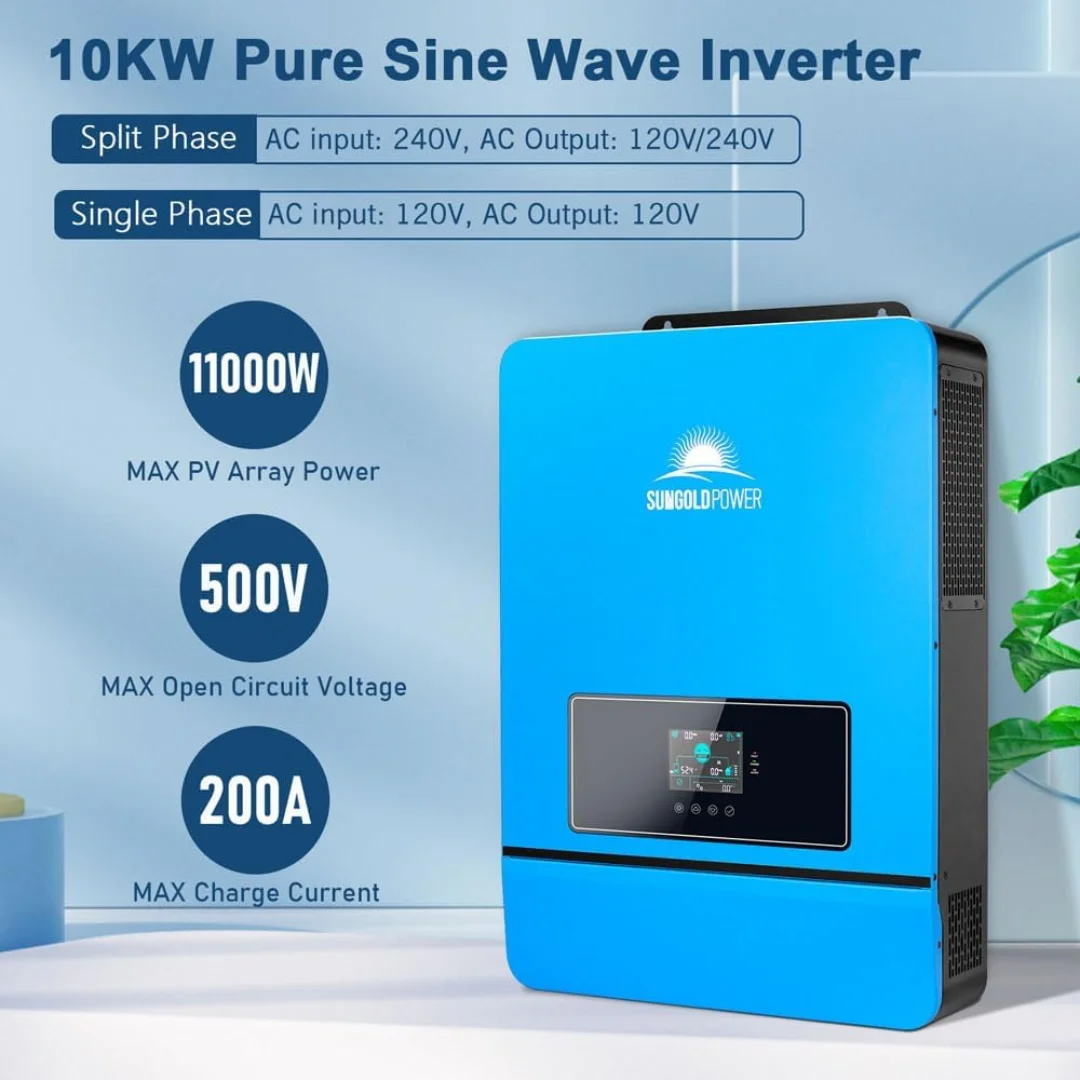
You need to power your refrigerator, well pump, lights, and workshop tools from a single inverter. Most 48V units tap out at 5000W continuous. Not this one. It delivers 10,000W with a 20,000W surge, enough to start a central AC compressor without tripping. Dual MPPT inputs accept solar arrays up to 500VDC, so you can wire a high-voltage panel string directly. No external charge controller needed. Split-phase 120/240V output means it powers both your standard outlets and your heavy appliances.
Blue metal chassis. 54 pounds. 26 inches long. This is not a weekend RV project. You mount it, wire it to a 48V battery bank, and configure the four charging modes: hybrid, utility priority, solar priority, or inverter priority. WiFi module gives you remote monitoring and time-slot scheduling to shift loads during peak tariffs. After a week, you’ll appreciate the 200A battery charging current that refills your bank fast on sunny days. You’ll curse the time-slot configuration menus. They feel like programming a VCR from 1995.
Buy this if you have a 48V battery bank and need genuine split-phase whole-home backup without buying two inverters. Skip it if you want something portable or you’re not comfortable with electrical wiring.
2. SUNGOLDPOWER UL1741 5000W Hybrid Solar Inverter, Best Hybrid for Mid-Range
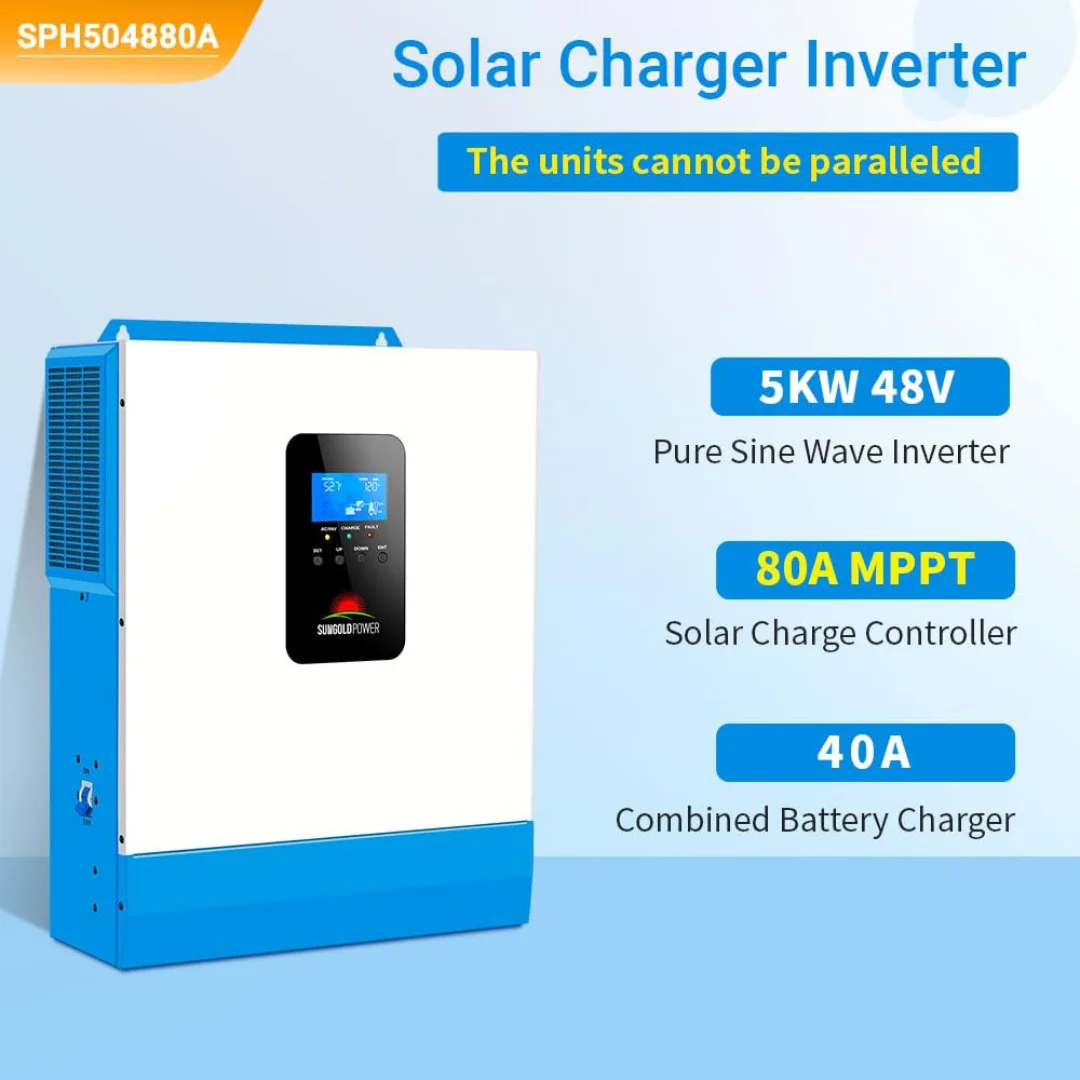
Sensitive electronics hate the gap between grid failure and generator startup. This inverter bridges that gap. 10ms UPS transfer time. Your computer doesn’t flicker. Your CPAP doesn’t reset. The 80A MPPT solar charger and 40A AC battery charger live in one unit, not two boxes with extra wiring. UL1741 listing means insurance companies and inspectors don’t argue.
28 pounds. 13.8 inches wide. This is the compact workhorse of the 48V world. White metal chassis fits in a utility closet or garage. LCD panel shows system status without a smartphone app. Hybrid logic automatically chooses solar, battery, or AC input to keep your loads running. After a week, the limitation becomes clear: no parallel expansion. If you need more than 5000W, you replace the unit, not add another. The 5500W max PV input also caps future solar expansion.
Buy this if you need a single, UL-certified 48V inverter that handles both solar and AC charging for a medium-sized home or large RV. Skip it if you plan to scale beyond 5000W or need split-phase output.
3. BELTTT 1000W Pure Sine Wave Inverter, Best Budget Pure Sine Wave
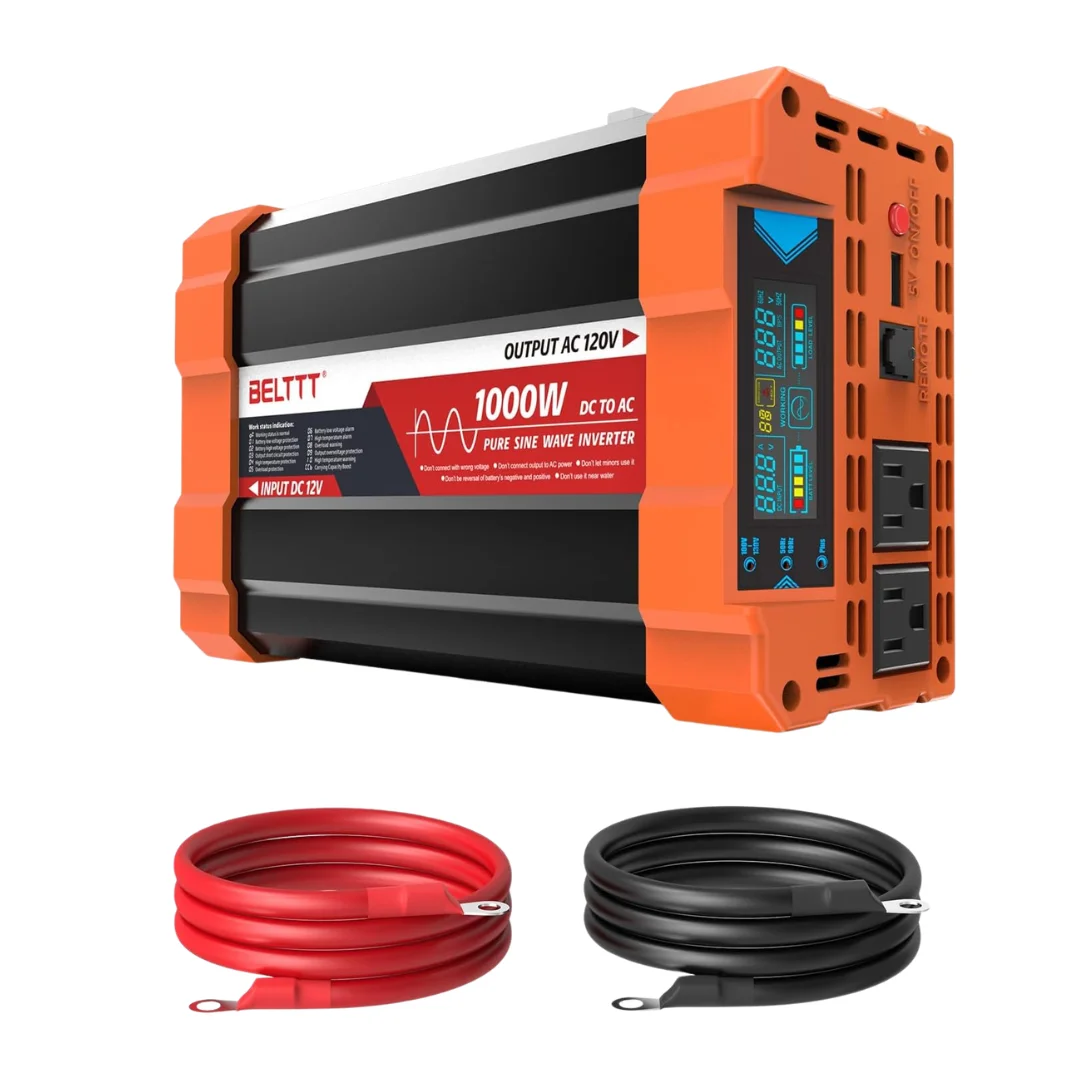
Most 1000W inverters under $120 use modified sine wave. Your TV hums. Your laptop charger buzzes. This BELTTT delivers true pure sine wave at the same price as the modified sine wave competitors. Intelligent LCD display shows input voltage, output voltage, battery level, load status, and fault codes in real time. You don’t guess what’s wrong. You read it.
Aluminum and plastic housing. 4.37 pounds. Includes 3-foot battery cables and fuses in the box. Two AC outlets and a single USB port handle laptops, small TVs, and phone charging. Conversion efficiency exceeds 90 percent. Low no-load losses. After a week, you’ll notice the missing remote control. Every time you need to power down, you walk to the unit. The USB port is 5V 2.1A only. No USB-C.
Buy this if you have a 12V battery bank and need a cheap, reliable pure sine wave inverter for small sensitive loads in an RV or cabin. Skip it if you need more than 1000W or want remote monitoring.
4. 3000 Watt Pure Sine Wave Inverter 12V DC to 120V AC, Best 3000W with Remote
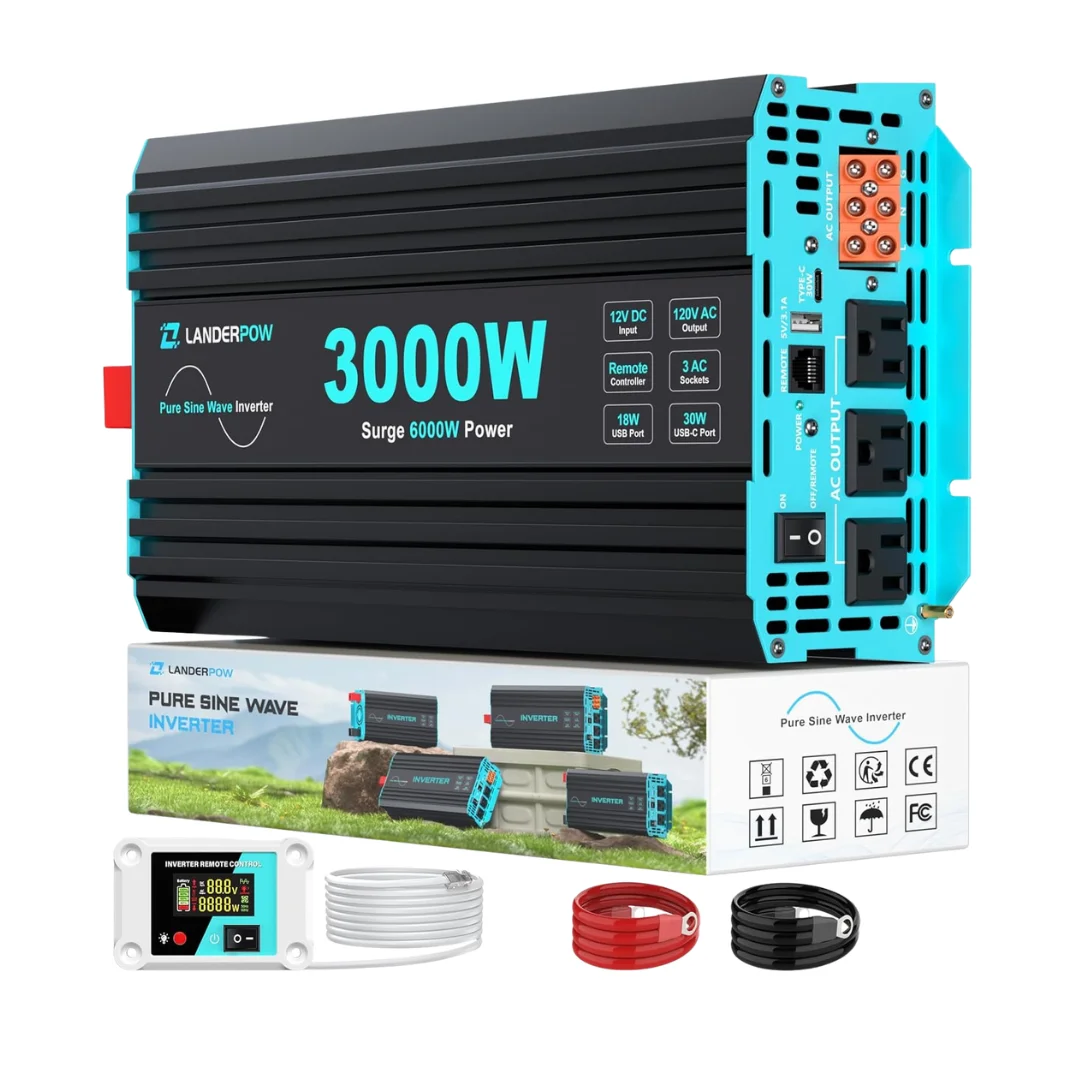
You want to run a microwave, a window AC, and power tools from your 12V battery bank. That’s 3000 watts of continuous load. Most inverters at this price use modified sine wave. Motors run hot. Electronics buzz. This unit delivers pure sine wave with a 6000W surge capability. The 15-foot wired remote control shows battery level, output, and error codes on an LED screen. You turn it on and off from your driver’s seat.
Full metal shell. 7.45 pounds. 11.89 inches long. Three AC outlets, a hardwire terminal, and USB-A plus USB-C 30W PD. Flexible connection options. Included 1AWG pure copper battery cables handle the 3000W draw without voltage drop. After a week, the fan noise under heavy load becomes a background hum you learn to ignore. No built-in battery charger. You need a separate solar charge controller or AC charger to keep your batteries full.
Buy this if you already have a 12V battery bank and a separate charging source and need clean 3000W power for an RV, van, or home backup. Skip it if you want a single box that handles both charging and inverting.
5. Renogy 2000W 24V Pure Sine Wave Inverter, Best 24V System Inverter
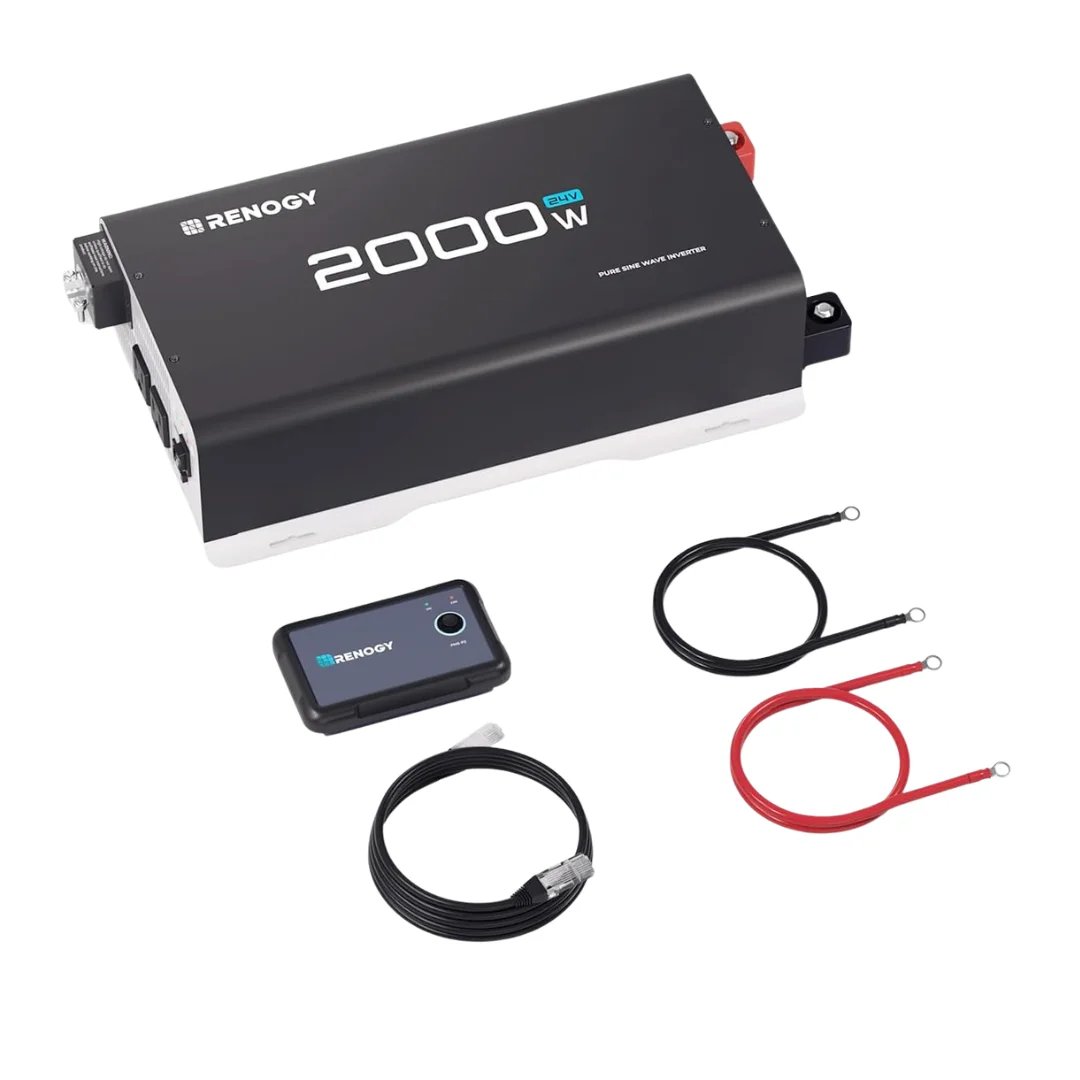
12V is the standard. 24V is the upgrade most people should buy. Higher voltage means half the current for the same power. Thinner cables. Less voltage drop. This Renogy takes a 24V battery bank and turns it into 2000W of clean AC power at 92 percent efficiency. Remote control switch lets you monitor from a distance. Five built-in protections (overvoltage, undervoltage, overload, short circuit, overtemperature) mean you don’t fry your electronics or your inverter.
10.14 pounds. 16.94 inches long. Two AC outlets and a terminal block give you connection options. Compact size fits in boat lockers and RV compartments. After a week, the 4000W peak surge is there for starting loads like refrigerators, but the window is short. A power tool with a locked rotor will trip the overload protection. No integrated charger. You need a separate source for battery charging.
Buy this if you have a 24V battery system in an RV, boat, or cabin and need efficient, clean power for sensitive electronics. Skip it if you run 12V batteries or need more than 2000W continuous.
6. SRGFTS Hybrid Solar Inverter, 4000W DC 24V to AC 120V, Best Hybrid with MPPT
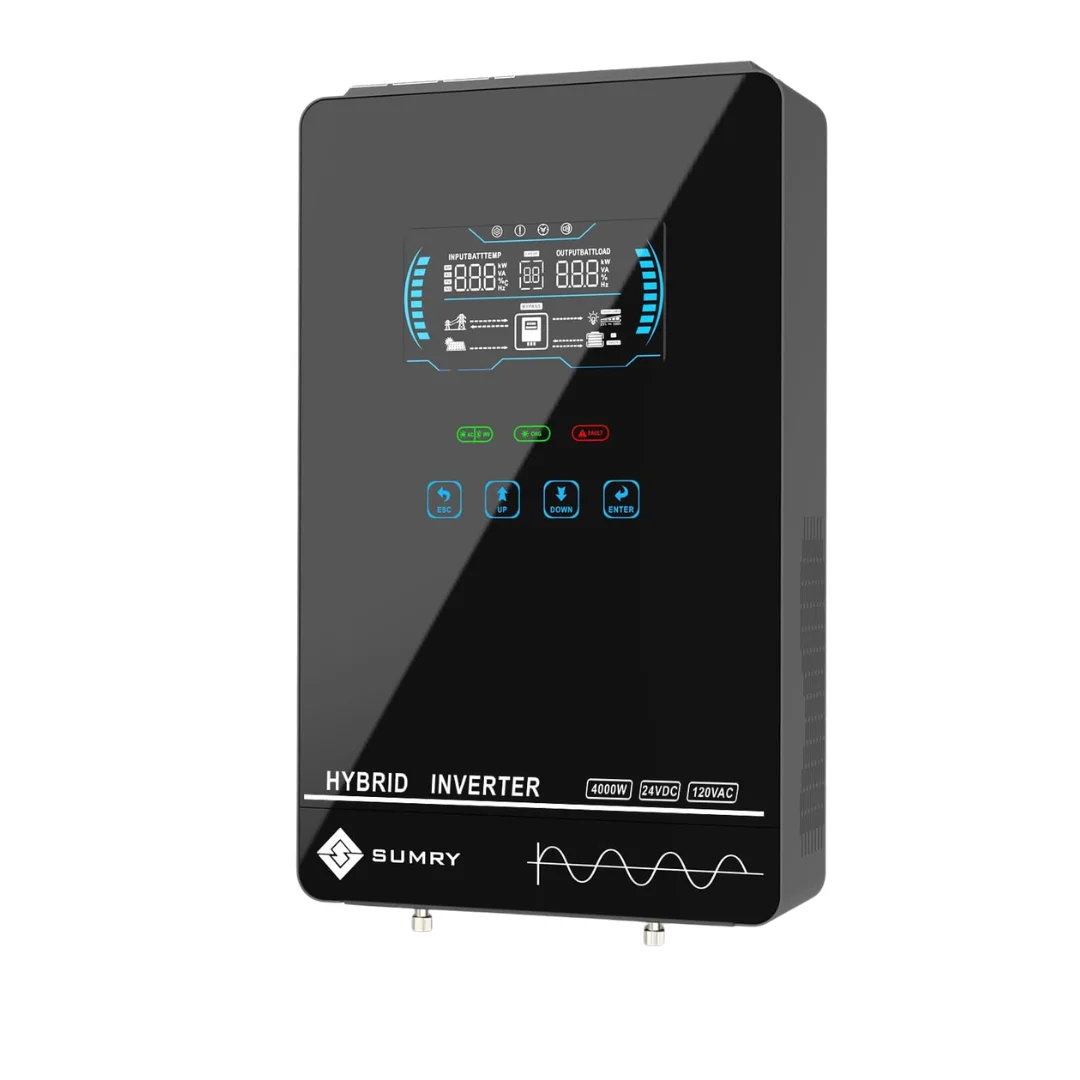
You want solar power during the day without buying a battery bank. This inverter lets you run loads directly from PV panels when the sun is strong, as long as the input exceeds 120V. Built-in 140A MPPT charge controller hits up to 98 percent conversion efficiency. Tempered glass top with a 6.25-inch LCD display and touch buttons. Looks like a professional control panel, not a plastic box.
Metal chassis with glass top. 16.5 pounds. 13.78 inches deep. Three cooling fans keep the 4000W continuous (8000W peak) unit from overheating during heavy loads. Hybrid priority settings let you choose solar, battery, or utility as the primary source. After a week, the catch appears: without a battery, if the grid is connected and PV voltage drops below 120V, the inverter draws grid power. For true off-grid autonomy, you need a battery attached. One-year warranty is shorter than competitors.
Buy this if you have a 24V battery bank and want a 4000W inverter with robust MPPT solar charging plus the ability to run loads directly from panels on sunny days. Skip it if you have a 48V system or need more than 4000W continuous.
7. Aninerel 12000W Solar Hybrid Inverter 48V DC to 120V/240V AC, Best Expandable High-Power
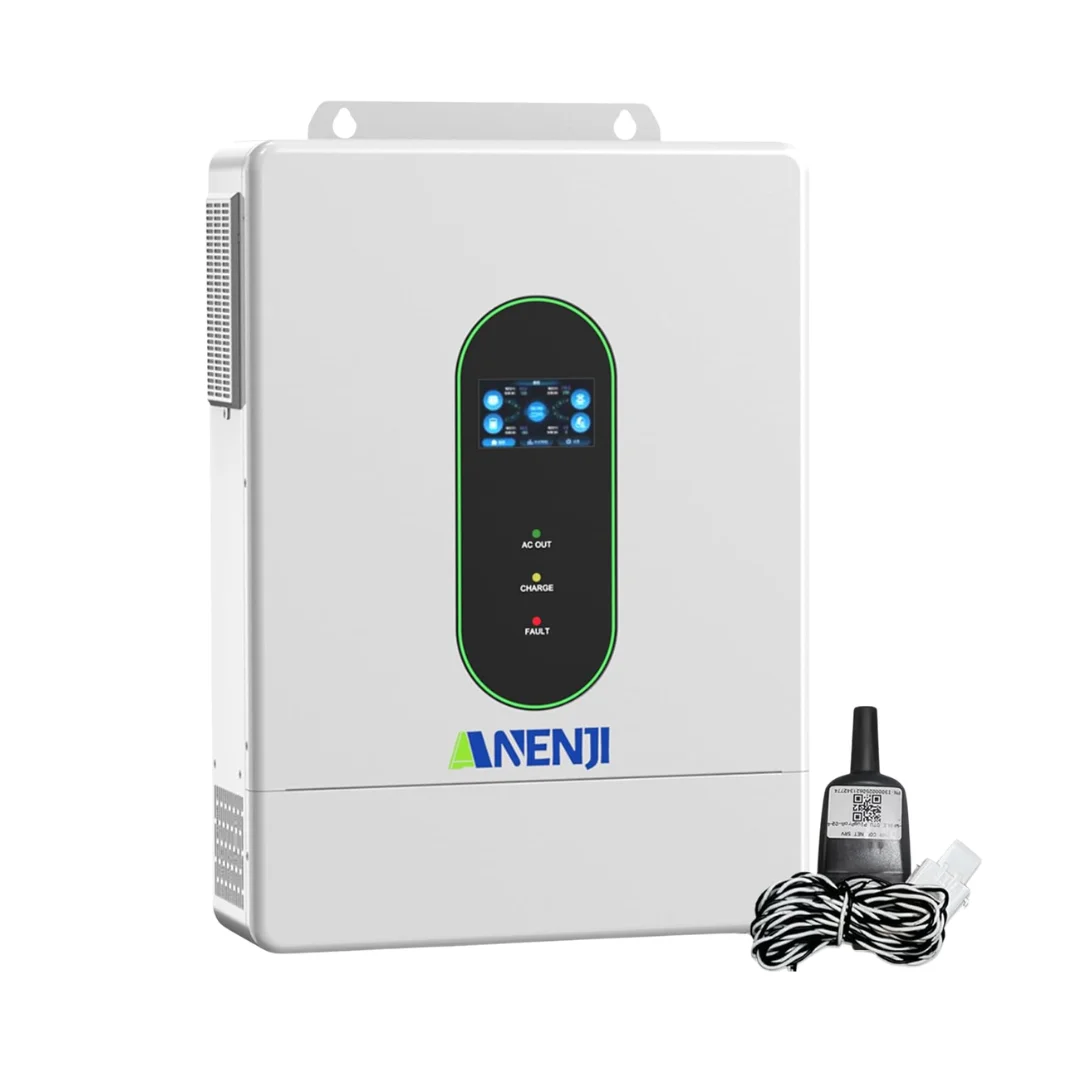
Your workshop requires 12,000 watts. Your well pump needs a 24,000W surge. Most inverters tap out at 10,000W. Not this one. Aninerel delivers 12,000W continuous from a 48V DC source, with dual MPPT solar charging controllers and a 220A battery charging current. Parallel connection supports up to six units. Total capacity: 72,000W. IP65 dustproof enclosure and smart variable-speed cooling system make it suitable for garage and outdoor installations.
OLED light-touch screen. WiFi monitoring. You get remote visibility into power production and battery status. Dual MPPT inputs boost solar harvesting efficiency by up to 30 percent compared to single-controller units. After a week, you’ll question the listed dimensions: 2.44 inches by 1.77 inches by 5.19 inches. That’s impossibly small for a 12,000W inverter. Peak power 18,000W. Professional installation is mandatory.
Buy this if you need a high-capacity, expandable inverter for a large off-grid home or commercial setup with a 48V battery bank. Skip it if you want a simple plug-and-play solution or if the contradictory specs make you uncomfortable.
8. BELTTT 2000W Pure Sine Wave Inverter, Best Value 2000W
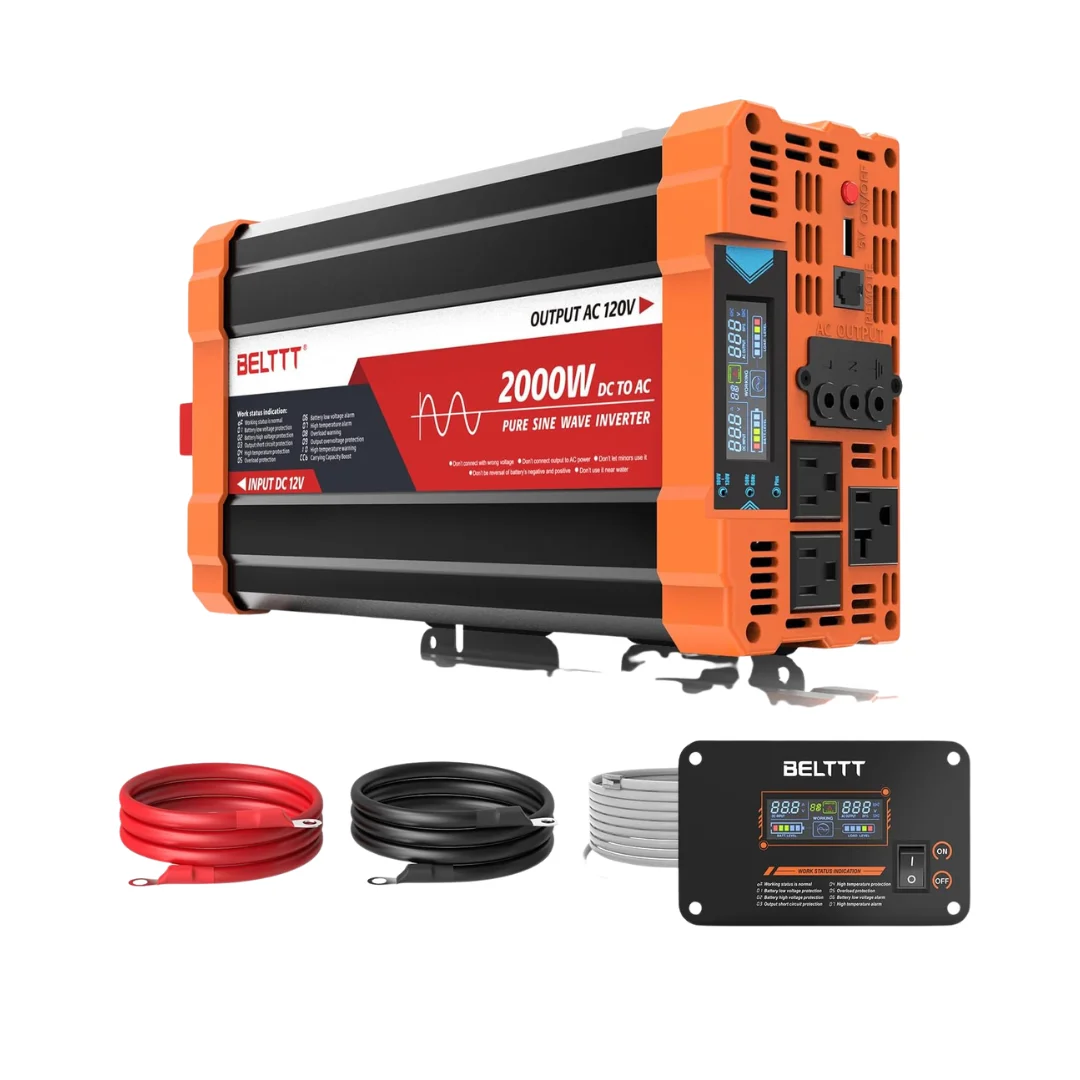
You need 2000W of clean power for an RV or small cabin. You don’t want to spend $300. This BELTTT delivers pure sine wave at $179.99 with a 23-foot remote controller cable. Mount the inverter out of sight, still control it from your living space. Dual AC sockets plus a dedicated 20A outlet give you flexibility. 93 percent efficiency and multiple safety protections make it reliable for daily use.
Aluminum and plastic housing. 7.72 pounds. 14.8 inches long. High-brightness LCD shows input voltage, output voltage, battery status, and load all at once. 4000W surge handles refrigerator and pump starts. After a week, you’ll notice the lack of a built-in transfer switch or pass-through charging. You manually connect and disconnect your battery source. Cooling fan is audible under load.
Buy this if you’re an RV owner or camper who needs a reliable 2000W pure sine wave inverter with the convenience of a wired remote. Skip it if you need more than 2000W continuous or want a compact, fanless design.
9. Renogy Inverter P2 3000W, Best Certified 3000W
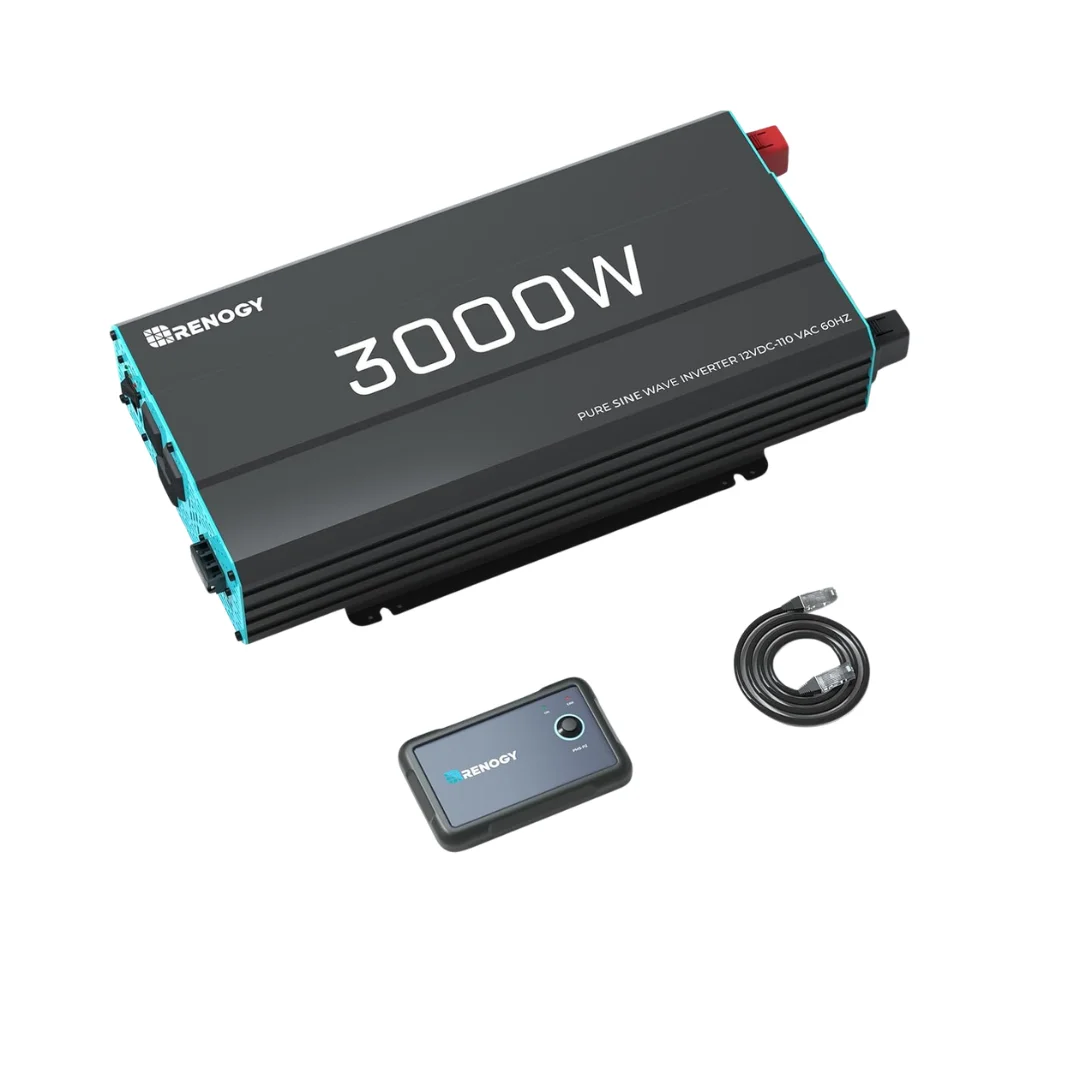
You want 3000W of clean power in your RV. Your insurance company wants certified equipment. This Renogy carries UL 458 and CSA C22.2 No. 107.1 certification. It meets safety standards for mobile and marine environments. Peak surge of 6000W with over 90 percent conversion efficiency handles motor starts and power tools. 16.4-foot wired remote gives you control from anywhere in the vehicle.
Metal housing. 12.5 pounds. 18.9 inches long. Three AC outlets and a terminal block handle multiple devices. High-speed cooling fans keep the unit operating at safe temperatures under continuous load. After a week, the limitation of this variant becomes clear: no Bluetooth, no ATS. You get basic remote on/off and fault indication. If you want remote monitoring and automatic transfer, you need the version with BT and ATS.
Buy this if you need a certified 3000W inverter for an RV, cabin, or truck camper and already have a separate charge controller and transfer switch. Skip it if you want all-in-one solar charging or Bluetooth monitoring.
Buying Guide: What to Look for in a Solar Power Inverter for Home
Pure Sine Wave Is Not Optional
Modified sine wave inverters are cheap for a reason. They make motors run hot, audio equipment buzz, and sensitive electronics fail prematurely. Every inverter on this list outputs pure sine wave. If you’re running a washing machine, a well pump, or a laptop, you need clean power. The SUNGOLDPOWER 5000W Hybrid proves that even sub-$700 units can deliver grid-quality AC with a 10ms UPS transfer time.
Continuous Wattage vs. Surge
Your refrigerator draws maybe 700 watts when running. When the compressor starts, it draws 2,000 watts. That surge capacity separates inverters that work from inverters that trip. The 3000W unit with 6000W surge handles that start. A 2000W unit with 4000W surge might not. Calculate your largest motor start and add 50 percent margin. The Renogy P2 3000W gives you that margin with its 6000W peak.
Build & Durability
Every unit over 60 lbs is stationary. The Jackery HomePower 3000 (59.5 lbs) is borderline carryable. The AFERIY (80+ lbs) is not. If you need to move it between garage and campsite, look for wheels. The Jackery HomePower 3600 Plus and Anker SOLIX F3000 have wheels. The others don’t.
Build & Durability
A 10,000W inverter in a plastic case is a fire risk in a $500 box. Look for metal enclosures, proper cooling fans, and protection features. The SRGFTS 4000W comes with a tempered glass top and metal chassis. The Aninerel 12000W claims IP65 dustproofing. Weight is a proxy for build quality in this category. A 7-pound 3000W inverter has different internals than a 12.5-pound one.
Ease of Use & Safety
Remote monitoring transforms an inverter from a black box to a tool you trust. The BELTTT 2000W includes a 23-foot remote cable. The 3000W inverter has a wired remote with LED display. LCD panels that show input voltage, load status, and fault codes save you hours of troubleshooting. Safety certifications matter for insurance and peace of mind. The Renogy P2 3000W carries UL 458 and CSA certification.
Value & Warranty
Price per watt is a trap. A $1,099 inverter that fails after two years costs more than a $1,635 inverter that runs for a decade. The SUNGOLDPOWER 10000W carries a 2-year warranty. The 3000W unit offers 3-year total coverage. The SRGFTS 4000W has only a 1-year warranty. The warranty length often reflects the manufacturer’s confidence in the product. Buy accordingly.
How to Care for Your 3000 Watt Solar Generator
Cleaning
Keep the air vents clear. Dust blocks heat dissipation, which degrades LiFePO4 batteries faster. Use a soft brush or compressed air. Don’t use water or solvents. If the casing is ABS (AFERIY) or aluminum/plastic (EF ECOFLOW), a dry microfiber cloth is fine.
Storage
Store at 50–70% charge, not full or empty. LiFePO4 batteries lose capacity faster when stored at 100% or 0%. Keep it in a dry, temperature-controlled space (32°F–86°F). Avoid garages that freeze or attics that bake. All units are non-returnable if damaged, so treat the battery like a delicate appliance.
Extending Lifespan
Don’t discharge below 20% regularly. LiFePO4 handles deep discharges better than older chemistries, but shallow cycles (20–80%) double cycle life. If you use the unit daily, top it up every night. If it’s emergency backup only, check the charge every 3 months and recharge to 50–70%. The Jackery HomePower 3600 Plus with ChargeShield 2.0 optimizes this automatically. Others need manual management.
Which Solar Power Inverter for Home Is Right for You?
| If you are… | Best pick |
|---|---|
| An off-grid homeowner with 48V batteries and heavy loads | SUNGOLDPOWER 10000W 48V |
| A mid-range user with 48V and sensitive electronics | SUNGOLDPOWER 5000W Hybrid |
| An RVer with 12V and limited space | BELTTT 1000W Pure Sine Wave |
| A vanlifer needing 3000W with remote control | 3000W Pure Sine Wave Inverter |
| A boat owner with 24V batteries | Renogy 2000W 24V |
| A cabin owner wanting MPPT and battery-less operation | SRGFTS 4000W Hybrid |
| A heavy-duty off-grid home needing expandability | Aninerel 12000W 48V Hybrid |
| An RVer wanting certified safety | Renogy Inverter P2 3000W |
The common thread: every buyer already has a battery system. If you don’t know your battery voltage, start there. 12V is everywhere but limits you to smaller loads. 24V and 48V let you scale up without replacing wiring. Your inverter choice is downstream of your battery decision.
Frequently Asked Questions
Q: What size solar power inverter do I need for my home?
A: Add up the running watts of everything you’ll run simultaneously. Add 50 percent for the largest motor start surge. A small cabin with lights, a fridge, and a laptop runs on 2000W. An off-grid home with a well pump, microwave, and power tools needs 5000W minimum. The SUNGOLDPOWER 10000W handles a whole house. The BELTTT 1000W covers a weekend camper.
Q: Can I use a 12V inverter with a 24V battery bank?
A: No. You must match the inverter input voltage to your battery bank voltage. The Renogy 2000W runs on 24V only. The 3000W unit runs on 12V only. Mismatching voltage damages both the inverter and the batteries. Check your battery bank voltage before you buy.
Q: Do I need a separate charge controller with these inverters?
A: It depends on the inverter. The SUNGOLDPOWER 5000W Hybrid and the SRGFTS 4000W include built-in MPPT charge controllers. The 3000W unit and the BELTTT 1000W are inverters only. If your inverter doesn’t have a built-in charge controller, you need a separate one between your solar panels and your batteries.
Q: How long does it take to install a solar power inverter for my home?
A: A small inverter like the BELTTT 1000W takes an hour with basic wiring skills. A 10,000W unit like the SUNGOLDPOWER requires a full day for mounting, battery cabling, AC wiring, and configuration. The Aninerel 12000W needs professional installation due to the high current and split-phase wiring.
Q: What is split-phase output and do I need it?
A: Split-phase provides both 120V and 240V from the same inverter. Standard home outlets run on 120V. Heavy appliances like well pumps, AC units, and dryers run on 240V. The SUNGOLDPOWER 10000W and the Aninerel 12000W offer split-phase output. If your home has 240V appliances, you need a split-phase inverter or two units wired in series.
Q: Can I connect multiple inverters for more power?
A: The Aninerel 12000W supports parallel connection of up to six units for 72,000W total. The SUNGOLDPOWER 5000W Hybrid does not support parallel operation. If you plan to scale up later, choose an inverter that explicitly supports parallel expansion.
Q: How do I know if an inverter is safe for my RV or home?
A: Look for UL or ETL certification. The SUNGOLDPOWER 5000W Hybrid is UL1741 listed by ETL. The Renogy Inverter P2 3000W carries UL 458 and CSA C22.2 No. 107.1 certification for RVs. Uncertified inverters may not pass insurance inspections.