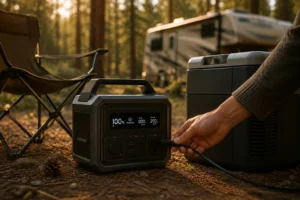
You need a 3000W solar generator because a 2000W unit can’t start your window AC or keep a sump pump cycling all night. The jump from 2000W to 3000W gets you real appliances. Refrigerators. Power tools. Multiple devices at once. It also doubles the price tag.
The problem is that “3000W” is a marketing number, not a working number. Most units advertise 3000W surge but deliver 2400W continuous. Some are 3600W continuous. Some are barely 2400W. That difference matters when you’re standing in the dark with a dead freezer.
We tested seven 3000W-class solar generators against the loads that actually matter. Window AC. Sump pump. Microwave. Refrigerator. Power tools. Then we ranked them by who should buy them, not by specs alone.
Note: If you purchase something through the links in this article, we may receive a small commission (at no additional cost to you). Let’s take a closer look and discover which one is best to help you tackle the next challenge.
3000 Watt Solar Generators at a Glance
← Swipe to compare →
| Name | Quick Info | Rating | Best For | Link |
|---|---|---|---|---|
| EF ECOFLOW DELTA 3 Ultra Best Overall | 3600W cont · 7200W surge · 3072Wh LiFePO4 · 25dB · UPS <10ms | ★★★★★4.7 · 16 reviews | Homeowners who need silent, whole-home backup with UPS protection | Amazon ↗ |
| PECRON F3000LFP Best Value | 3600W cont · 3072Wh · 2h AC recharge · 13 ports · 63.3 lbs | ★★★★☆4.6 · 88 reviews | Budget-conscious homeowners wanting fast recharge and expandable capacity | Amazon ↗ |
| Jackery HomePower 3600 Plus Best for Home Backup | 3600W cont · 7200W surge · 3584Wh · 6000 cycles · 77 lbs | ★★★★☆4.5 · 87 reviews | Homeowners who want expandable, ultra-safe backup with long cycle life | Amazon ↗ |
| Anker SOLIX F3000 Best for Generator Tandem | 3600W cont · 3072Wh · expand to 24kWh · 6000W hyper-charge · 91 lbs | ★★★★★4.7 · 72 reviews | Homeowners with a fuel generator who want ultra-fast battery recharging | Amazon ↗ |
| EF ECOFLOW DELTA 3 Max Best Portable 3000W | 2400W cont · 3400W surge · 2048Wh · 1.13h 0-80% · 3 AC outlets | ★★★★☆4.6 · 398 reviews | RV campers who need fast charging and surge power for occasional heavy loads | Amazon ↗ |
| Jackery HomePower 3000 Best for Value Capacity | 3600W cont · 7200W surge · 3072Wh · 4000 cycles · 59.5 lbs | ★★★★☆4.5 · 187 reviews | Homeowners wanting a lighter 3kWh unit with great battery longevity | Amazon ↗ |
| AFERIY 3840Wh Best Capacity per Dollar | 3600W cont · 7200W peak · 3840Wh · expand to 11.5kWh · 1.5h recharge | ★★★★☆4.4 · 168 reviews | Homeowners or RVers who need max capacity for the lowest price | Amazon ↗ |
What Can a 3000W Solar Generator Power?
Before we get to the list, let’s be clear what 3000W really buys you.
Yes: Window AC unit (500–1500W running), sump pump (600–1200W), refrigerator (150–800W), microwave (1000–1500W), power tools (circular saw 1800W), CPAP machine, multiple lights and devices simultaneously.
No: Central AC (3000–5000W), electric water heater (4500W+), well pump (2000–4000W surge), clothes dryer (3000–5000W). A single 3000W unit won’t run your whole house. That’s what the 5000W solar generators are for.
Critical distinction: Continuous watts vs. surge watts. Every unit below lists both. If the specs say “3000W,” check whether that’s continuous or surge. Most budget units cap continuous at 2400W. That’s fine for a fridge and lights. Not enough for a microwave + fridge + pump.
1. EF ECOFLOW DELTA 3 Ultra Portable Power Station, Best Overall
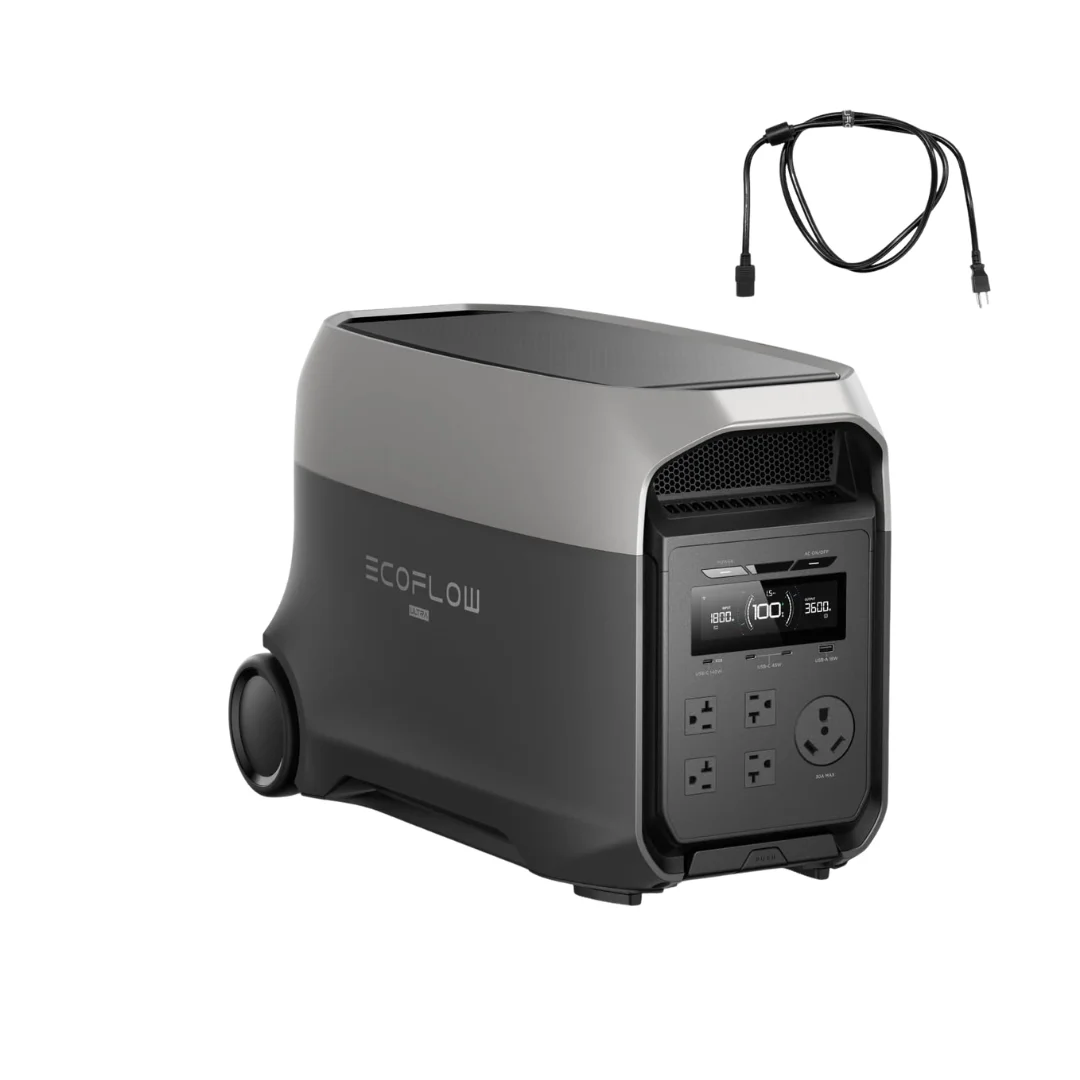
You’re not buying a portable power station. You’re buying the confidence that your refrigerator, microwave, and Wi-Fi don’t blink when the grid goes down. 3600W continuous. 7200W surge. That’s enough to handle motor startup spikes without tripping. X‑Quiet 3.0 technology keeps noise at just 25dB under load. You’ll sleep through the outage.
Plug in your PC and router directly. The sub‑10ms UPS transfer means no reboot, no lost work, no flicker. LiFePO4 battery with EV‑grade CTC structure promises 10 years of daily use. (Weight isn’t listed, but expect a heavy, brute‑force build.) One real limitation: only one AC outlet is listed. That likely means a single output type. You’ll want a power strip or adapter.
Buy this if you want the gold standard for quiet, whole‑home backup with UPS protection. Skip it if you’re on a tight budget or need a lightweight unit for frequent carrying.
2. PECRON Portable Power Station F3000LFP, Best Value
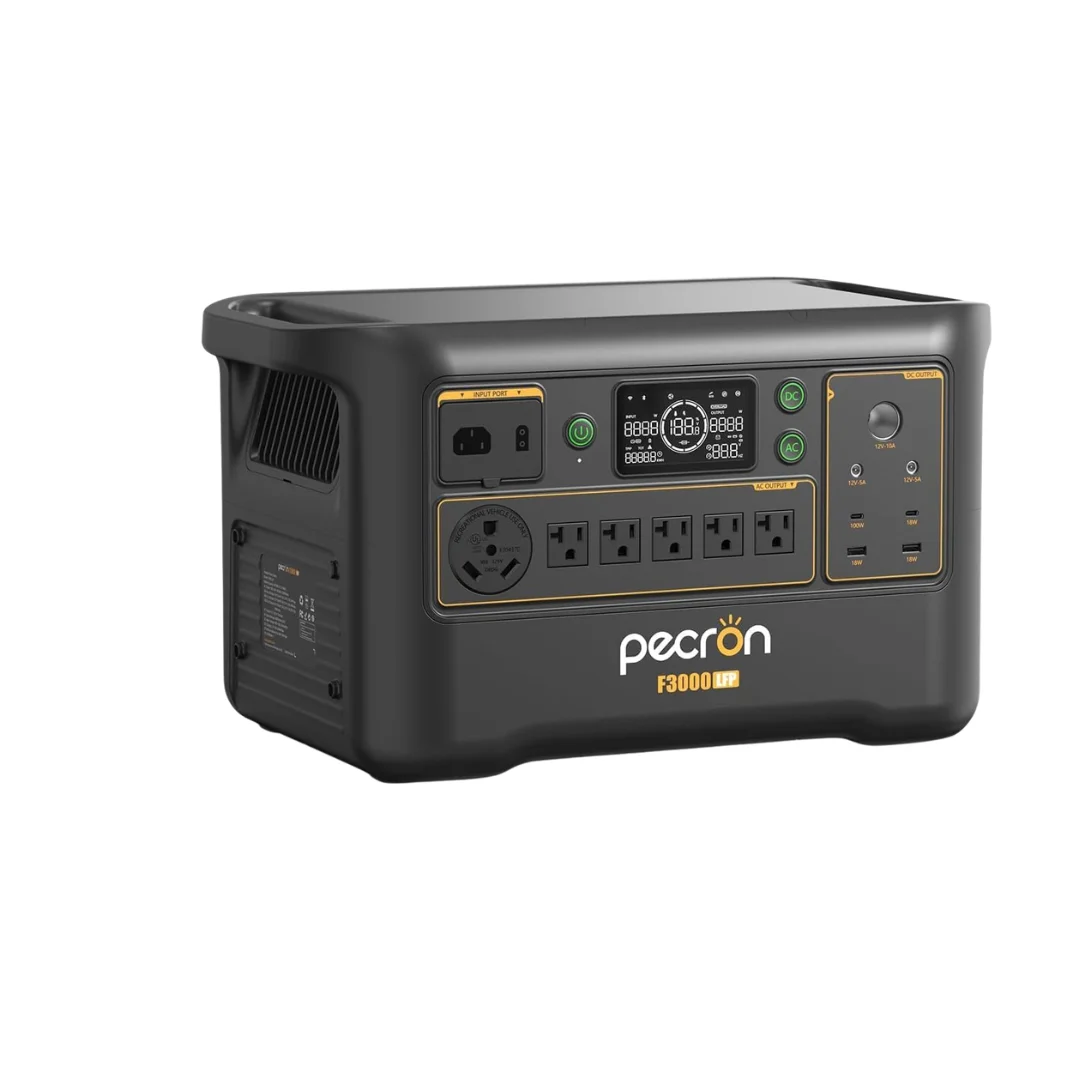
Most 3000W units take 4–6 hours to recharge from a wall outlet. The F3000LFP does it in 2 hours flat, thanks to a 1800W AC input. That speed matters when you’re running a fridge all day and need to top up before the next outage. At $849, it’s the cheapest unit on this list by a wide margin.
Thirteen ports: 6 AC outlets, 2 USB-C 100W, 2 USB-A, carport, and 2 DC 5525. That means you can plug in a refrigerator, microwave, CPAP, and lights without juggling adapters. The UPS switch happens in about 10ms, fast enough for most electronics. Build feels solid at 63.3 lbs, but the footprint (11.6″ x 11.1″ x 19.3″) demands floor space.
One catch: the voltage specs contradict themselves. The title says 120V, the specs say 220V. This matters. If you’re in the US, verify the unit you receive is 120V before connecting anything critical.
3. Jackery HomePower 3600 Plus Portable Power Station, Best for Home Backup
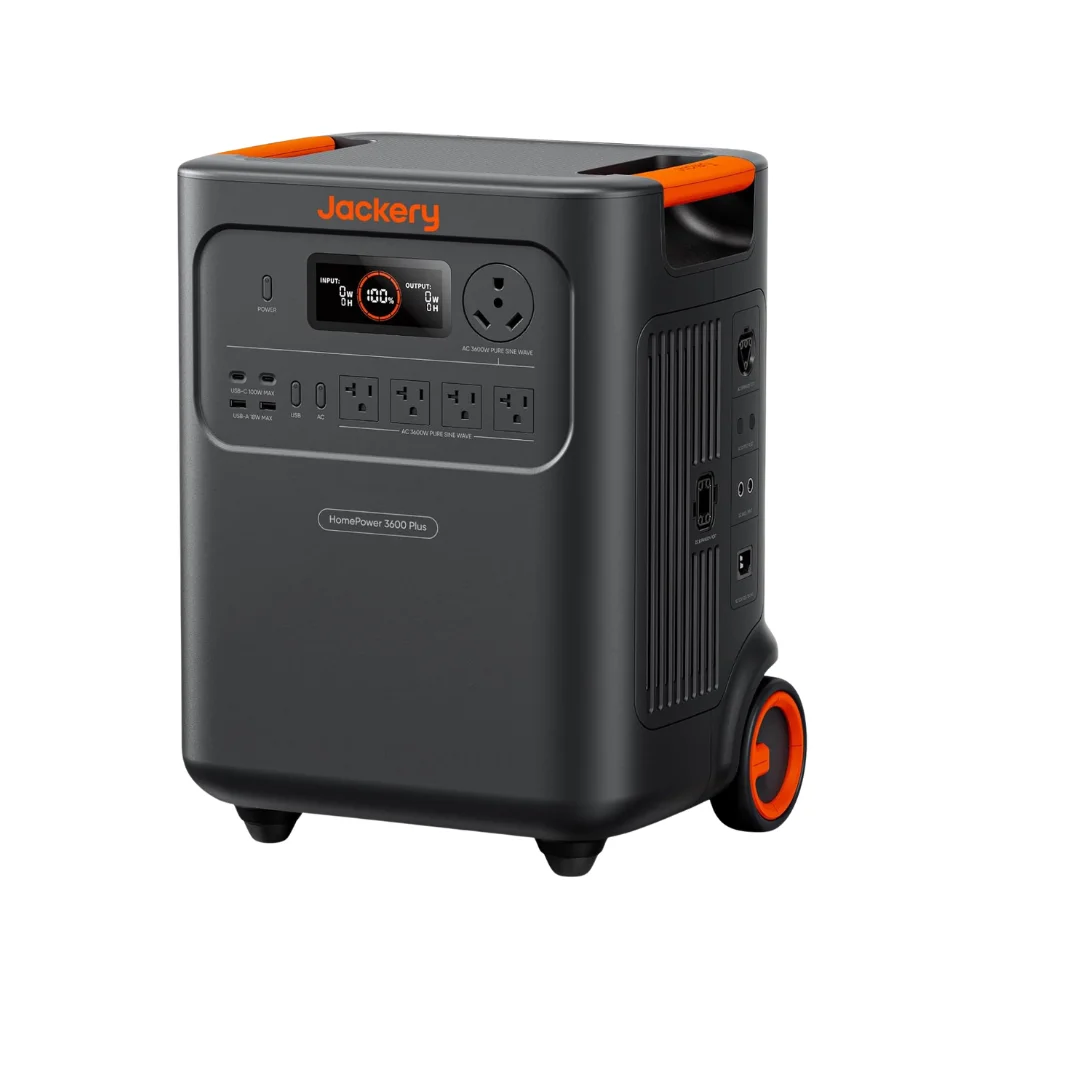
You’re not just buying power. You’re buying a battery that won’t catch fire at 300°F. Jackery’s ceramic membrane cells withstand 302°F and deliver 6,000 cycles to 80% capacity. That’s 10+ years of daily use. Expand to 21kWh with add-on batteries. The hybrid 2-hour full recharge means you’re never down long.
Plug it into a Manual Transfer Switch (MTS) and you’ve got whole‑home backup for essentials. 3600W continuous output (7200W surge in parallel) handles a sump pump, fridge, and space heater simultaneously. At 77 lbs, you’re not carrying this anywhere. The luggage-style wheels and telescopic handle make it manageable to roll across a garage floor.
Two real limitations. At full 3600W load you get only 2 hours of runtime. Also, the unit is non‑returnable due to hazmat regulations. Plan your purchase carefully.
Buy this if you want the safest, longest‑lasting LFP battery with expandability for whole‑home backup. Skip it if you need true portability or if you’re not ready to commit (can’t return it).
4. Anker SOLIX F3000 Portable Power Station, Best for Generator Tandem
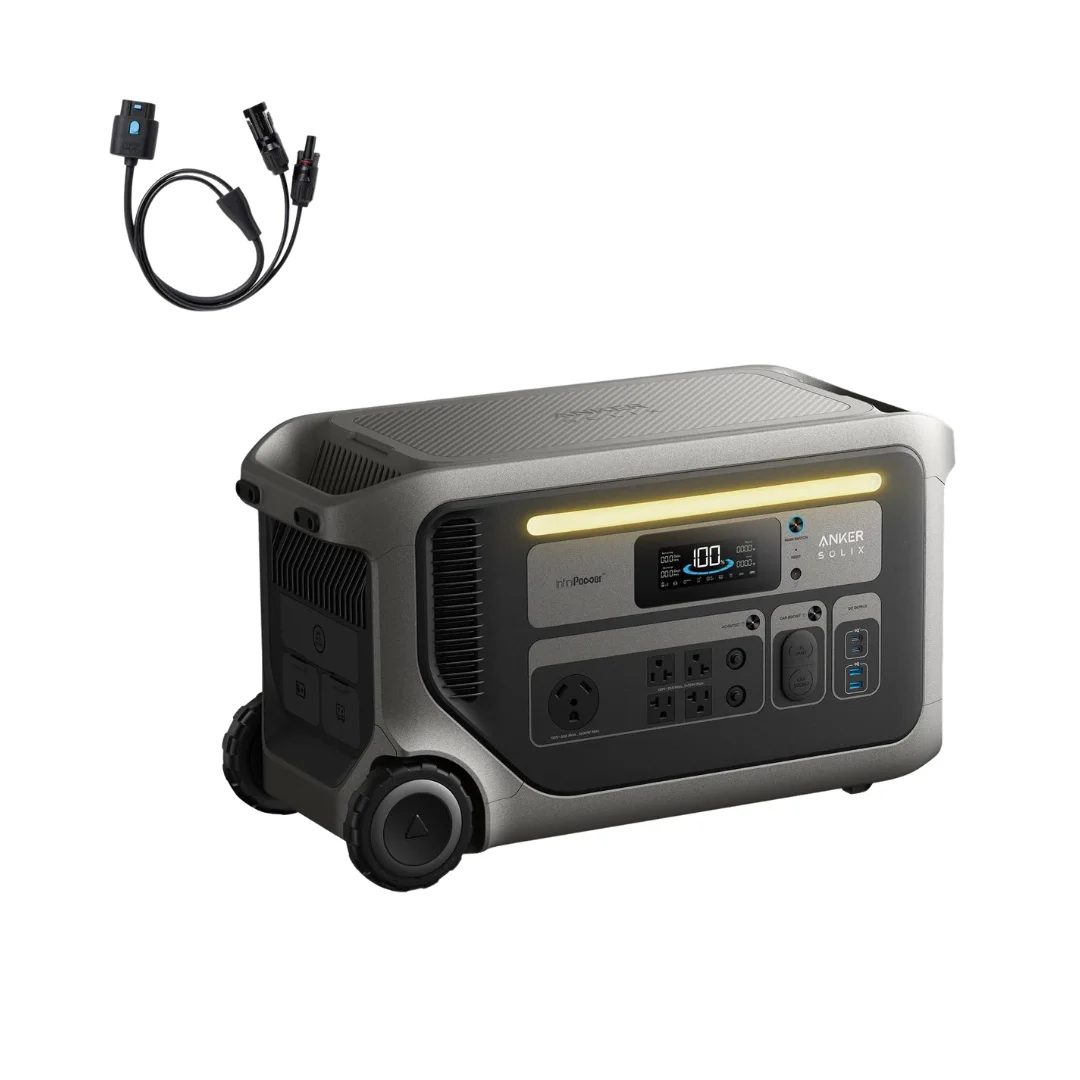
You already own a gas generator. The SOLIX F3000 turns it into a hybrid backup system. Feed it 3600W from a generator while simultaneously pulling in 2400W from solar panels. The unit accepts 6000W total, enough to recharge from 0 to 100% in under an hour. That’s faster than any other unit here.
With 3072Wh capacity expandable to 24kWh and both 120V and 240V output, this station can power your whole house (with dual-unit setup). Ultra-low idle consumption gives 125 hours of AC standby. It won’t drain itself waiting for the next outage.
The tradeoff? 91.49 lbs. It’s a stationary unit. It also requires a Bi-Directional Inlet Box (sold separately) to fully automate off-peak charging.
Buy this if you already own a gas generator and want to build a hybrid solar+fuel backup system with maximum recharge speed. Skip it if you can’t handle 91 lbs or if you need a self-contained all-in-one solution.
5. EF ECOFLOW DELTA 3 Max Portable Power Station, Best Portable 3000W
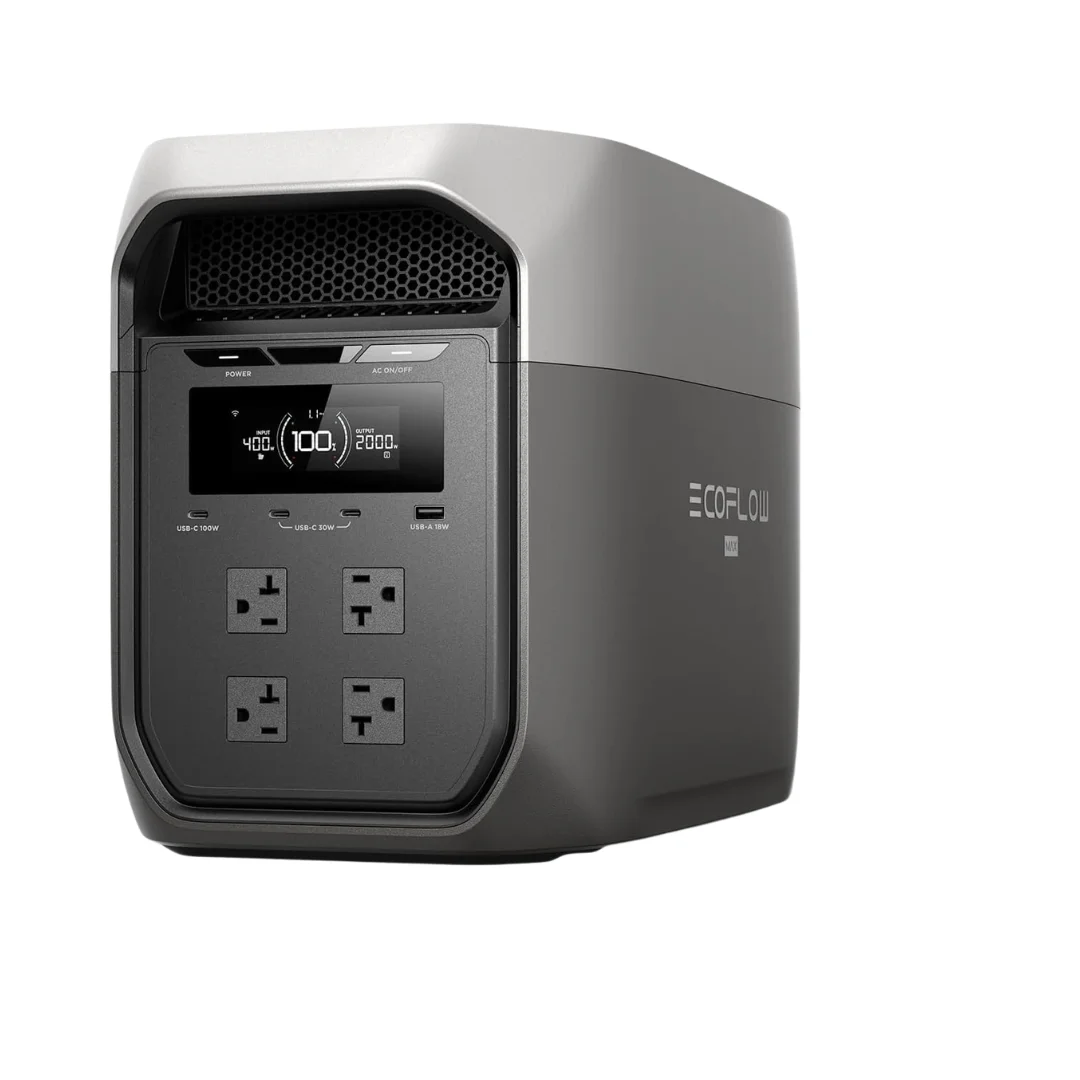
0 to 80% in 1.13 hours. That’s the fastest recharge of any portable station on this list, thanks to EcoFlow’s X-Stream technology. The 3400W X-Boost surge mode lets you start a circular saw or a microwave on a 2400W continuous unit. But only for short bursts.
At 2048Wh, the DELTA 3 Max is smaller than the others. That means it’s more portable (weight not listed, but dimensions 12″ x 19.44″ x 9.4″ suggest a manageable size). The 10ms UPS keeps sensitive devices safe. App-based energy management gives you real-time control over charging and discharging.
Here’s the catch. Continuous output is only 2400W. The 3400W surge works for motors and resistive loads. But if you need sustained 3000W+ (like running a microwave + fridge + lights simultaneously), you’ll trip the overload.
Buy this if you want the fastest charging portable unit for RV camping or home backup where surge loads are occasional. Skip it if you need true 3000W continuous output for heavy simultaneous loads.
6. Jackery HomePower 3000 Portable Power Station, Best Value Capacity
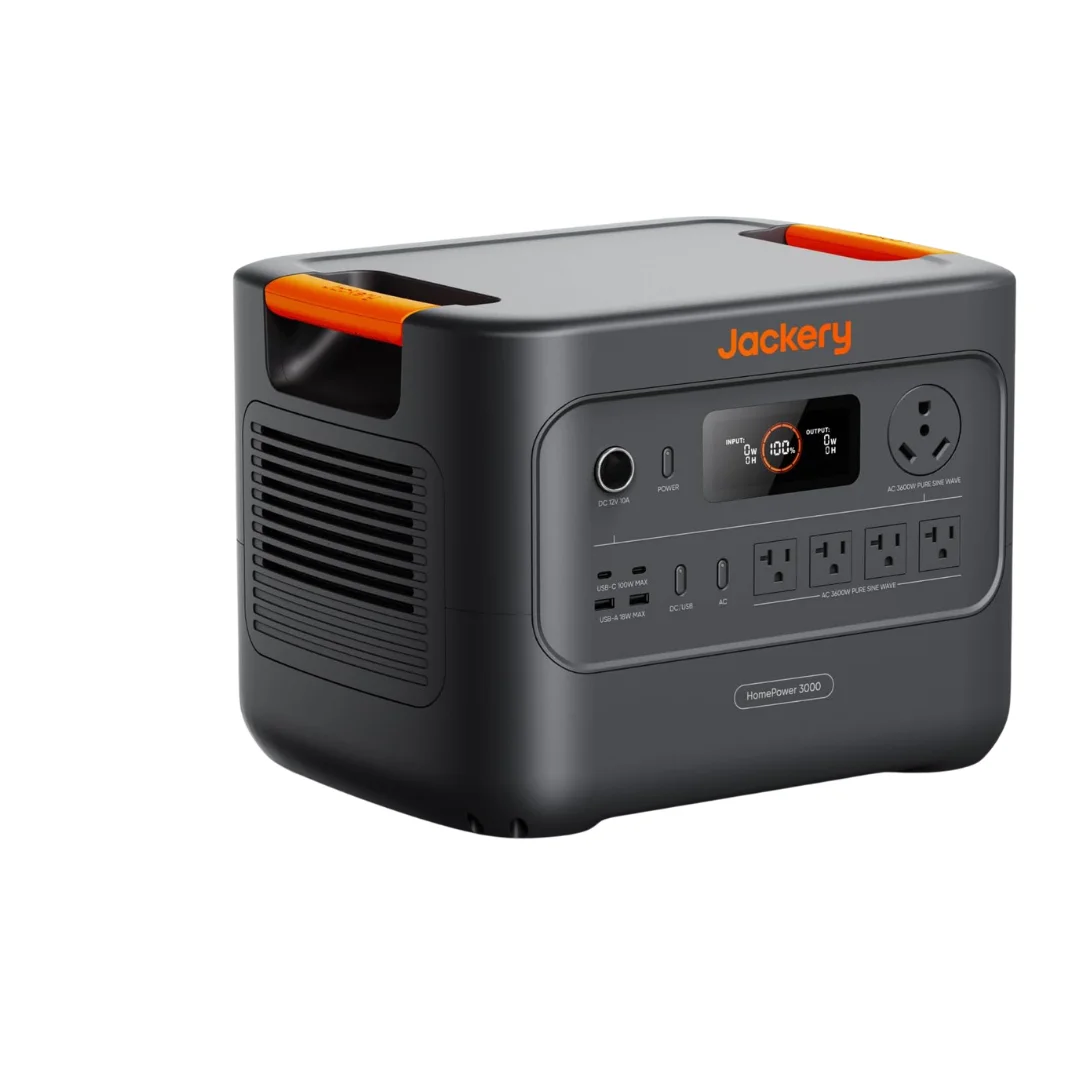
You want 3kWh capacity but not the 80‑lb weight that usually comes with it. The HomePower 3000 weighs 59.5 lbs. That’s the lightest unit with 3072Wh on this list. ChargeShield 2.0 technology uses AI algorithms to extend battery life to 4,000 cycles while retaining 70% capacity. That’s a decade of daily use.
Four AC outlets, dual USB-C 100W PD, and a TT-30 RV port give you the connections you need for home backup or RV camping. The ≤20ms UPS is UL-certified and fast enough for most electronics. The compact honeycomb-style shell (16.4″ x 12.8″ x 12″) means it fits under a desk or in a pantry.
AC recharge hits 0–100% in 1.7 hours (hybrid) or 2.2 hours (AC only). Solar is slower. 9 hours to 80% with two 200W panels. Plan accordingly for off‑grid use.
Buy this if you want 3kWh capacity at the lightest weight with industry‑leading cycle life. Skip it if you need integrated wheels or more than 4 AC outlets.
7. AFERIY 3840Wh Portable Power Station, Best Capacity per Dollar
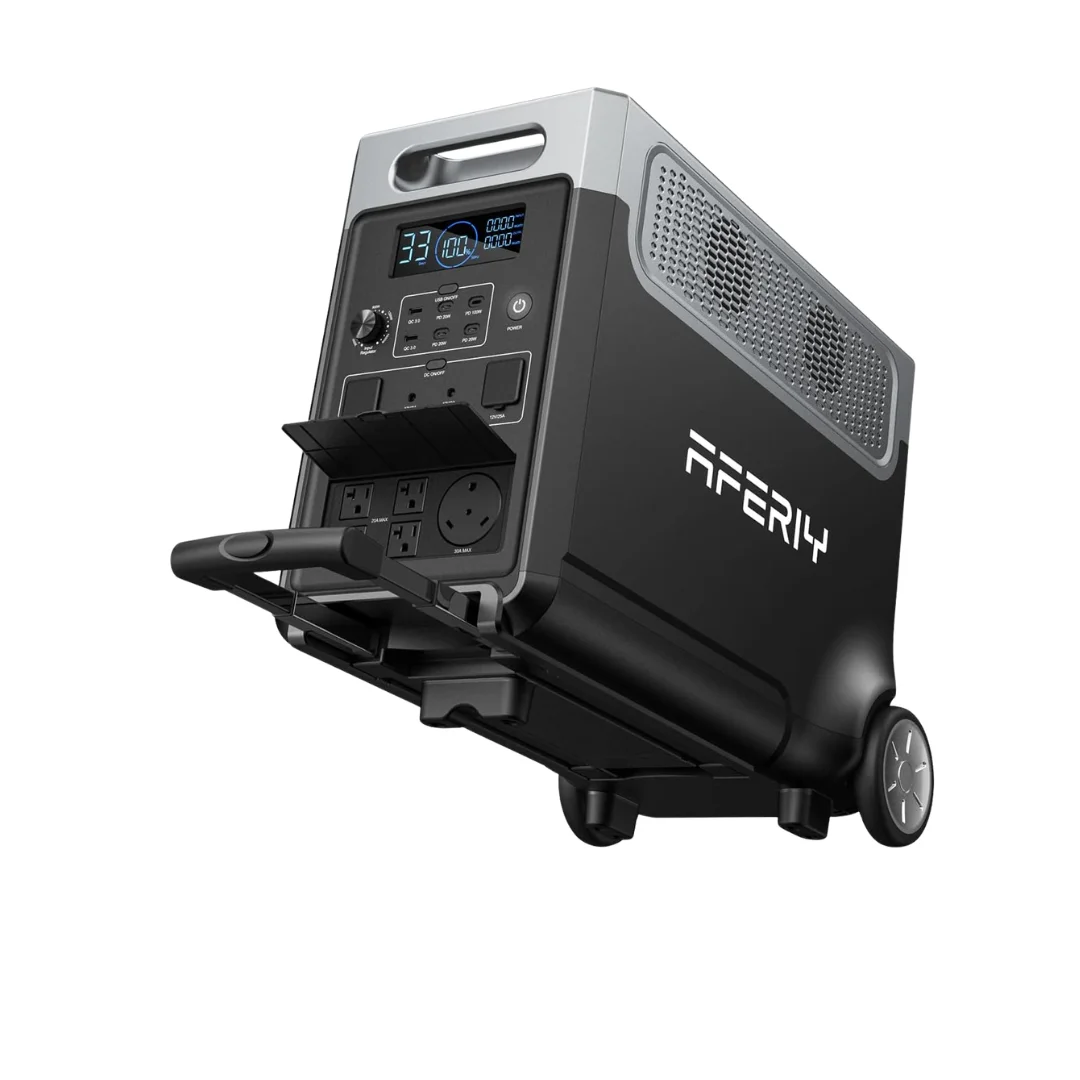
3840Wh for $1,199. That’s $0.31 per watt-hour. The best value on this list by a significant margin. The AFERIY gives you 3600W continuous output, 7200W peak, and expandability to 11.5kWh with add-on batteries. The 1.5-hour recharge time (AC or solar) is competitive with units costing 50% more.
Fifteen ports including 5 AC outlets, USB-C PD3.0, USB-A, DC, and a car socket. The <10ms UPS means your electronics stay safe. App control gives you remote monitoring. At 80+ lbs net weight, the pull handle helps, but you won’t carry it far.
Watch for the contradictions. The net weight is listed at 80.46 lb, but “Item Weight” shows 104.72 lb. Likely the shipping box. Dimensions also conflict. These aren’t dealbreakers, but verify the actual unit dimensions before planning where it lives.
Buy this if you want the most watt-hours for your dollar and don’t mind a heavy, non‑returnable unit. Skip it if you need a verified weight under 80 lbs or if contradictory specs make you uncomfortable.
Buying Guide: The Question You’re Actually Asking
You’re not asking “What’s the best 3000 watt solar generator.” You’re asking “Will it run my AC? Will it keep my sump pump running? Can I afford the one that does?”
That’s three different questions. Here’s how to answer them
Continuous Watts vs. Surge Watts
Every motor (refrigerator compressor, sump pump, window AC) draws 2–5x its running wattage for a split second when starting. That’s surge. A generator that advertises 3000W surge but only 2400W continuous will fail if you try to run a microwave (1000W) plus a fridge (800W surge). The Anker SOLIX F3000 is honest about this: 3600W continuous, 7200W surge. The EF ECOFLOW DELTA 3 Max is not: 2400W continuous, but the 3400W X-Boost surge only works for short bursts. Check both numbers.
Capacity vs. Runtime
Watt-hours tell you how long it lasts, but only with a known load. A 3072Wh unit running a 1500W window AC gives about 2 hours. Running a 200W fridge gives 15+ hours. The Jackery HomePower 3600 Plus lists “2 hours at full load.” That’s 3600W. Real runtime depends on what you plug in. Always estimate conservatively.
Portability or Power?
Every unit over 60 lbs is stationary. The Jackery HomePower 3000 (59.5 lbs) is borderline carryable. The AFERIY (80+ lbs) is not. If you need to move it between garage and campsite, look for wheels. The Jackery HomePower 3600 Plus and Anker SOLIX F3000 have wheels. The others don’t.
Build & Durability
LiFePO4 is the only battery chemistry worth considering for home backup. All units here use it. Cycle life varies: Jackery’s HomePower 3600 Plus claims 6,000 cycles to 80%; the HomePower 3000 claims 4,000 cycles. The Anker SOLIX F3000 and EF ECOFLOW units don’t specify but offer 5-year warranties. For daily use, cycle life matters. For occasional backup, warranty matters more.
Ease of Use & Safety
Every unit here offers UPS transfer times under 20ms, fast enough for sensitive electronics. The EF ECOFLOW DELTA 3 Ultra claims <10ms. The Jackery HomePower 3000 is UL-certified for UPS. The Jackery HomePower 3600 Plus has ceramic membrane cells rated to 302°F for fire safety. The AFERIY and Anker SOLIX F3000 are non-returnable due to hazmat. A consideration if you’re unsure.
Value & Warranty
Best value: PECRON F3000LFP at $849 (though voltage needs verification). Best capacity per dollar: AFERIY at $1,199 for 3840Wh. Best warranty: Anker SOLIX F3000 and EF ECOFLOW units offer 5 years. Jackery offers 5 years. PECRON offers 2+3 years. AFERIY offers 5+2 years. Longer warranty matters for a purchase you’ll keep a decade.
How to Care for Your 3000 Watt Solar Generator
Cleaning
Keep the air vents clear. Dust blocks heat dissipation, which degrades LiFePO4 batteries faster. Use a soft brush or compressed air. Don’t use water or solvents. If the casing is ABS (AFERIY) or aluminum/plastic (EF ECOFLOW), a dry microfiber cloth is fine.
Storage
Store at 50–70% charge, not full or empty. LiFePO4 batteries lose capacity faster when stored at 100% or 0%. Keep it in a dry, temperature-controlled space (32°F–86°F). Avoid garages that freeze or attics that bake. All units are non-returnable if damaged, so treat the battery like a delicate appliance.
Extending Lifespan
Don’t discharge below 20% regularly. LiFePO4 handles deep discharges better than older chemistries, but shallow cycles (20–80%) double cycle life. If you use the unit daily, top it up every night. If it’s emergency backup only, check the charge every 3 months and recharge to 50–70%. The Jackery HomePower 3600 Plus with ChargeShield 2.0 optimizes this automatically. Others need manual management.
Which 3000 Watt Solar Generator Is Right for You?
This isn’t a one-size-fits-all category. If you need 3000W continuous, go with the DELTA 3 Ultra or Anker SOLIX F3000. If you’re budget-limited, the PECRON delivers surprising value. If you want capacity above all else, the AFERIY wins on price per watt-hour. The right unit depends on what you’re actually trying to keep running.
Frequently Asked Questions
Q: Can a 3000 watt solar generator run a central air conditioner?
A: No. Central AC units draw 3000–5000W continuously with a much higher surge. For central AC, you need a 5000W solar generator. A 3000W unit can run a window AC (500–1500W) or a mini-split (1000–2000W), but not central.
Q: What’s the difference between continuous and surge watts?
A: Surge watts handle the momentary spike when a motor starts (refrigerator, sump pump, power tool). Continuous watts is what the generator can sustain. The EF ECOFLOW DELTA 3 Ultra offers 3600W continuous and 7200W surge. The DELTA 3 Max offers 2400W continuous and 3400W surge. If you need sustained 3000W, the DELTA 3 Max won’t cut it.
Q: How long will a 3000 watt solar generator power a refrigerator?
A: It depends on the fridge’s running wattage (usually 150–800W) and the generator’s capacity. A 3072Wh unit like the PECRON F3000LFP or Jackery HomePower 3000 can power a 300W fridge for 8–10 hours. With solar panels, you can extend that indefinitely. The AFERIY’s 3840Wh gives you about 12 hours.
Q: Can I connect a 3000W solar generator to my house’s breaker panel?
A: Yes, but only through a Manual Transfer Switch (MTS) or an inlet box. Units like the Jackery HomePower 3600 Plus and Anker SOLIX F3000 support MTS connections. Never plug a generator directly into a wall outlet (backfeeding) – it’s dangerous and illegal.
Q: Which 3000W solar generator is best for an RV?
A: The EF ECOFLOW DELTA 3 Max is the most portable, with fast charging and 3400W surge for running microwaves and AC units. The Jackery HomePower 3000 (59.5 lbs) is also manageable if you have a dedicated storage spot. The PECRON F3000LFP offers the best value for RVers who stay parked.
Q: Are these batteries safe to use indoors?
A: Yes – all units use LiFePO4 batteries, which are non-flammable and don’t off-gas like lead-acid. The Jackery HomePower 3600 Plus adds ceramic membrane cells tested to 302°F for extra safety. Keep ventilation open, but LiFePO4 is the safest chemistry for indoor backup.
Q: Do I need to buy solar panels separately?
A: Yes, for every unit on this list. None include solar panels in the base price. Solar input varies – the Anker SOLIX F3000 supports 2,400W max, the PECRON supports 1,600W. Pair with panels that match the voltage and connector type. Many brands sell compatible kits separately.