
It’s a painful process looking for the perfect hiking boots for men, which can be more difficult than spending days on end trudging through the backcountry. Both are designed for different kinds of foot or leg postures, and sometimes even that might interfere with the durability, comfort level, waterproofing factor, or traction. I have worn beautiful boots in hundreds of miles, all of which were lost from my feet through blisters. That’s why I put together this guide: to help you cut through the marketing and get a of what actually works sense in the real world.
The perfect hiking boone ot is that has a good fit, the right footbed shape, and enough space to avoid foot pinching. Whether you prefer rocky switchbacks or multi-day backpacking, the right boot (or the wrong one) can make or break your hike.
Here, I’m going to explain the three primary hiking boot categories, break down what you need to consider when it comes to fit and sizing before you buy, examine how the materials (leather or synthetic) of a boot impact its performance, and provide some insight into waterproofing. Better yet, I’ve chosen the seven best men’s hiking boots – based on my personal experience as well as real user reviews – so you can save time and money. I will summarise each boot’s best uses, target users, and where it might fall short.
Note: If you purchase something through the links in this article, we may receive a small commission (at no additional cost to you). Let’s take a closer look and discover which pair is best to help you tackle the next challenge.
Our Top Picks
Top Hiking Boots For Men:
1. Salomon Men’s X Ultra 5 Mid GTX
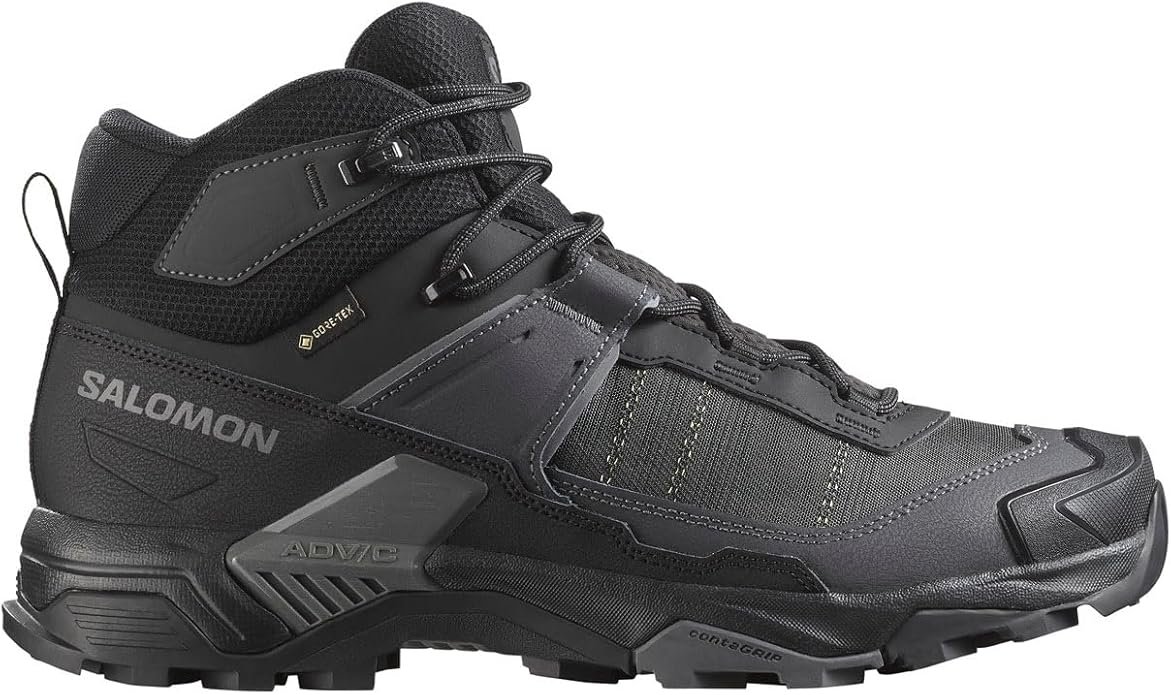
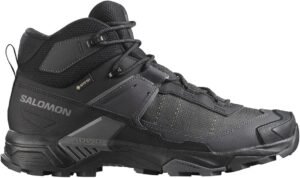
The Salomon X Ultra 5 Mid GTX features the classic Salomon DNA: it’s comfortable and capable, with terrific grip and durability. It feels like a trail runner but acts like a light tank. An abrasion-resistant Matryx upper is also flexible, and a high-traction Contagrip rubber tread provides excellent traction on rocks and descends steep grades. If you desire smart performance, tough waterproof protection, and shoes that match your active style, then this boot is your trail companion.
2. LOWA Men’s Renegade Evo GTX Mid
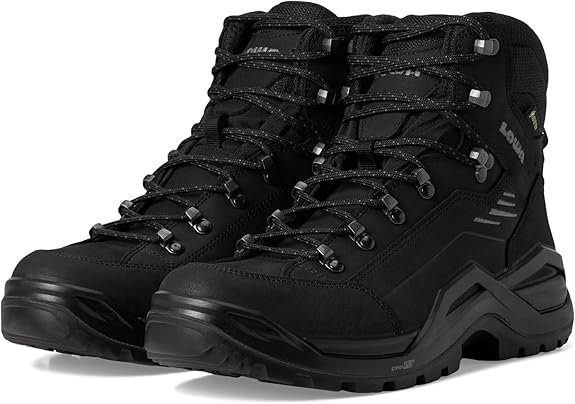
The Renegade Evo GTX Mid is an evolution of a legend. LOWA kept everything hikers adore about the original Renegade, toughness, fit, and support – and updated it with modern improvements on the classic: fewer seams, improved midsoles, and cleaner styling. Constructed with Heinen Terracare Nubuck leather and lined with a waterproof-breathable Gore-Tex, the boot is designed for serious backpackers or anyone who prefers longevity over flash. It’s a splurge, he said, but one that may be worth it for big mileage.
3. Merrell Men’s Moab 3 Mid Waterproof Hiking Boots
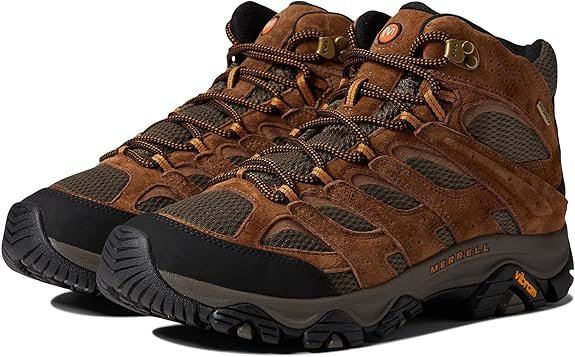
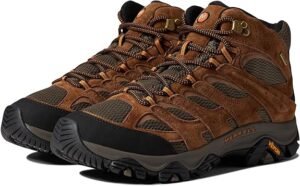
Merrell’s third generation of the best-selling hiking boot in the world, the Moab 3 Mid Waterproof, is showcased. Thanks to a more cushioned midsole, improved insole support, and an enhanced Vibram TC5+ sole, the Moab 3 delivers serious all-around performance for casual hikers and weekend warriors. AKU’s patented IMS2 technology offers support and shock absorption, while the waterproof membrane keeps feet dry. The bellows tongue and protection toe cap block debris. What really sets it apart? That legendary out-of-the-box comfort, with no break-in required. And at this price, it’s a no-brainer for trail enthusiasts.
4. Salomon Men’s Quest 4 GORE-TEX® Hiking Boots
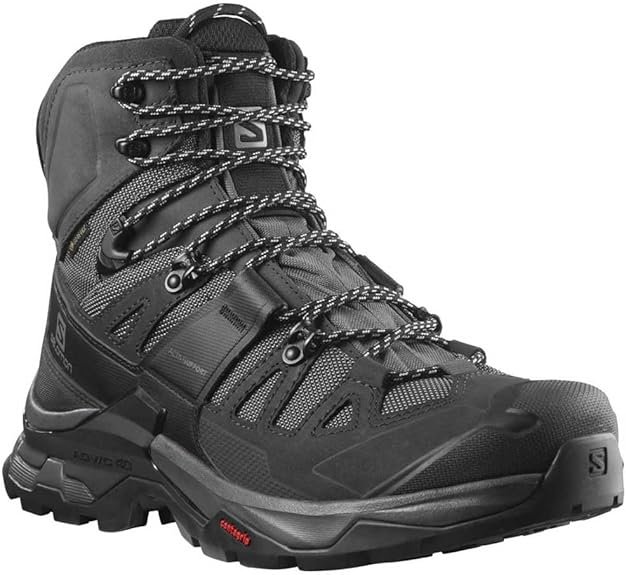
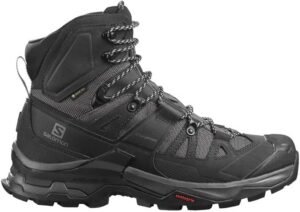
The Salomon Quest 4 GTX is the very definition of a serious hiking boot. Designed with hard-core hikers in mind, it combines trail-running technology with a structured frame, providing agility without sacrificing form. Its evolved ACS chassis, along with stabilizing sole technology and the sturdy Contagrip outsole, maintains comfort and support over rough terrain with ease. It’s constructed to not only support heavy payloads but also protect your feet and stave off the fatigue of multi-day treks. If you need a bombproof boot for hauling heavy loads over long distances, this is your boot.
5. La Sportiva Men’s Ultra Raptor II Mid Leather GTX
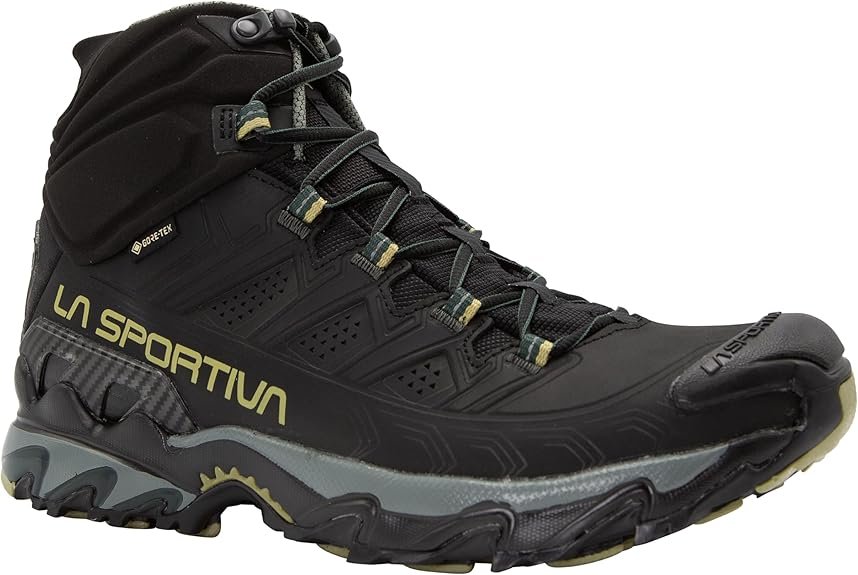
With the Ultra Raptor II Mid Leather GTX, you get trail-runner speed and hiking-boot protection. Its FriXion AT 2.0 outsole scrabbles up descents and bites into particulate rock as you bag your technical points, with a plush MEMlex EVA midsole for added cushion and a GORE-TEX lining to keep moisture at bay. A heel cup and TPU shank provide stability, offering both structure and mobility in a boot that stands out from others at this price point. It’s a great option for quick hikers who want the durability of leather without the weight of traditional boots.
6. La Sportiva Men’s Nucleo High II GTX Hiking Boots
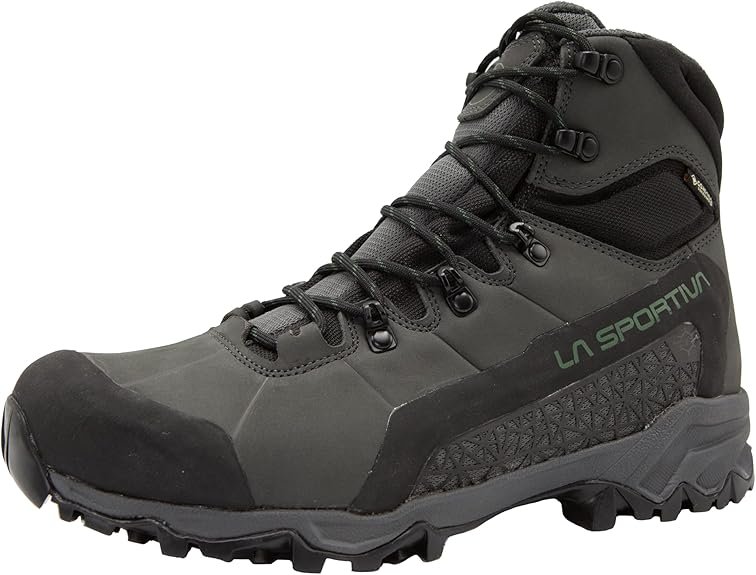
Designed for serious hikers and backpackers who can’t afford to have their feet ill-equipped on the trail, the Nucleo High II GTX isn’t messing around. What distinguishes it is the GORE-TEX Surround – a special membrane that we have described as being able to keep water out while venting heat and sweat from underneath your foot. Paired with a Nubuck leather upper, breathable Nano Cell inserts, and a Vibram XS-Trek sole that provides increased traction and stability, the G5 is tough yet comfortable to wear day after day. The 3D Flex ankle hinge offers a faster break-in time and immediate trail comfort.
7. KEEN Men’s Targhee 2 Mid Waterproof Hiking Boots
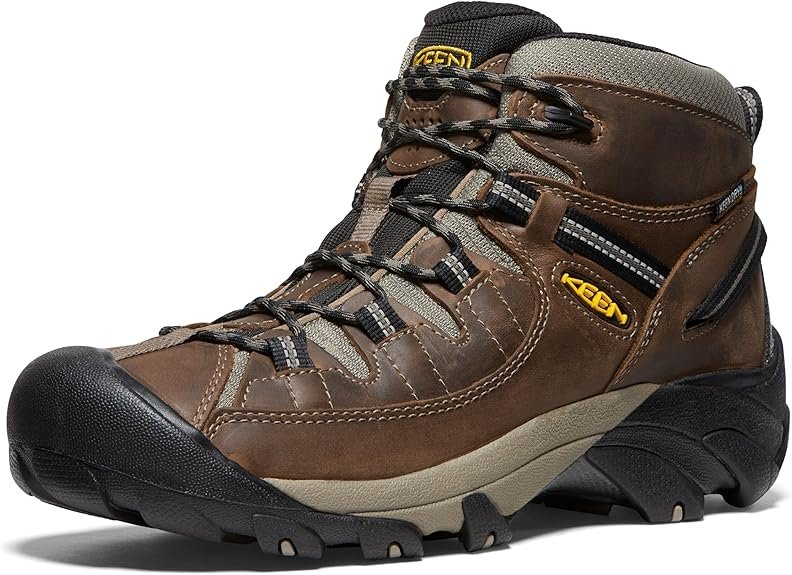
KEEN’s flagship all-rounder for day hikers and weekend trekkers: the Targhee 2 Mid WP. Best known for its roomy toe box, firm arch, and ankle support, as well as its aggressive outsole, it’s a great pick if you want a boot that feels like a hiking sneaker but works like a trail workhorse. The KEEN. The KEEN DRY membrane keeps your feet dry on muddy terrain, while the toe guard prevents rock hits. Still one of the best mid-range boots for all-terrain adventures, with more than 13,000 reviews backing the claim to comfort.
Types and Features of Hiking Boots
Since there are all different kinds of hiking boots. Full-grain leather boots (such as classic mountaineering models) are incredibly durable and offer great water resistance, but they’re on the heavier side and usually require a period to break in. Hybrid boots incorporate leather with mesh to reduce weight, while synthetic boots (often made from polyester or nylon) are lighter, dry faster, and break in more quickly – although they tend to wear out more quickly as well.
Leather vs. Synthetic: Leather boots are like the SUVs of hiking footwear — thick, supportive, and built for rough terrain. Full-grain or nubuck leather delivers long-term stability and durability. Ideal for carrying a heavy pack over long distances, while enjoying excellent breathability and comfort. Synthetic boots (especially those lined with GORE-TEX), by contrast, are more like sports cars: they’re lighter, more breathable, and faster to break in, but they tend not to last as long. I generally favour leather for more heavy-duty backpacking and trekking, while synthetic boots are ideal for fastpacking or hot-weather hikes.
Height (Ankle Support): There are also low, mid, or high-cut boots:
1. High-cut boots rise above the ankles and offer plenty of support — perfect for rocky or uneven terrain.
2. Mid-cut boots are the most popular, offering a balance of support and weight.
3. Low-cut boots resemble trail runners, offering greater flexibility but less ankle protection.
Anecdotally, I’ve found that rigid high-ankle boots (such as the Salomon Quest 4 GTX) really lock your foot into place on steep climbs and loaded treks. If you spend most of your time on groomed trails or moving quickly, a mid- or low-cut boot might be a better fit.
Waterproof vs. Breathable: The majority of waterproof boots employ membranes, such as GORE-TEX, to keep rain and splashes out while allowing moisture vapor to escape. In wet or muddy conditions, they are essential. However, waterproofing inhibits breathability, potentially causing your feet to sweat more on hot days. My recommendation: ensure they’re waterproof if you anticipate rain, mud, or snow. Breathable, non-waterproof alternatives that provide cooler comfort for hot, dry climates.
Outsole and Traction: Traction is a critical feature. Look for monster truck-like rubber outsoles with deep, multi-directional lugs. Wider-spaced lugs dump mud more readily, and the stickiest rubber compounds grip rock better. Many premium boots utilize trusted outsole brands like Vibram and Contagrip. The Salomon X Ultra 5 and La Sportiva Ultra Raptor II also receive kudos for their excellent traction on everything from trails to scree.
Hiking boots include durable leather, lightweight synthetic, and hybrid types, each offering distinct support, breathability, and durability. Boot height (low, mid, or high-cut), waterproofing, and outsole design all impact comfort and performance on various terrains.
Buying Guides and Gear Tips
Terrain Match: Select boots appropriate for your trail conditions:
For groomed trails and short hikes, a lighter mid-cut boot or hiking shoe should suffice.
Dirtbags or lovers of the more rugged, rocky, or off-trail routes among us may want a beefier boot that’s stiffer and provides more support.
As CleverHiker puts it:
“The Renegades are designed for those hikers who are ready to go off-trail in a sturdy, stable, and comfortable package.
Weight Matters: Lighter boots – under 2 lbs per pair (such as the La Sportiva Ultra Raptor II) for improved agility and reduced fatigue on the long days of a thru-hike. Heavier boots provide more protection and support (particularly under a load), but you’ll feel the trade-off. If you’re traveling light or moving fast, light is right. OutdoorgearLab also rewards lighter models with higher comfort scores.
Socks & Lacing: Also, wear good hiking socks (merino wool or synthetic) when trying on boots. Learning and mastering lacing techniques, such as the heel lock, can help avoid toe bang (your toes hitting the front of your shoe) and drive your heel into the back of the shoe when running downhill. The outdoor retailer REI offers a handy “How to Lace Hiking Boots” guide. Customize lacing in various zones of the boot for optimal fit, heel hold, and support.
Warranty & Returns: If you’re shopping online, look for the return policy. REI offers a one-year return policy on most gear. Many Amazon listings include a 30-day free return policy. Take advantage of that window: Wear your boots indoors (on clean surfaces), take short strolls in them, check for fit and comfort, and hang on to that receipt.
Hiking boots come in different types and materials, each offering unique benefits for support and durability. Features like boot height, waterproofing, and outsole design affect comfort and performance on the trail.
Frequently Asked Questions
Q. How do hiking boots fit?
A: Your boots should be snug in the heel and midfoot, but you should still feel enough space to wiggle your toes. You’ll want approximately a thumb’s width of space in the front. Lacing up should create no pressure points. Wear them in slowly before doing real trail work.
Q: Do I actually need waterproof boots?
A: If you hike in damp, muddy, snow-covered, or stream-filled areas, waterproof boots are worth it – they help keep blisters at bay and keep your feet warm. However, waterproof membranes reduce breathability. In extremely hot and dry desert climates, non-waterproof boots may actually be cooler and therefore more comfortable.
Q: How do hiking boots differ from hiking shoes?
A: Hiking shoes are low-cut, lighter, and more flexible than boots, making them excellent for short or fast hikes on well-maintained trails. Boots, on the other hand, support the ankle, providing more stability and being better suited for rough tracks or heavy loads. Base your choice on your trail velocity and pack weight.
Q: How long should hiking boots last?
A: It really depends on the build and application.
Full leather boots (such as LOWAlast or Salomon Quest) typically well over 500 miles with proper care.
Synthetic boots (such as La Sportiva or Oboz) are less durable.
Examine the outsole and upper of your boots regularly, and replace them before they are worn down or a hole appears.
Q: How do you break in hiking boots?
A: Start small: use or wear them on short walks, light hikes, or around your yard. Leather boots: lightly condition the uppers and flex them by hand to soften. A good break-in can make the difference between ruined hikes, according to REI.
Q: Can I wear my hiking boots for travel or everyday use?
A: Absolutely. Many boots, such as the Salomon X Ultra 5 or Merrell Moab 3, are also suitable for casual city use or travel. Keep in mind that leather boots will wear down and develop a rugged appearance over time. Popular go-tos for urban hikes or light trails are models like KEEN’s Targhee.
Q: Do I size up in hiking boots?
A: Often, yes. Feet swell on long hikes, and many hikers opt for boots that are a half-size larger than their regular shoe size. Definitely always test them out with hiking socks, and if possible, try them out on some sort of ramp or incline to make sure there’s no toe bang.
Q: How can I best care for my hiking boots?
A: Clean and condition leather regularly.
Use wax or spray and let them dry; apply as necessary.
Resist the urge to kick wet boots under the bed as or toss them in front of a heater, CAITLIN ZAINO, the owner of Porter Lyons, said.
Replace insoles once cushioning compresses.
Taking good care of your boot can also greatly extend its life.