
When you’re watching every ounce and your pack is already full, the last thing you want is a heavy charger slowing you down. But if you’re hiking or camping off the grid without an outlet, what do you do? Whether you’re on the trail, at your campsite, or just trying to travel light, a good light solar phone charger is the answer. In 2025, solar charging gear is finally lighter, faster, and more efficient than ever.
This guide covers my hands-on tests of the best and most portable solar phone chargers—each one fits easily in a backpack without extra bulk. I’ll break down real-world charging speeds, weight-to-output ratios, and which models actually work well outdoors. Whether you’re an ultralight hiker who wants to keep things simple or just need a backup panel for your coat pocket, you’ll find gear here that keeps your phone powered up without any trade-offs.
Ready to find out which solar phone chargers are actually worth it this year? Let’s get started.
Our Top Picks
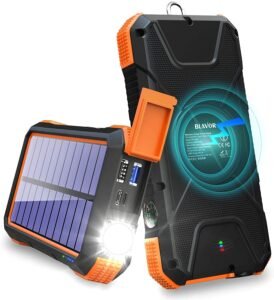
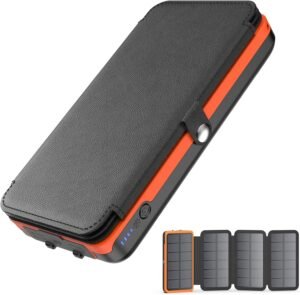
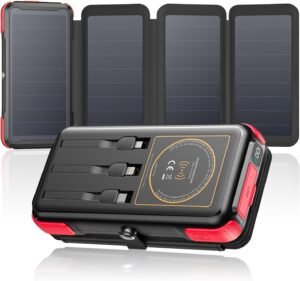
Top 6 Light Solar Chargers for Hiking
1. BLAVOR PN-W12 18W Light Solar Charger 20,000mAh (Best Overall)
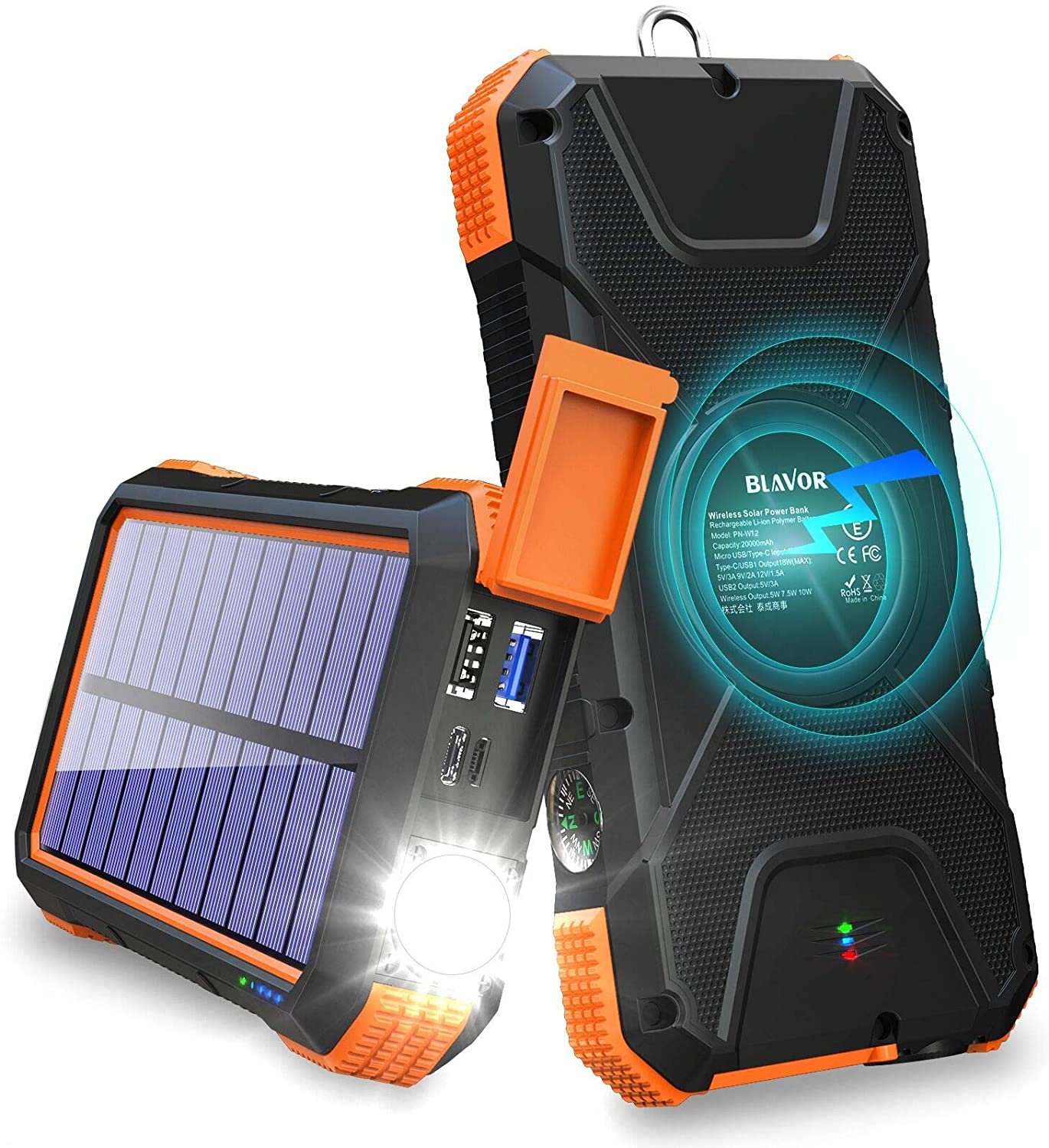
The BLAVOR PN-W12 is a great portable solar charger for hikers, travelers and emergency packs. It’s got a 10,000mAh battery, a small solar panel for slow charging and Qi wireless charging all in a tough, lightweight case that slips into any daypack.
In the real world, it could provide 2 to 3 charges of a phone and the wireless pad made topping off devices a snap. The solar panel — like all small ones — charges slowly, but if you spend time in direct sunlight, it can add a few percent per hour to your phone’s battery and give you some useful backup when you go off the grid.
One traveler described it as:
“A tiny lifesaver. It kept my phone alive for two days in Nepal, and the wireless charging was clutch during long airport layovers.”
With a rubberized exterior, built-in compass and IPX4 water resistance, it is a good choice for light outdoor use. Whether you’re taking a day trip or want peace of mind during an emergency, the BLAVOR PN-W12 is an inexpensive, tough and light solar charger power bank that won’t let you down.
2. Hiluckey 27,000mAh Light Solar Charger (Best High-Capacity Solar Power Bank)
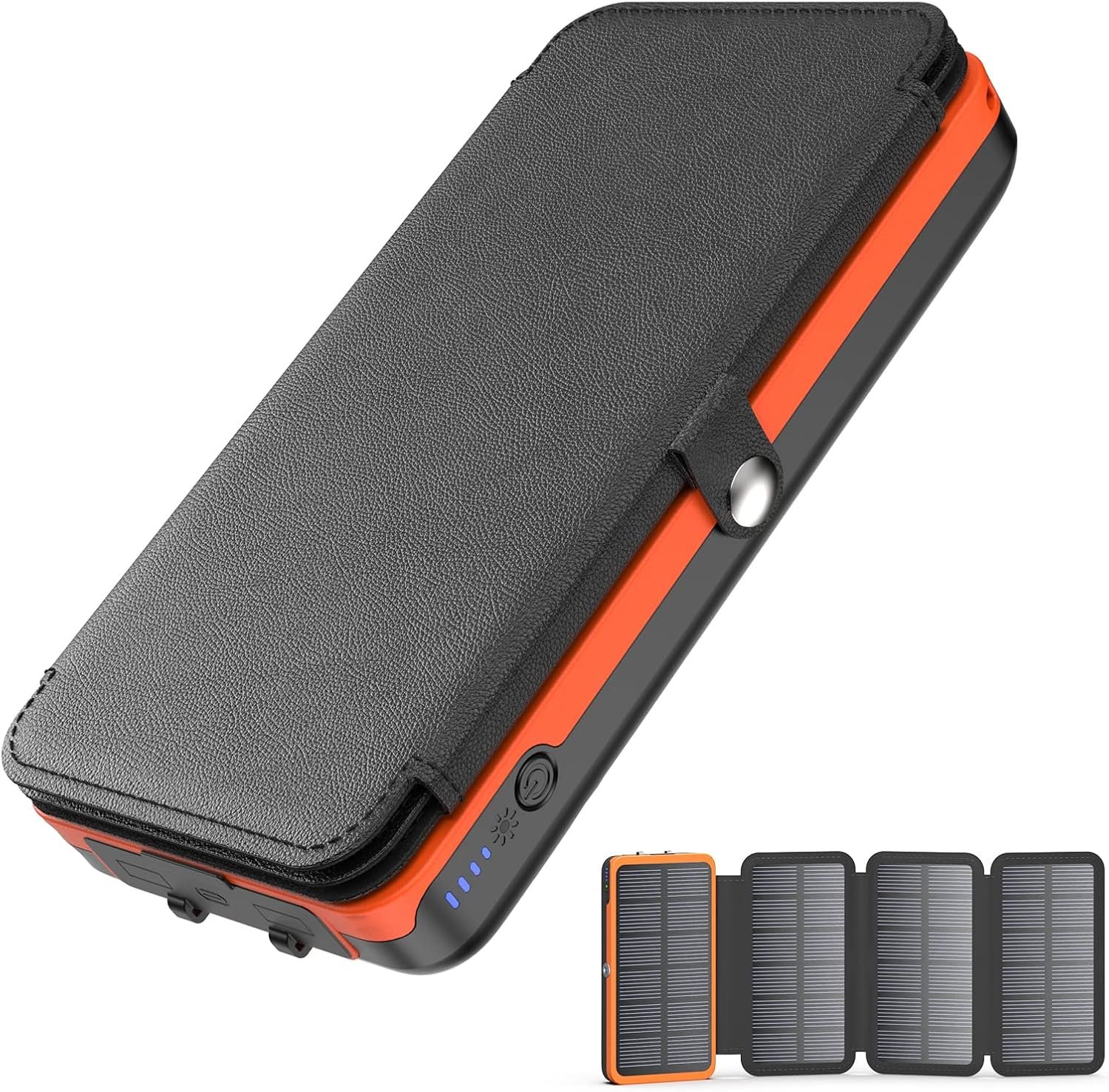
The Hiluckey 27,000 mAh Solar Phone Charger is a reliable power bank for travelers who need a lot of battery but don’t want to carry something bulky. It comes with four hooks for easy hanging, offers 6W of solar power, and has a foldable, compact design. You can easily fit it in your backpack, bag, or even your pocket, or hang it on your backpack when you’re outdoors. It’s a simple and convenient way to carry extra power.
With a 27,000 mAh capacity, you can get about 5 to 6 full phone charges or 2 full charges for a tablet. This makes it a great choice for camping, road trips, or multi-day adventures. In our tests, it was able to charge two phones at once while also collecting solar power throughout the day. The charger is well built, with textured rubber footing, reinforced corners, and IPX5 water resistance, so it’s ready for the outdoors.
As one backpacker said: “It is the only solar power bank that I’ve carried that actually gets enough sunlight to make any difference.”
Charging with solar power is slower than using a wall outlet, but the foldable panels on this charger work better than most other compact power banks.
If you want a high-capacity solar charger that’s practical for everyday use, the Hiluckey charger is a great option.
3. Riapow 27,000mAh Solar Power Bank (Best High-Capacity Rescue Unit)

The Riapow 27,000mAh Solar Power Bank is a powerful charger. It is designed for anyone who needs wireless charging, multiple output options, and solar backup, with a tough design. Its large 27,000mAh battery can charge your phone 5 or 6 times or power up tablets more than once. This makes it a great choice for travel, camping, or emergencies.
Its Qi wireless charging pad lets you charge your phone without cables. Four output ports mean you can power multiple devices simultaneously. The power bank also has two built-in LED flashlights, a compass, and a rubber-coated case. It is easy to use outdoors and can handle drops.
Like most small solar banks, it has just one solar panel. Solar charging works best as a slow, backup option in emergencies, not as your main charging method. If you charge it from the wall before your trip, it can keep your devices powered for several days.
One reviewer said:
“It charged my phone while charging two other devices, perfect for camping with family.”
The Ripow 27,000mAh balances battery capacity, useful features, and everyday practicality.
4. SOARAISE 25,000mAh 20W Light Solar Charger Power Bank
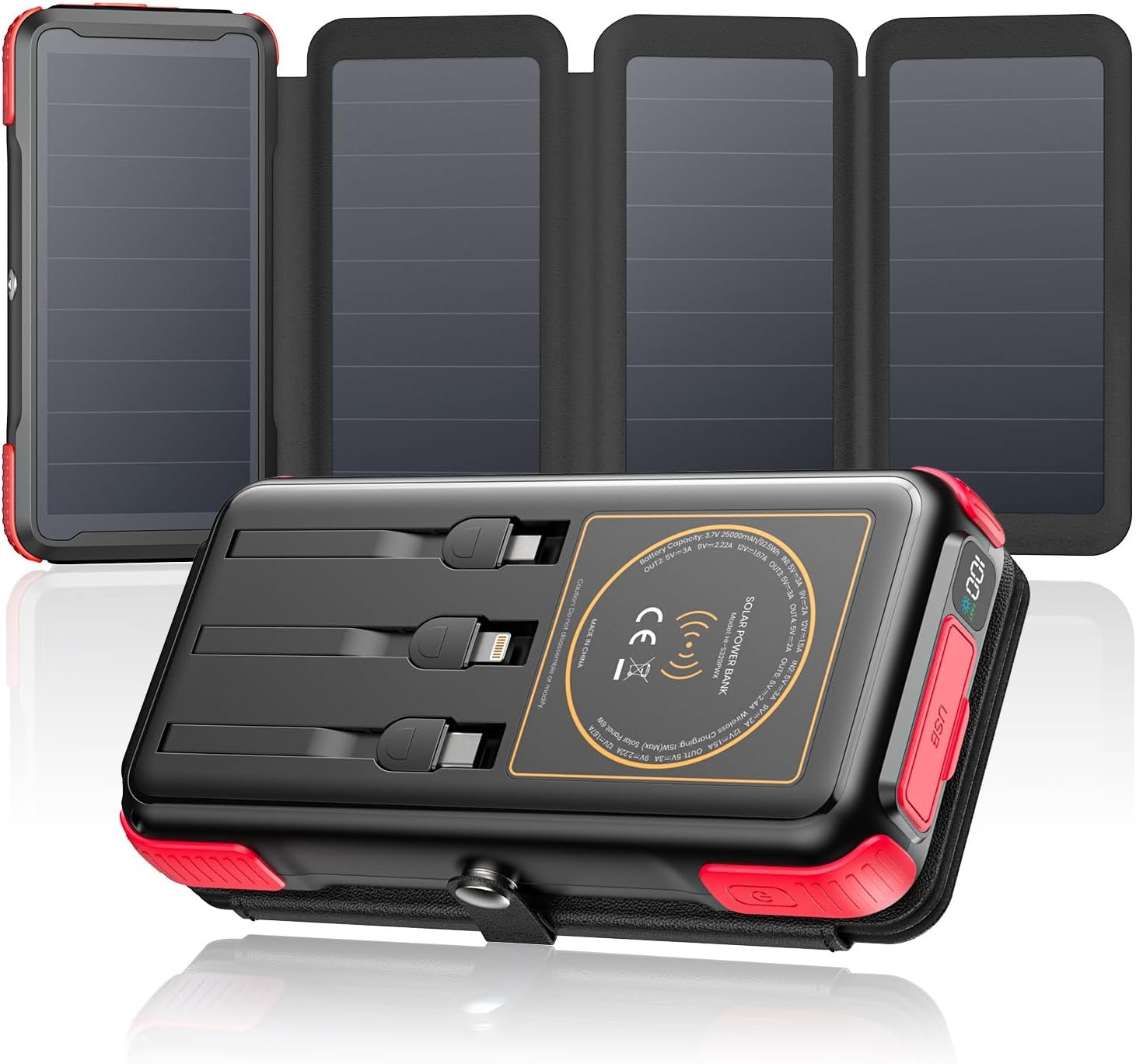
Need powerful, portable charging on the go? The SOARAISE 25,000mAh Solar Phone Charger delivers high-capacity charging for multiple devices in a lightweight, travel-friendly package. With 20W USB-C PD, 2 USB-A ports, and 10W Qi wireless charging, you can power your phone, earbuds, and more simultaneously. It’s a handy choice for anyone who values both power and flexibility.
The 25,000mAh battery fully charges your phone 4 to 6 times, making this power bank great for long trips or home backup. Use the solar panel for emergencies; although it charges slowly, the main power bank reliably provides power when you need it.
Designed for adventure, this power bank includes two flashlights and is rated IPX5 for dust and water resistance, making it a good fit for outdoor use. Users appreciate its sturdy design, fast wired charging, and easy wireless charging, proving it performs well.
A reviewer summed it up: fast, sturdy, reliable, and ready to charge multiple devices anywhere.
5. Autel 15,000mAh Solar Power Bank (High-Efficiency Foldable Charger)
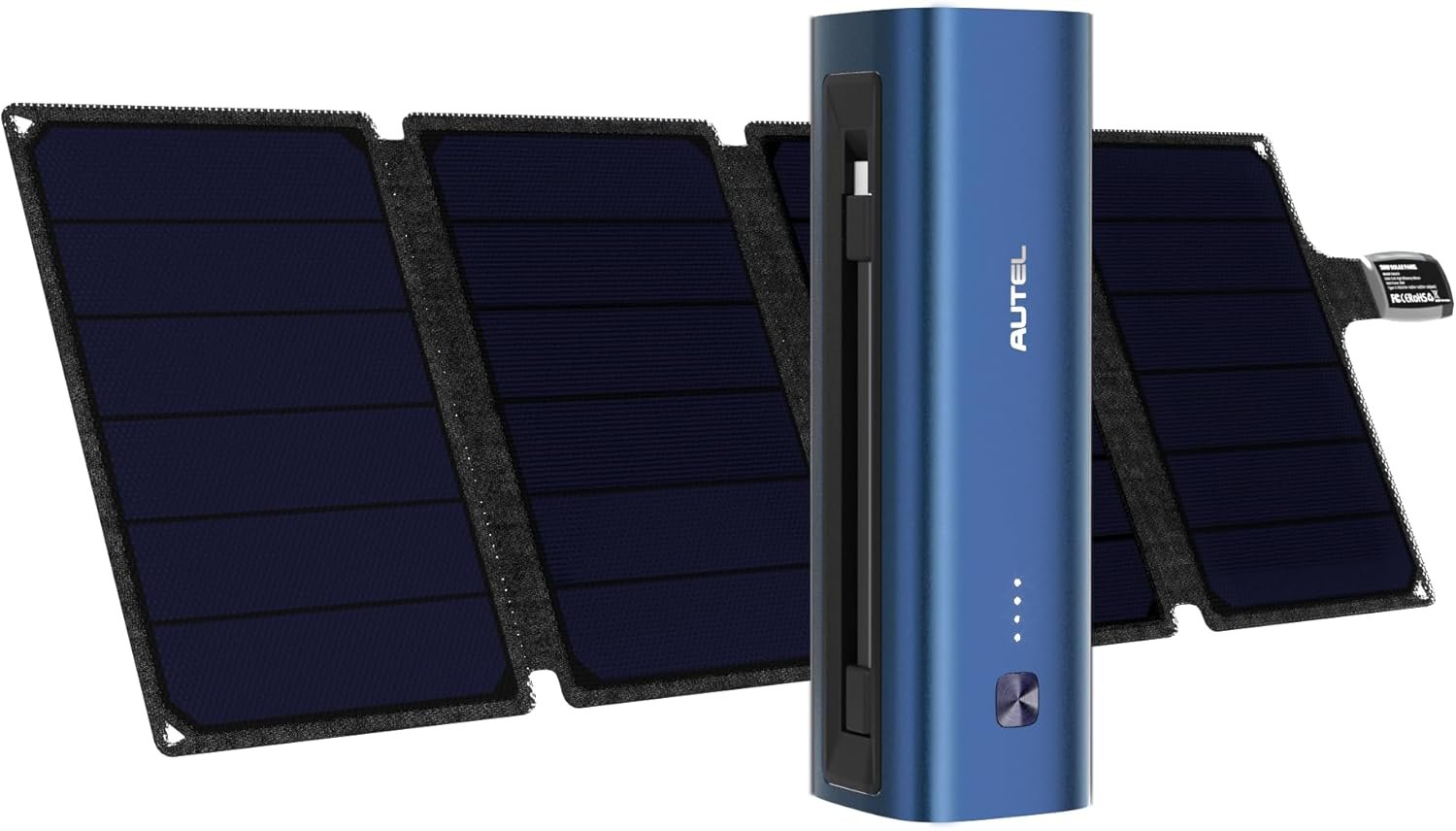
The Autel 15,000mAh Solar Power Bank is lighter than larger 25,000 to 45,000mAh models but can still recharge your phone several times. It has two USB-A outputs, a USB-C input, and a foldable solar panel that charges quickly, making it a good choice for travel and off-grid trips.
The foldable solar panel array makes this power bank stand out from other compact models. Single-panel units often do not provide enough power to charge devices or run small electronics, but Autel’s multi-panel design collects more solar energy outdoors. This makes it more useful for hiking, camping, and weekend trips.
The 15,000mAh battery gives about two to three full phone charges and can also charge smaller devices like earbuds, flashlights, or action cameras. It is lightweight, easy to hang from a backpack, and built to handle outdoor use. Reviewers mention its reliability, practical foldable design, and faster solar charging compared to similar products.
6. YELOMIN 20,000mAh Solar Power Bank (Waterproof Outdoor Charger
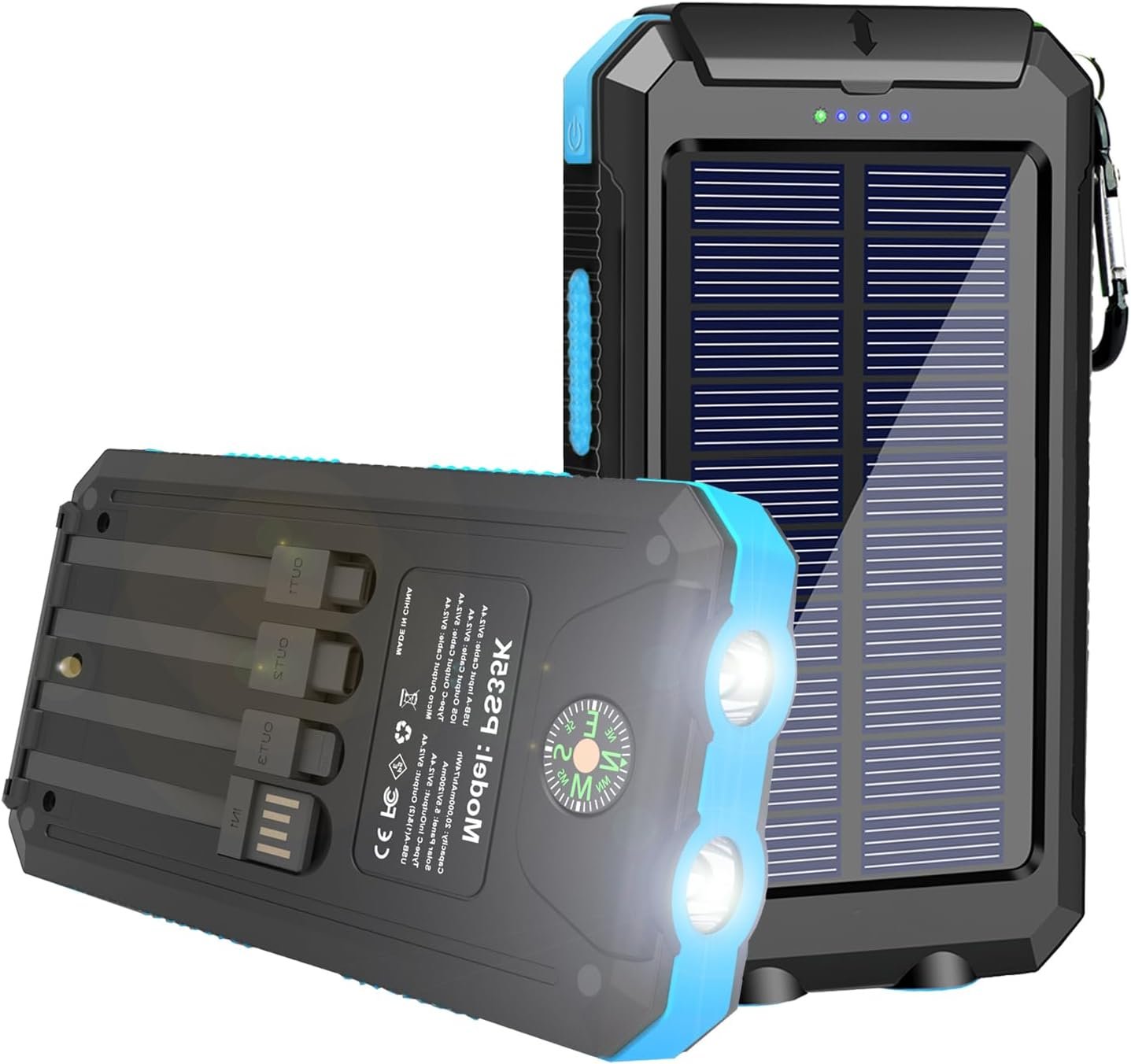
YELOMIN 20,000mAh Solar Power Bank is a well-priced option as a slim travel light solar charger for hikers, camping, and emergency kits. It’s slim and rugged, made to survive outdoor use but with enough battery capacity to recharge most smartphones 3-4 times.
Its small solar panel trickle-charges slowly over time; ideal as a backup rather than a primary charging source. Dual USB outputs allow you to charge two devices at a time, and the built-in LED flashlight (including SOS mode) ensures it’s useful for nighttime or roadside hiking emergencies.
It doesn’t come with fancy fast-charging features, nor with wireless output, but it nails the basics very well for the price. One user put it best: “Cheap, durable, and has functioned well on my weekend hikes. Good backup when my main charger decides to die.”
Other Notable Mentions
SunJack 25W Light Solar Charger
Reliable foldable panel using SunPower cells. Delivers ~850 mA/hour in full sun via dual USB. Slightly heavier than BigBlue, but a solid mid-power option if on sale.
→ Output: 25W | Ports: 2× USB-A | Weight: ~1.9 lbs
Goal Zero Nomad 20
Sturdy 20W panel with USB-A and 8mm outputs. Best for car camping or basecamps where weight isn’t a concern. Expensive, but dependable.
→ Output: 20W | Ports: USB-A, 8mm | Weight: ~2.3 lbs
EcoFlow Magnetic 10,000mAh Power Bank (non-solar)
Fast USB-C PD charger for on-the-go power. No solar input, but handy for quick top-ups on travel days.
→ Battery: 10,000mAh | Ports: USB-C PD | Solar: ❌
Why Light Solar Chargers?
Why You Should Get a Solar Phone Charger for Travel? Whether you’re on the road or deep in nature, dependable power is essential. Nearly half of all smartphone owners say their batteries die at least once a week, and for travelers, a dead phone can verge on nightmare territory; 66 percent would rather forget their toothbrush than their charger! Solar chargers and power banks turn the sun into free fuel for your devices. Think of a solar charger as a portable power plant—an indispensable resource for outdoor adventurers, especially when you’re miles away from an outlet.
Portable solar technology has matured significantly. The global portable solar charger market was valued at about $5.2 billion in 2014 and is projected to reach $22.8 billion by 2033. Why such rapid growth? Two major reasons: first, our increasing dependence on smartphones, cameras, GPS units, e-readers, and other gadgets; second, the rising adoption of eco-conscious products for off-grid travel. Plug-and-play solar chargers provide “green” power for your devices, allowing you to ditch clunky generators and endless batteries. They’re lightweight, and many are ruggedized to withstand water, dust, and drops—built to survive the rigors of travel.
Solar phone chargers come in two main types: folding solar panels and solar power banks. Foldable panels (such as the BigBlue and Allpowers panels below) act like mini-solar stations: you park them in the sun, they generate electricity, and you plug your phone or a power bank into them. Solar power banks, on the other hand, are battery packs with a small solar panel on top—they offer trickle charging in the sun, then charge your devices as needed. The bottom line: either way, you can harness free sunlight to keep your battery topped up.
In our field tests, we set out several chargers to compare their output under identical conditions. We consulted both lab reviews and real user tests to find the best gear. For example, one independent test found that the BigBlue 28W panel delivered about 950 mAh per hour under ideal sunlight, outperforming similar panels from Anker and Nekteck. We also reviewed Travel + Leisure and OutdoorGearLab articles that included real-world trials, then tested the shortlisted models ourselves. We hung panels on backpacks, clipped them to tents, and measured device charging speeds in both bright sun and cloudy conditions.
In short, we did our homework so you can trust which chargers and power banks will actually keep your devices alive.
Read more about our top 7 solar phone chargers hereWhat to Consider When Buying Light Solar Chargers
When deciding on a slim, light solar charger, there are several important factors to keep in mind:
Battery Capacity (mAh): We’re looking at models between 20,000–35,000mAh. The higher the mAh, the more often you can charge your phone, but it will also be heavier. A 20,000mAh pack typically weighs around 0.5–0.7 kg. A 35,000mAh pack may weigh 1 kg and exceed airline limits. A 20K-25K is a good multi-charge pack and reasonable weight for most backpackers. Check airline limits too. TSA permits up to 100 Wh (approximately 27,000 mAh) in carry-on.
Panel Power Output (Watts): Higher wattage results in faster solar charging. A 10W panel is fine, but bigger (say, 15-20W) if you will be using it daily. For instance, some chargers have four panels that are approximately 6-20W at sun. The higher the watts, the faster you can fill up the battery.
Physical Size & Weight: When you’re backpacking, size matters. Check the weight, which is typically available in Amazon listings. Ultra-light options are indeed ultra-light but may come with smaller panels or batteries. Then compare the watts and mAh per pound. And a big, 30,000mAh pack can add more weight to your kit than it’s worth if you rarely (if ever) need that entire capacity.
Ports & Charging Speed: Opt for USB-C PD or quick-charge compatible. Many chargers have 2+ USB-A ports (5V/2.4A is typical for each) and a single USB-C port (PD output). The important thing is the current rating (in amps) – you want at least 2.4A per port to charge at full speed. Some (like the SOARAISE below) even have 20W PD output, which speeds recharge times dramatically. It’s a nice bonus that the charging cables (USB-C, Lightning, micro) are built right in. These will save you weight, not having to carry around excess cords, and won’t lose cables in camp.
Durability & Extras: Most are durable and frequently rated IPX4 splashproof or better. Extras, such as a flashlight or compass, can be useful in an emergency. If water resistance or shockproofing is important, read the details. Some have LED flashlights that can run for more than 100 hours on a charge.
Features & Extras: Some chargers include helpful extras like kickstands or carabiner clips for positioning, built-in ammeters to display charging current, LED flashlights, or even emergency hand cranks. For example, the BigBlue 28W’s built-in ammeter lets you monitor real-time charging amps.
Keep in mind that charging speed will vary under different conditions. Even a top-of-the-range 20W panel requires you like a couple of hours for good charge. On a sunny hike, that’s fine. Fast solar charging for a quick re-charge at camp in daylight. You’re not going to get full sun walking beneath trees. What I discovered was that hanging the panel on a rock or my tent at lunch worked best. Output falls off significantly in anything less than direct sun. This is why a big battery is key. You can save many kilowatt hours for the cloudy days.
Bottom line: Go for a solar charger that’s easy to carry, charges your devices quickly, and can handle a little rough use. If the solar charger has a decent battery, offers multiple charging at once, water or dust resistance, or a flashlight, you’ll be set for any adventure without extra bulk.
Frequently Asked Questions
Q: • Are solar power banks worth it while hiking?
A: Absolutely, if you frequently travel far from outlets often. And they spare you the nuisance of lugging around dozens of AA/AAA batteries, while offering nearly unlimited power. In full sun, they’ll keep your phone or GPS running all week with no need to restock. Some hikers have concerns about the added weight, while in reality, a single 25,000 mAh solar charger (0.5–0.6 kg) is more than enough to replace all your smaller power packs combined. You’re even allowed to bring batteries up to 100Wh (about 27,000mAh) on planes according to some U.S. government studies, so many of these banks are plane-friendly.
Q: How long does it take to charge a phone with a solar charger?
A: It depends on conditions, but a modern smartphone (battery = 3-4Ah) can be fully charged in approximately. 3-6 hours of good / typical PV panel insolation *. sunshine when using a 10–20W panel. Higher-output panels (15–20W) will charge faster, but any panel will slow down when passing through clouds or with misalignment. The way it actually works, we also charge at high noon, when the sun is strongest. (Note: the quoted charge times are in ideal sun; on a partly cloudy day, it would take far longer.) That’s also why these chargers have big batteries – you charge the bank over a couple of sunny days, then draw from it as needed.
Q: Do they work when it’s cloudy?
A: To a limited degree. Patches of cloudy sky are very inefficient at generating small panels’ current. To a limited degree. You’re not going to top off the battery on an overcast day. But if your solar charger’s battery is fully charged on a sunny day, it will automatically use the stored energy even on cloudy days. So it’s best to get a dose of power on sunny days and then store it for cloudy days. The team at Treeline notes that large solar panels (such as the Goal Zero Nomad 50) may still be able to squeeze out some juice on cloudy days, but the tiny, backpack-size bags generally prefer full sun. In summary: Miracles don’t come naturally in the woods. Throughout my years covering news in Bigfoot’s North American stomping grounds, I, for one, have learned not to expect miracles. Tree cover – plan for sun.
Q: What should a good solar power bank have?
A: Look for battery size, panel output, and durability. I would recommend at least 20,000mAh capacity for backpacking (25K is even better) and stay within airline restrictions – restrict to 35K total. Seek at least one USB-C PD port (for speedy 18–20W charging) and 2.4A on USB-A ports. The panel wattage also matters: more is better (10W is minimal; 15W+ is ideal). Carabiner clips and built-in cables are the extras that make for easy operation. And always make sure it’s weather-resistant – outdoor gear can take a little rain.
Q: How can I improve the efficiency of solar charging on the trail?
A: Always position the panel flat in the direction of the panels. sun when stationary (at camp). A slight misalignment can sever power. If you really want efficiency, try to camp midday with the panel on a rock or leaning against a tent that faces the sun (about a 37° tilt in mid-latitudes). Hooking it to your backpack as you walk is of limited value – they point out that you certainly wouldn’t be, as it is premised on walking in lockstep with the sun’s course to keep the juice flowing continuously. Also, pre-charge devices as often as you can before leaving, and top them up in short bursts of sunlight.