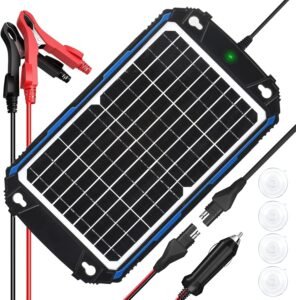
Losing a charge at the worst possible moment can turn an exciting day into one filled with stress. Whether you’re camping, on a weekend trip, or preparing for power outages, having the best solar-powered phone charger and power bank on hand can make all the difference. The best part? Solar tech is a lot better in 2025 than it was; quicker charging, more robust designs, and wayyy better performance under actual sunlight.
In this guide, we’re comparing the leading solar phone chargers and power banks of 2025 based on recharge speed, durability, weight, capacity, and everyday usability. You’ll read straightforward, how-to advice on a range of topics — from casual travel to extended outdoor expeditions. Our goal is a modest one: We aim to make choosing a solar charger as easy as it should be, so you can keep your devices charged up in the wild without pulling out your hair, puzzling over complicated output figures, or spending money on something that won’t work when you need it.
Ready to find out which solar chargers are actually worth it this year? Let’s get started.
Our Top Picks
Top 7 Solar Phone Chargers & Power Banks (Tested for 2026)
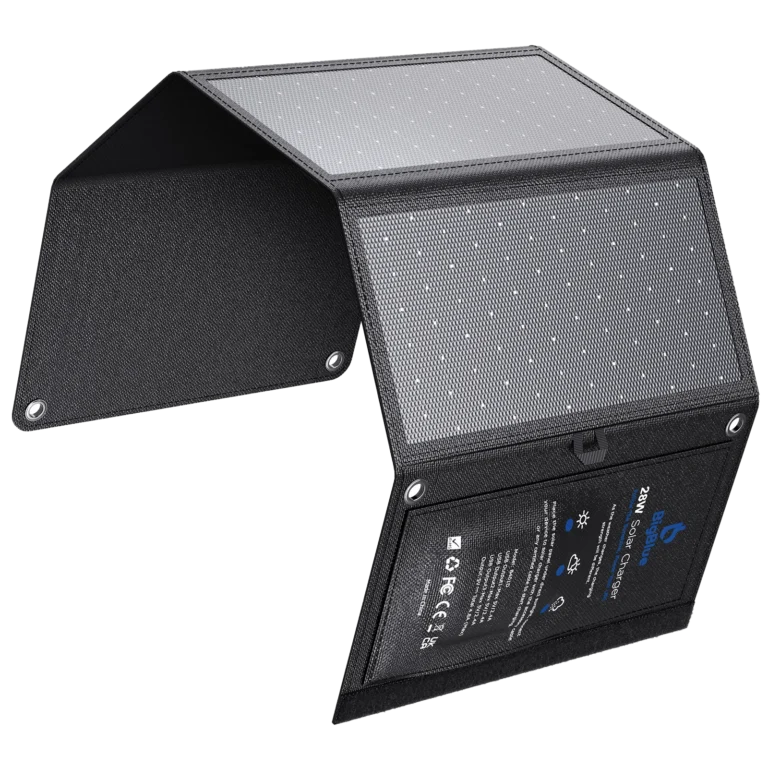
1. BigBlue 28W USB Solar Charger (Best Overall)
Price: $49-$54
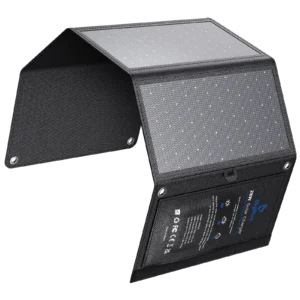
The BigBlue 28W panel from solar phone charger category stood out in multiple tests. It’s a foldable, three-panel charger with SunPower cells that weighs about 1 lb 48 oz (1.48 pounds). With a total output of 28W (5V, 2.4A per USB port), it delivers more power than similar competitors, resulting in faster phone charging. In direct sunlight, testers measured roughly 950 mA per hour from this panel—enough to fully charge two phones in a few hours.
We love how easy the BigBlue is to use: lay it flat or hang it using clips, and its built-in ammeter displays charging power. An editor described it as “simple, lightweight, and powerful,” noting that it provides a bit more power than other models. The rugged canvas backing and metal grommets add durability for outdoor use.
The only downsides are that it lacks an onboard battery, so it charges devices in real time only (you’ll need a separate power bank or wait for the sun), and it has two USB-C and USB-A ports. But for charging phones and tablets under sunlight, it’s hard to beat.
2. Anker Solix PS30 Solar Panel (Best Portable Solar Panel for Travel)
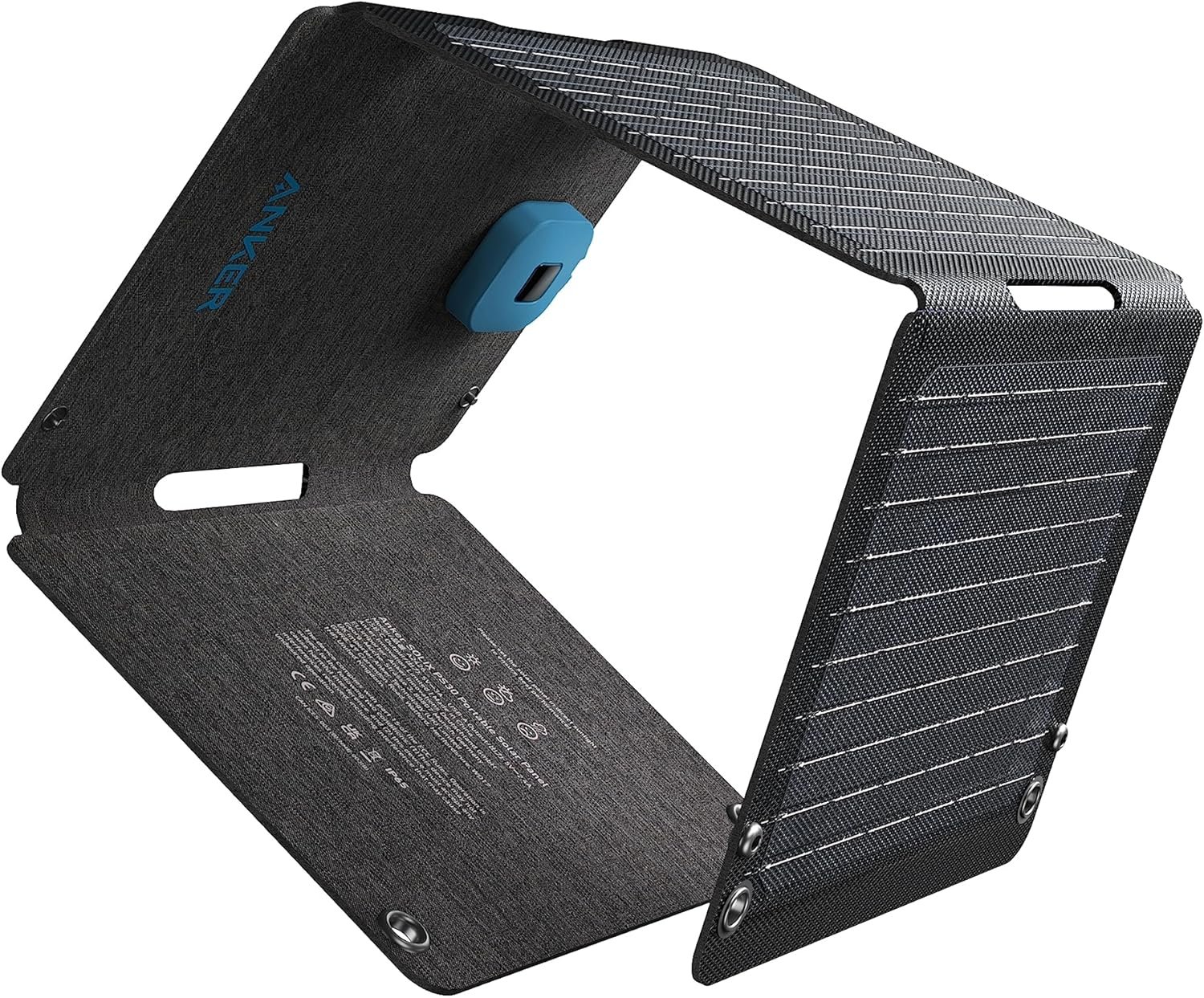
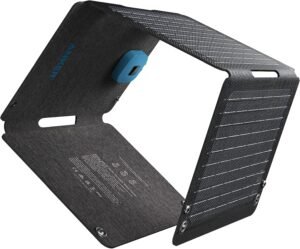
If you are traveling, camping, or hiking and want a worry-free charger on the go, this foldable solar charger is for you. This one is on active use (not permanently mounted as a stationary panel like the Moultrie). That’s a lot faster than most compact panels in this class, which produce only 30W or so; you can attach two devices at once, with USB-A and USB-C output ports to keep your phone or power bank going on weekend jaunts into the wilderness.
The foldable form factor is an incredible win. It compresses to an inconceivably small size, weighs 2.2 pounds, and has carabiners for attachment to your backpack. Simple setting; just fold it out and aim towards the sun. It’s also sealed to IP65 standards, so it won’t mind dank places or tough outdoor environments.
“What a wonderful way to go on hiking trips. I clipped it onto my backpack, and I was just walking around all day with the – charging the phone.” one said. This panel is ideal for portable solar charging, but here’s your wakeup call: it works best in direct sunlight and isn’t a high-powered option.
3. ALLPOWERS SP027 100W Foldable Solar Panel (Best Highpower)
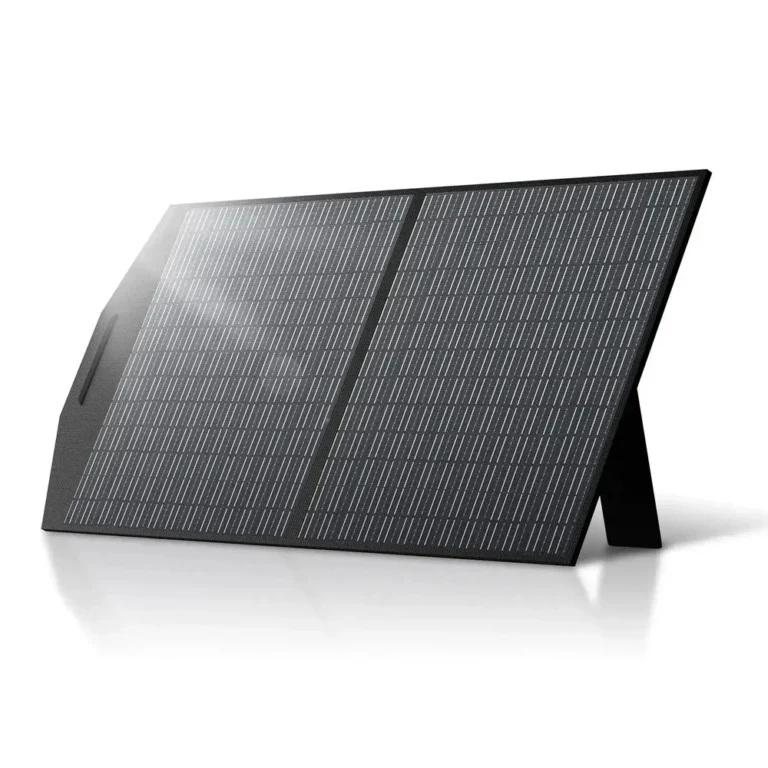
If you need real muscle—think charging laptops, portable power stations, or even a car battery in a pinch—the Allpowers 100W panel is our go-to choice. This large foldable panel (100W max output) is ideal for car camping or basecamp trips. In testing, it charged large 10,000–20,000 mAh batteries in a few hours without any issues, and it features a special DC output port so you can plug directly into generator batteries or cars (with adapters).
It’s not as compact or light, 7.92 lb and about the size of a messenger bag when folded, but the payoff is versatility. We could run iPhones while charging much bigger devices at the same time. Note: If you try charging a small phone and a big battery simultaneously, phone charging may slow down (we even saw an overheat warning). That’s normal when pushing 100W across devices. In practice, it’s best for scenarios where you have multiple gadgets or need to jump a flat car battery. One reviewer called it “a great device to keep in a car while road tripping or camping,” and we agree.
4. HQST 100W 12V Monocrystalline Solar Panel (Best Budget 100W Solar Panel)
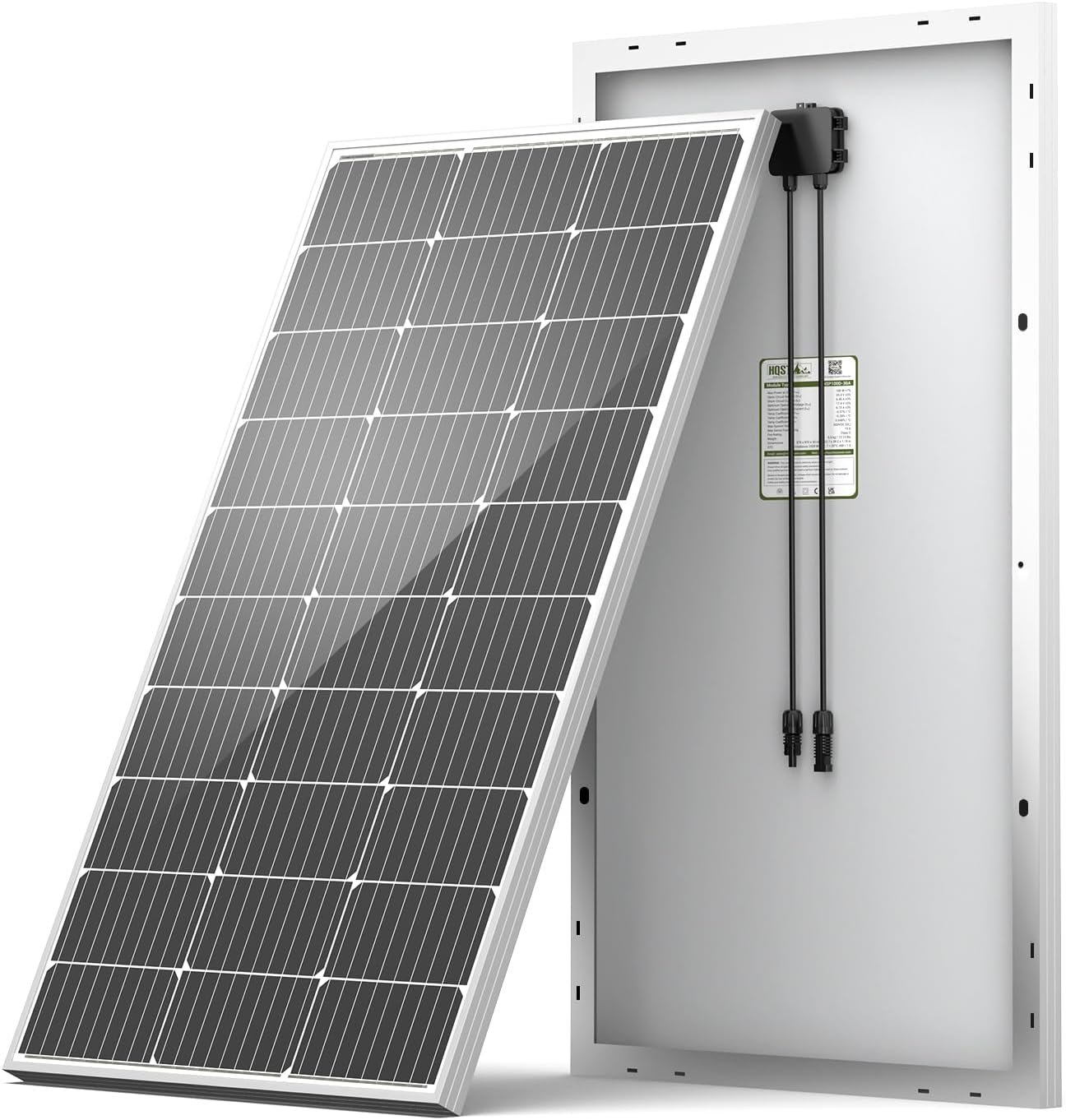
One of the best-value options for anyone creating a dependable off-grid power setup. The performance is solid, and it doesn’t come at the premium price point of high-end brands designed for RVs, boats, cabins, and van life. The use of 9 busbar (9BB) technology, which improves efficiency and reduces the risk of microcracks over the long run, is immediately noticeable. The panel offers up to 25% conversion efficiency, better than most standard panels in this range, thanks to Grade A+ monocrystalline cells.
In practice, you can get 400–500 Wh per day from the panel on a good day. Because built-in bypass diodes reduce power loss due to shading, also performs well in less-than-ideal lighting. Durability is another strong point. Cr Norfo’s durable aluminum frame is corrosion-resistant, and an IP65-rated junction box protects against rain, wind, and snow, making them suitable for a long service life under any weather conditions the outdoors has to offer.
This is not a portable panel; it’s meant for permanent or semi-permanent installations. However, if what you’re after is a dependable, inexpensive solar panel designed for off-grid setups, the HQST 100W is definitely worth your consideration.
5. Blavor 10,000mAh Solar Power Bank (Best Budget Power Bank)
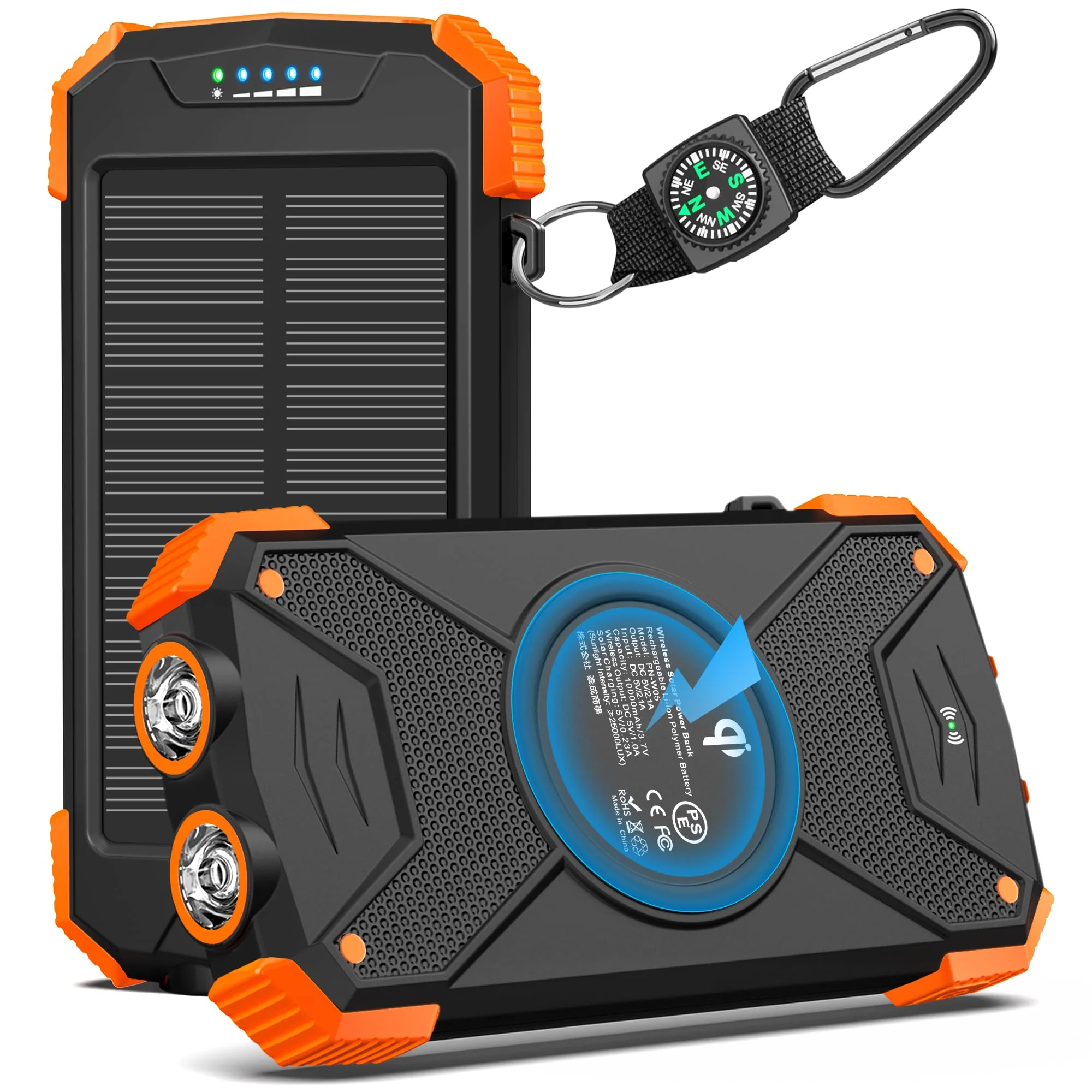
The Blavor 10,000mAh Solar Power Bank stands out as a top budget-friendly choice for travelers and emergency kits. This compact battery pack features a trickle-charging solar panel on top, making it perfect for topping off your phone in a pinch when you’re off the grid.
In real-world use, it fits in your palm, slips easily into any backpack, and can recharge two devices at once. The Qi wireless pad on the back is especially convenient for cable-free charging, and the rugged shell (IPX4 splashproof) makes it suitable for light hikes, beach days, or as a backup emergency device. It also includes a flashlight and compass, which—though not professional-grade—are useful for casual campers or preppers.
Testing shows that while the solar panel charges slowly (as expected at this size), it can add a few percent per hour under direct sunlight. Fully charged via a wall outlet, the 10,000mAh battery delivers two to three full phone charges.
A traveler noted, “It gave me peace of mind hiking in Nepal. The built-in cables and wireless charging saved me during a long layover.”
6. BigBlue 28W SunPower Solar Charger (New & Improved Version)
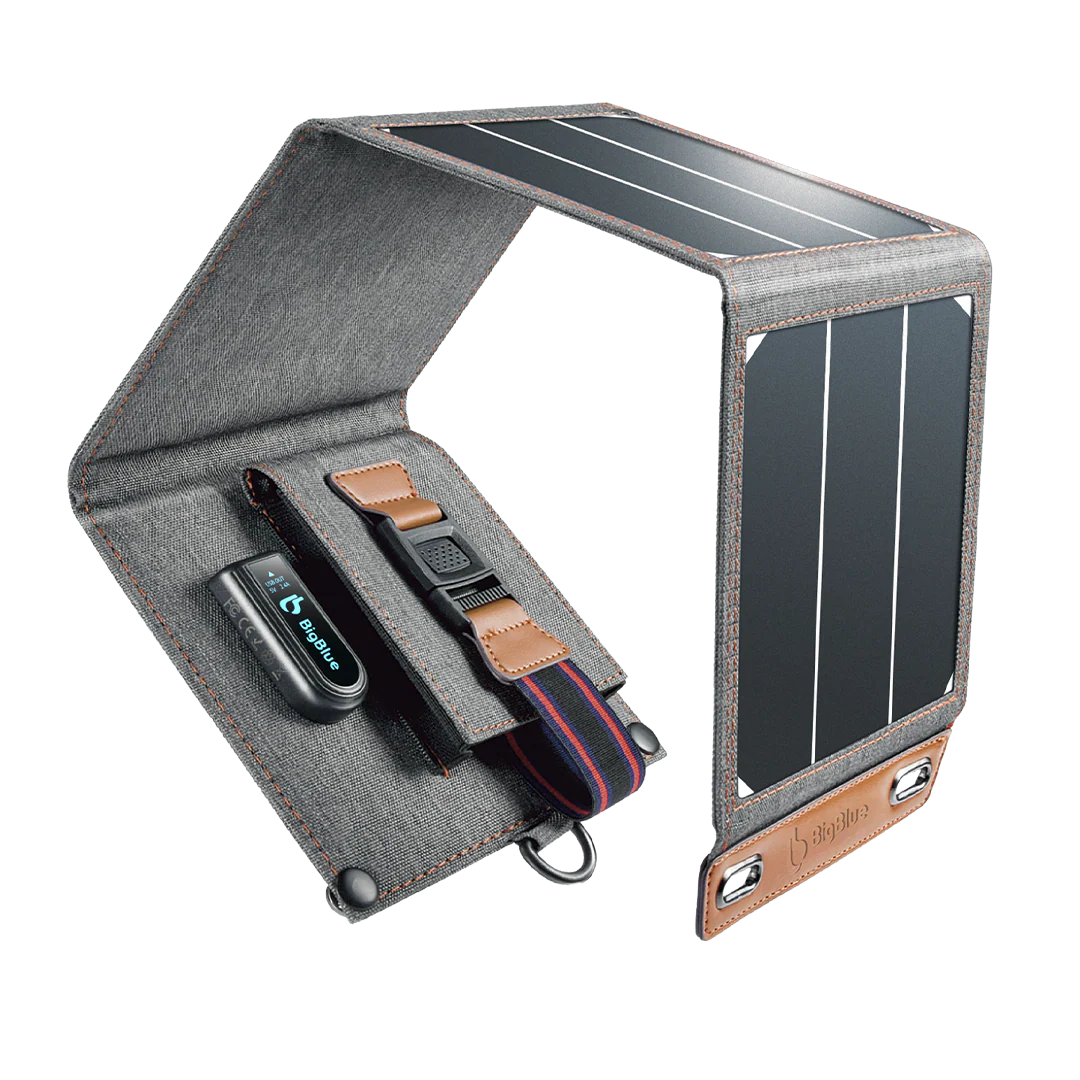
The upgraded BigBlue 28W combines improved performance, greater durability, and field-tested reliability, making it ideal for outdoor use. It retains the popular backpack-ready design, features high-efficiency SunPower solar cells, and offers dual USB-A outputs for charging smartphones, tablets, and power banks in just a few hours of bright sunlight.
Enhanced waterproofing (IPX4) and heat resistance stand out, making the BigBlue 28W well-suited to challenging outdoor settings, including hot or humid conditions. The fold-flat design clips conveniently to packs or tents. While it lacks an internal battery and charges only in real time, reviewers note its output is consistently faster than expected.
An Amazon user commented, “I use this on the roof of my van while driving cross-country. It handles dust, heat, and rain with no issues.”
6. GOODaaa 45,800mAh Solar Power Bank (Best for Multi-Device Use)
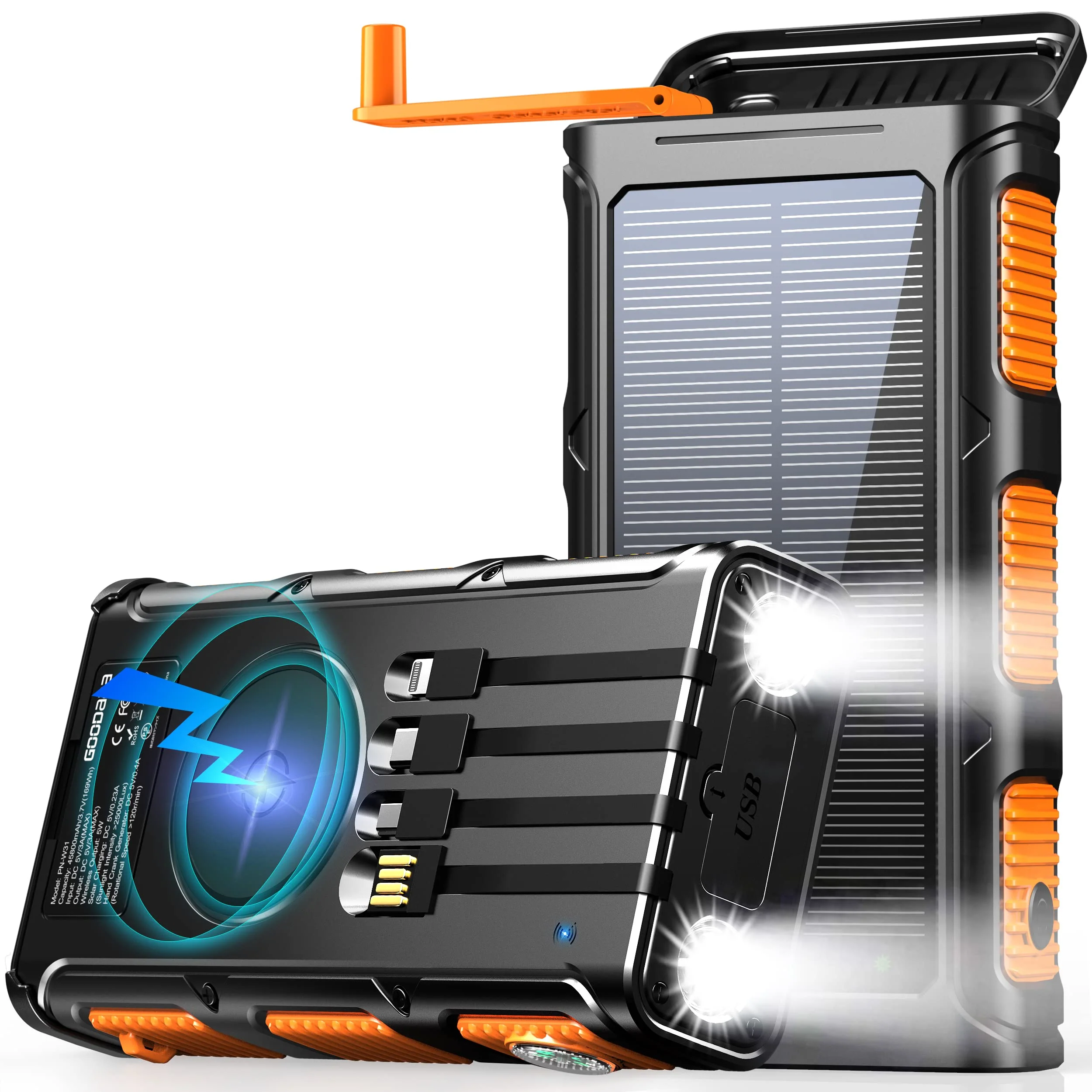
When your goals are maximum power output, convenience, and off-grid backup, the GOODaaa 45,800 mAh solar power bank stands out. With four built-in cables, wireless MagSafe charging, and a flashlight plus hand-crank combo, it’s designed to support multiple devices during family trips, camping, or emergencies.
In testing, this powerhouse charger refueled two iPhones, a Kindle, and Bluetooth headphones—with capacity to spare. Its rugged design and IPX5 rating make it ready for the outdoors. While the solar input is slow (as expected for this size), it works well for daytime trickle top-ups between full USB charges.
As one Amazon user said:
“This is my go-to in the car and during storms. I charged four devices and it still had juice. It’s a beast.”
Other Notable Mentions
SunJack 25W Solar Charger
Reliable foldable panel using SunPower cells. Delivers ~850 mA/hour in full sun via dual USB. Slightly heavier than BigBlue, but a solid mid-power option if on sale.
→ Output: 25W | Ports: 2× USB-A | Weight: ~1.9 lbs
Goal Zero Nomad 20
Sturdy 20W panel with USB-A and 8mm outputs. Best for car camping or basecamps where weight isn’t a concern. Expensive, but dependable.
→ Output: 20W | Ports: USB-A, 8mm | Weight: ~2.3 lbs
EcoFlow Magnetic 10,000mAh Power Bank (non-solar)
Fast USB-C PD charger for on-the-go power. No solar input, but handy for quick top-ups on travel days.
→ Battery: 10,000mAh | Ports: USB-C PD | Solar: ❌
Why Solar Phone Chargers?
Why You Should Get a Solar Phone Charger for Travel? Whether you’re on the road or deep in nature, dependable power is essential. Nearly half of all smartphone owners say their batteries die at least once a week, and for travelers, a dead phone can verge on nightmare territory—66 percent would rather forget their toothbrush than their charger! Solar chargers and power banks turn the sun into free fuel for your devices. Think of a solar charger as a portable power plant—an indispensable resource for outdoor adventurers, especially when you’re miles away from an outlet.
Portable solar technology has matured significantly. The global portable solar charger market was valued at about $5.2 billion in 2014 and is projected to reach $22.8 billion by 2033. Why such rapid growth? Two major reasons: first, our increasing dependence on smartphones, cameras, GPS units, e-readers, and other gadgets; second, the rising adoption of eco-conscious products for off-grid travel. Plug-and-play solar chargers provide “green” power for your devices, allowing you to ditch clunky generators and endless batteries. They’re lightweight, and many are ruggedized to withstand water, dust, and drops—built to survive the rigors of travel.
Solar phone chargers come in two main types: folding solar panels and solar power banks. Foldable panels (such as the BigBlue and Allpowers panels below) act like mini-solar stations: you park them in the sun, they generate electricity, and you plug your phone or a power bank into them. Solar power banks, on the other hand, are battery packs with a small solar panel on top—they offer trickle charging in the sun, then charge your devices as needed. The bottom line: either way, you can harness free sunlight to keep your battery topped up.
In our field tests, we set out several chargers to compare their output under identical conditions. We consulted both lab reviews and real user tests to find the best gear. For example, one independent test found that the BigBlue 28W panel delivered about 950 mAh per hour under ideal sunlight, outperforming similar panels from Anker and Nekteck. We also reviewed Travel + Leisure and OutdoorGearLab articles that included real-world trials, then tested the shortlisted models ourselves. We hung panels on backpacks, clipped them to tents, and measured device charging speeds in both bright sun and cloudy conditions.
In short, we did our homework so you can trust which chargers and power banks will actually keep your devices alive.
What to Look For in Solar Charger and Powerbank?
Choosing the right solar charger is a lot like picking the right gear for a hike—your choice can make or break the trip. Here are the essential factors to keep in mind:
Power (Watts and Ports): More watts means faster charging. Small panels (5–10W) only trickle-charge phones, while larger foldable panels (15–30W or higher) can power multiple devices or even a tablet. Count the output ports (USB-A, USB-C, DC) to make sure you can plug in everything you need—at least two ports if you plan to charge more than one device at a time. For example, the BigBlue 28W charger provides up to 28 watts total (5V at 2.4A per port), which is enough to charge two smartphones at once.
Built-in Battery (mAh): Solar power banks include a built-in battery—typically between 5,000 and 25,000 mAh. The milliamp-hour (mAh) rating tells you how many times you can recharge your phone. As a rule of thumb, 10,000 mAh can provide about two full charges for a standard smartphone. For most travelers, we recommend at least 10,000 mAh. Some solar banks even support wireless (MagSafe) charging. Keep in mind: solar panels themselves usually don’t have a battery, so pairing a panel with a separate power bank gives you the most flexibility.
Weight and Portability: If you’re hiking or traveling light, every ounce matters. Solar panels range from a few ounces (like the 12.7 oz Goal Zero Nomad 5) to several pounds (the 4.7 lb Allpowers 100W). Power banks get heavier as capacity increases—a 20,000 mAh battery weighs around 1.5 lbs. Decide if you need something ultralight (but less powerful), or if extra weight is worth faster charging. For instance, Travel + Leisure found the Goal Zero Nomad 5 so light they “didn’t even notice it in our pack” during a 6-hour bike ride.
Weight and Portability: If you’re hiking or traveling light, every ounce matters. Solar panels range from a few ounces (like the 12.7 oz Goal Zero Nomad 5) to several pounds (the 4.7 lb Allpowers 100W). Power banks get heavier as capacity increases—a 20,000 mAh battery weighs around 1.5 lbs. Decide if you need something ultralight (but less powerful), or if extra weight is worth faster charging. For instance, Travel + Leisure found the Goal Zero Nomad 5 so light they “didn’t even notice it in our pack” during a 6-hour bike ride.
Durability: Look for water-resistant, rugged designs. Outdoor tests reward panels with reinforced layers, and banks with rubberized edges. Many solar chargers have aluminum or polycarbonate backing to survive a fall. If you’re camping, check for an IP rating (water- or dustproof).
Features & Extras: Some chargers include helpful extras like kickstands or carabiner clips for positioning, built-in ammeters to display charging current, LED flashlights, or even emergency hand cranks. For example, the BigBlue 28W’s built-in ammeter lets you monitor real-time charging amps.
Airline-Friendly: If you’re flying, keep in mind that batteries over 100 Wh (about 27,000 mAh at 3.7V) are usually restricted in carry-on luggage. Most 10,000–20,000 mAh power banks are allowed. One reviewer noted that the 10,000 mAh Blavor solar power bank was “the size of a typical portable phone charger,” making it easy to bring on a plane.
Bottom line: match your charger to your trip. For a long hike in the sun, a lightweight panel plus a medium-capacity bank might be best. If you’re road-tripping or setting up a basecamp, a heavier, high-watt panel (like 100W) or a large battery bank can power laptops and multiple phones. Next, we’ll dive into our top picks.
Frequently Asked Questions
Q: Are solar phone chargers worth it for travel?
A: Yes—especially if you travel off the grid. Solar chargers give you backup power when you can’t find an outlet, so you don’t have to stress about your phone dying. While they aren’t as fast as wall chargers, they’re dependable for topping up your phone during long trips. Even a small amount of solar power can be a lifesaver in an emergency.
Q: How fast do solar chargers charge my phone?
A: It depends on the sun and how big your solar panel is. With a big panel (like 28W) and lots of sunlight, you can charge your phone in about 3–5 hours. Smaller panels take longer. Solar power banks usually charge at the same speed as a typical USB charger—about 3–4 hours per phone. The angle and brightness of the sun matter too, so try to position your panel to catch as much sunlight as possible.
Q: Can solar chargers work in cloudy or low light?
A: Yes, but it’ll be much slower. Solar chargers do make some power in cloudy or low light, but it’s just a trickle. Most power banks with solar panels can catch a bit of energy, but think of that as an emergency backup, not your main source. Some fancy chargers can even grab indoor light, but standard models work best in direct sun. Treat solar charging as a helpful bonus—keep your power bank charged from a wall outlet when you can, and let the sun top it up while you’re on the go.
Q: Can I bring these on an airplane?
A: Most solar chargers are allowed on planes as long as the batteries are within the usual limits. Keep your power banks under 100 Wh (that’s about 10,000–20,000 mAh) and pack them in your carry-on bag. Foldable panels are simple to travel with, too. Just double-check the battery size before you fly to be safe.
Q: Should I use a panel with a battery, or is a solar panel enough?
A: Both options have their perks. If you use just a solar panel (with no battery), like the BigBlue 28W, you can charge your devices directly while the sun is out—great for daytime use, but it won’t work after dark. A solar power bank (which has a panel and a battery) can soak up sunlight during the day and store it, so you can charge your phone at night. Many people recommend carrying both: charge your power bank from a wall outlet before your trip, then use the sun to keep it topped up while you travel. Think of it this way: the solar panel fills up the battery, and the battery keeps your phone powered up. This gives you quick charging from the battery and longer use thanks to the sun.
Q: How do I maximize solar charging?
A: To get the most out of your solar charger, always face the panels directly at the sun. Use a kickstand or tilt them toward midday sun for the best results. If clouds come, move the panel to catch the brightest light. Switch your phone to Airplane or Low Power mode while charging to help it fill up faster. If you’re using a solar power bank, put it in a sunny spot—like a windowsill, car dashboard, or clipped to your backpack. Solar charging is slow but steady—even a few more hours in the sun can give your battery a 10–20% boost, which adds up over time. And don’t forget to secure your panels so they don’t blow away or get damaged by wind.